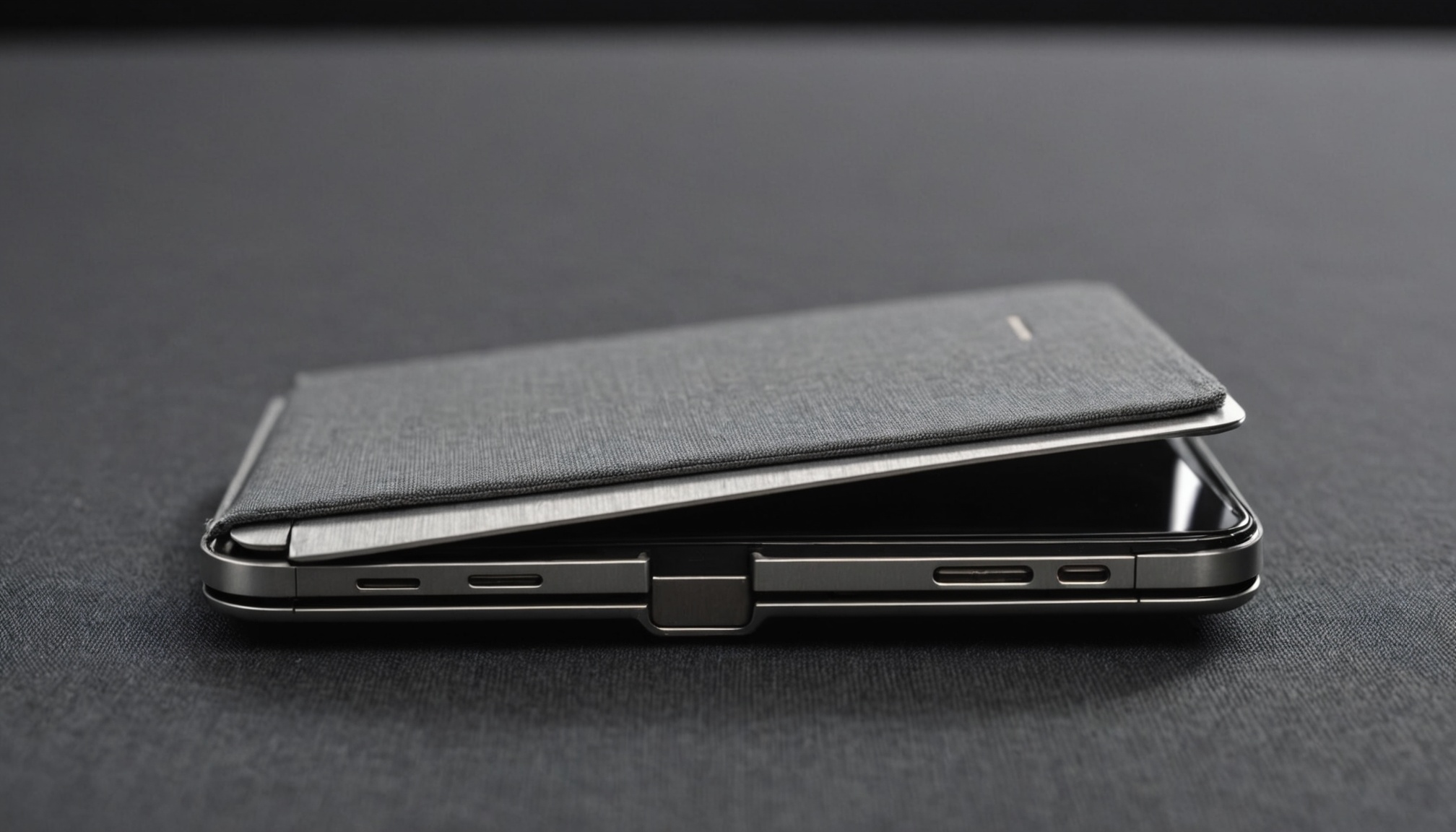
The "200,000 folds" line on a foldable spec sheet works out to roughly 5.5 years for someone who opens and closes the device 100 times a day. The figure is not marketing copy — it means the panel passed a third-party lab's repeated folding test — and equally it does not promise anything beyond that point. Foldable durability only makes sense when the fold count is read together with the cover window material, its thickness, the folding curvature and the ingress rating.
This piece works only from published manufacturer statements and press coverage, converting spec-sheet numbers into something usable for a purchase decision rather than passing judgment on any single device.
What does 200,000 folds mean in years?
According to the Samsung Display newsroom, the 1.4R foldable OLED with large-area UTG passed a 200,000-cycle folding test verified by the French certification body Bureau Veritas. Greened reported the same verification, noting that quality was certified as unaffected after 200,000 repeated open-close cycles.
The trouble is that 200,000 means nothing intuitively. Divided by daily open-close counts and converted to years — using 365 days per year — it looks like this.
| Opens per day | Days to reach 200,000 | Equivalent (years) |
|---|---|---|
| 30 | 6,667 | 18.3 |
| 50 | 4,000 | 11.0 |
| 80 | 2,500 | 6.8 |
| 100 | 2,000 | 5.5 |
| 150 | 1,333 | 3.7 |
| 200 | 1,000 | 2.7 |
At around 30 opens a day, 200,000 cycles sits well outside the practical life of the hardware. At 150 to 200 opens a day — the habit of unfolding for every notification — you reach the edge of the certified range in roughly three years. The important caveat is that 200,000 does not mean "it breaks here"; it means "it was verified this far." Certification rigs fold at a fixed speed and angle, so real-world variables like pocket pressure or grit in the hinge are not part of the test.
200,000 folds is not a life expectancy but the upper bound of the verified range. How many times a day you unfold is what converts that bound into years.
What matters on the spec sheet is less the number itself than whether a certifying body is named. A figure printed alongside Bureau Veritas or SGS rests on different evidence than one backed only by in-house testing.
UTG at 30㎛ versus 45㎛: what changes
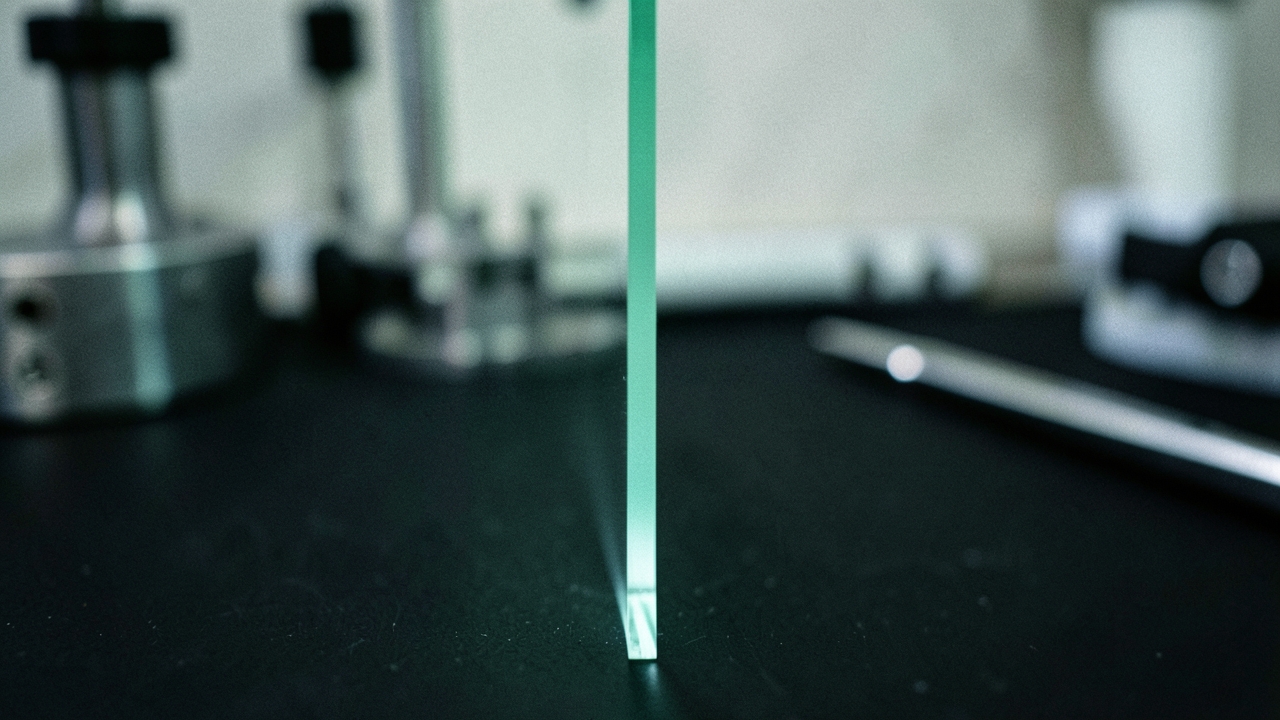
The top layer of a foldable display comes in two broad families: polyimide (CPI) film and ultra-thin glass (UTG). Per the Greened report, UTG is glass machined down to around 30 micrometres and put through a strengthening process so it bends while keeping the hardness and smooth feel of glass. Samsung Display described the material as "Tough, yet Tender" and said it had secured both PI and UTG cover windows to widen customer choice.
Thickness is not fixed across generations, though. Money Today reported that recent-generation UTG measures around 45㎛ and that the next generation is expected to hold that thickness while improving the crease. The gap between 30㎛ and 45㎛ is a factor of 1.5. Thicker glass resists point pressure and impact better, but at the same curvature it carries more bending stress — so a generation that thickens the glass has to absorb that stress through the hinge or the support layer.

On published specs alone, then, neither thinner nor thicker is straightforwardly better. Thickness is designed as a set with curvature and the support stack, and if the curvature is not printed alongside it, the thickness number on its own is not a basis for judgment.
1.4R curvature and titanium hinges — what sets the crease
Folding curvature is written as an R value. The commercialized 1.4R means the inner screen traces a 1.4mm radius when closed, introduced as the smallest curvature among commercial foldables. A smaller number folds flatter and cuts the closed thickness of the device, but for the same material it raises bending stress, and with it the risk of creasing and fatigue.
Managing that stress is the job of the hinge and the support layer. Money Today reported that recent generations replaced the plastic film beneath the panel with a titanium alloy film paired with an upgraded titanium plate. The titanium alloy film is described as roughly one third the thickness of a human hair while offering about 20 times the stiffness of the previous polymer film. On the hinge side, a second-generation titanium design distributes stress, and 3D liquid printing with dozens of repeated UV-curing passes is used to smooth microscopic undulations along the fold.
The crease, in other words, is not decided by the display material alone. It is the combination of four things: curvature (how flat it folds), cover window thickness (what takes the surface load), support layer stiffness (where the stress goes), and hinge precision (whether the fold line concentrates at one point). Spec sheets rarely print all four, so in practice the tell is whether curvature and support-layer material are listed at all.
What to actually check on the spec sheet
Narrowed to what a buyer can verify before purchase, the list looks like this. Ingress ratings in particular deserve a look at the digits. As BetaNews summarized, the 2021 foldable models shipped with IPX8 as the first water-resistant foldables — and the X in IPX8 marks a dust test that was never run. That is a different claim from a rating with a number in the dust digit, a distinction broken down digit by digit in the difference between IP48 and IP68.
| Spec item | Typical notation | What to check |
|---|---|---|
| Cover window material | UTG (ultra-thin glass) / CPI (polyimide film) | Glass favors feel and scratch resistance; film is weaker under localized pressure |
| Cover window thickness | 30–45㎛ | Meaningless alone — must be read with the curvature figure |
| Folding curvature | 1.4R, etc. | Smaller folds flatter: thinner when closed, higher stress |
| Fold endurance | 200,000 cycles | Whether a third-party certifier is named |
| Support layer / hinge material | Titanium plate, titanium alloy film | Metal or polymer support — this drives crease and pressure resistance |
| Ingress rating | IPX8 / IP48 | An X in the first digit means no dust test; a number means a particle-size standard applies |
| Panel spec | 7.6-inch, 2,208×1,768 | Unfolded resolution and size — and whether the cover screen is listed separately |
Samsung Display's supplementary certifications are worth noting too. The panel cut blue light emission to around 6.5% and was certified as an "Eye Care Display" by SGS, and the folding area was said to be 1.7 times wider than the earlier clamshell model. A long list of certifications does not by itself guarantee quality, but which items a maker submits for third-party verification shows where it is confident.
Who this suits, and who can wait a generation
On published specs, fold endurance is not the bottleneck for anyone opening the device around 50 times a day. That is the 11-year row in the conversion table above — the battery and the software support window both run out first. For that user the deciding factors move to unfolded screen size and closed thickness and weight instead. Generation-to-generation differences in those, and in price, split in 300,000-won steps as laid out in the Fold 8 versus Ultra comparison.
Waiting one more generation is the more reasonable call under three conditions. First, if your habit runs past 150 opens a day, putting you at the edge of the certified range within three to four years. Second, if you plan to use a model with an X in the dust digit in a dusty environment — grit entering the hinge is exactly the variable the folding test does not cover. Third, if the crease is decisive for your use case, such as reviewing drawings or photographs, in which case it is better to wait for a generation with improved curvature and support-layer material.