
The first number to check on a foldable phone is not megapixels or the camera but the folded thickness and weight. It is a device you carry folded in a pocket all day, so these two values decide the daily feel. The latest generation has slimmed to 8.9mm folded and 215g, but that does not mean it is as comfortable as a bar-type phone.
The items to actually check on the spec sheet come down to five lines: folded thickness and weight, hinge type, the real meaning of the water/dust rating, cover-screen ratio, and the screen area gained when unfolded. We examine what each means and which values are good signals, based on published specs.

Folded Thickness and Weight: The First Gate
According to the manufacturer's published specs, the latest large-screen foldable is 8.9mm folded, 4.2mm unfolded, and 215g (per the product page). That is about 10% lighter than the previous generation, and a public spec summary also records it as the thinnest and lightest configuration yet. Still, 8.9mm folded is thicker than a typical bar-type flagship (around the low 8mm range). With two panels and a hinge overlapping, that is an unavoidable physical limit.
At 215g, the weight is similar to or slightly heavier than a large bar-type phone. First-time foldable users often feel it is 'heavier than expected' less because of weight and more because of the in-hand bulk from the folded thickness. Gripping it folded in a store and checking the bulk in a front pocket is more accurate than reading the spec table alone.
Hinge and Crease: Why They Form and How Much They Shrank
The heart of a foldable is the hinge. As the part that folds the body and flexible display tens of thousands of times, durability comes first, so it inevitably gets somewhat thick. The industry is developing ultra-slim hinges around 2.5mm and composite-material hinges about 25% lighter than before, as reported by ET News. The thinner and lighter the hinge, the lower the overall thickness and weight.
The crease is not a defect but a physical property of a flexible display — what to check on the spec sheet is not 'is there no crease' but 'how was the crease reduced.'
The screen crease is something to manage, not eliminate. A flexible display cannot fold as fully as paper, so a crease forms along the fold line. Recent generations thickened the ultra-thin glass (UTG) and added reinforcement to the hinge to ease the crease, a public spec summary explains. In other words, the axis of solving creases is shifting from mechanical structure toward materials. When buying, it is realistic to check how much the fold catches on your fingertip and whether reflections stand out at certain angles, rather than the mere presence of a crease.

The '4' in IP48 Is Not Full Dust Protection
This is where the water/dust rating lulls you. The latest large-screen foldable is rated IP48. The trailing 8 is the water rating, meaning it withstands 1.5m of fresh water for 30 minutes while stationary under lab conditions per IEC 60529. The catch is the leading 4. Dust rating 4 only protects against solid particles 1mm or larger — not full dust sealing (rating 6). Fine dust and sand can enter through the hinge gap.
| Check item | What it means | Good signal |
|---|---|---|
| Folded thickness (mm) | In-pocket bulk | Under 9mm nears bar-type |
| Weight (g) | Long-use fatigue | Under 220g |
| Hinge material | Durability, thickness | Composite/reinforced hinge |
| Dust (IP first digit) | Dust-blocking level | 4 is not full fine-dust sealing |
| UTG thickness | Crease/scratch resistance | Generational improvement stated |
In short, IP48 withstands rain or hand-washing levels of water, but read it as needing hinge care at a sandy beach or dusty site. The accurate interpretation is not 'waterproof, so relax' but 'certain water is fine, certain dust is not.'
Unfolding Roughly Doubles the Screen Area
A foldable's real value lies in the screen area when unfolded. Per public specs, the cover screen is 6.5 inches (2520x1080, an elongated roughly 21:9 ratio), and the main screen is 8.0 inches (2184x1968, a near-square ratio). Computing area directly from the diagonal and aspect ratio makes the difference clear. Area is the diagonal squared times an aspect correction factor (r/(1+r-squared), where r is the width-to-height ratio).
| Screen | Diagonal | Aspect (w:h) | Estimated area |
|---|---|---|---|
| Cover | 6.5 in | about 2.33:1 | about 15.3 sq in |
| Main | 8.0 in | about 1.11:1 | about 31.8 sq in |
The calculation shows the main screen is about 2.08 times wider than the cover. The diagonal grew only 1.23x from 6.5 to 8.0 inches, yet the area doubles because the cover is an elongated 21:9 while the main is near-square, giving higher area efficiency per diagonal. This is where the extra money for a foldable pays off — the feel diverges from the cover screen in tasks where vertical information density matters, like web, documents, and multitasking. Interpret screen specs numerically with the same frame as the five lines to check on a spec sheet.

Who It Fits, and Who Should Wait
For users who often multitask documents, web, and video on the unfolded screen and want to merge tablet and phone into one, the doubled area is worth a lot. Conversely, if one-handed operation and pocket portability come first all day, the 8.9mm folded bulk and near-220g weight weigh on you daily. If your usage often exposes the phone to dust and sand while trusting only the water rating, account for IP48's dust limit.
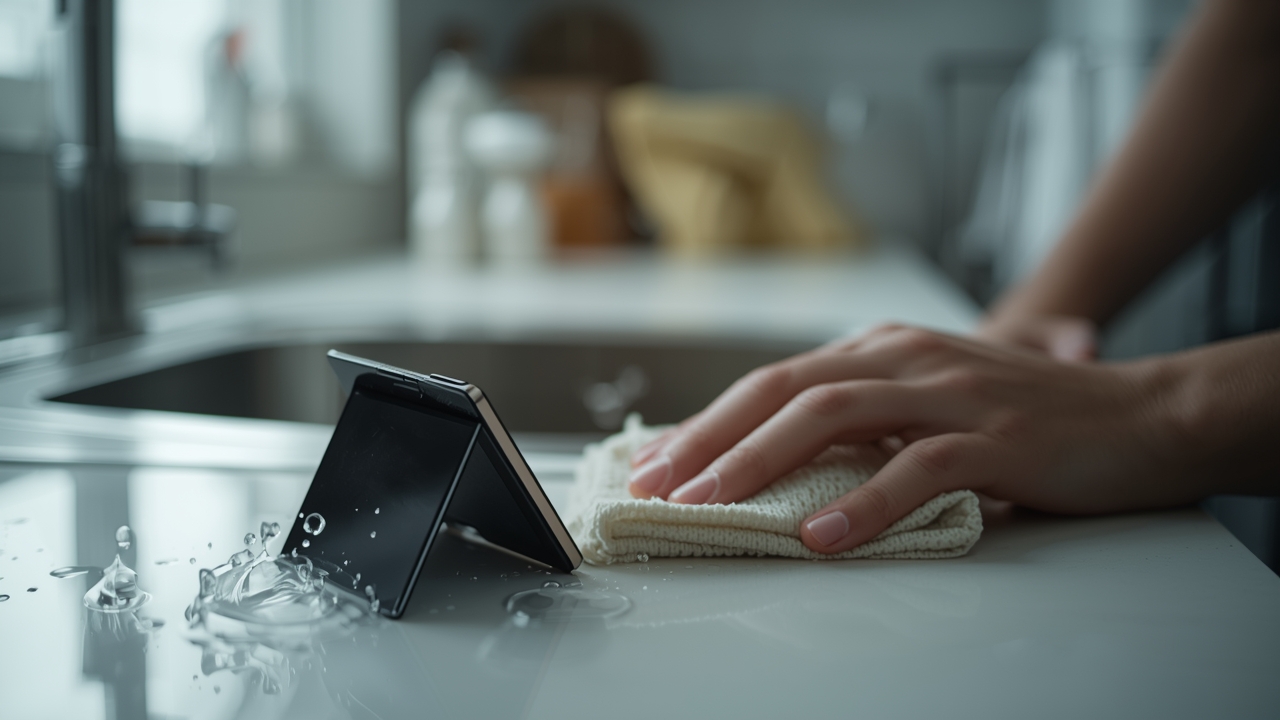
- Folded thickness/weight — grip it folded in a store and check pocket bulk.
- Hinge material and reinforcement — whether composite/reinforced structure is stated.
- IP first digit — remember 4 is not full fine-dust sealing.
- Cover vs. main aspect ratio — whether your actual apps need vertical information.
- UTG/crease improvement — whether generational gains are stated in the specs.