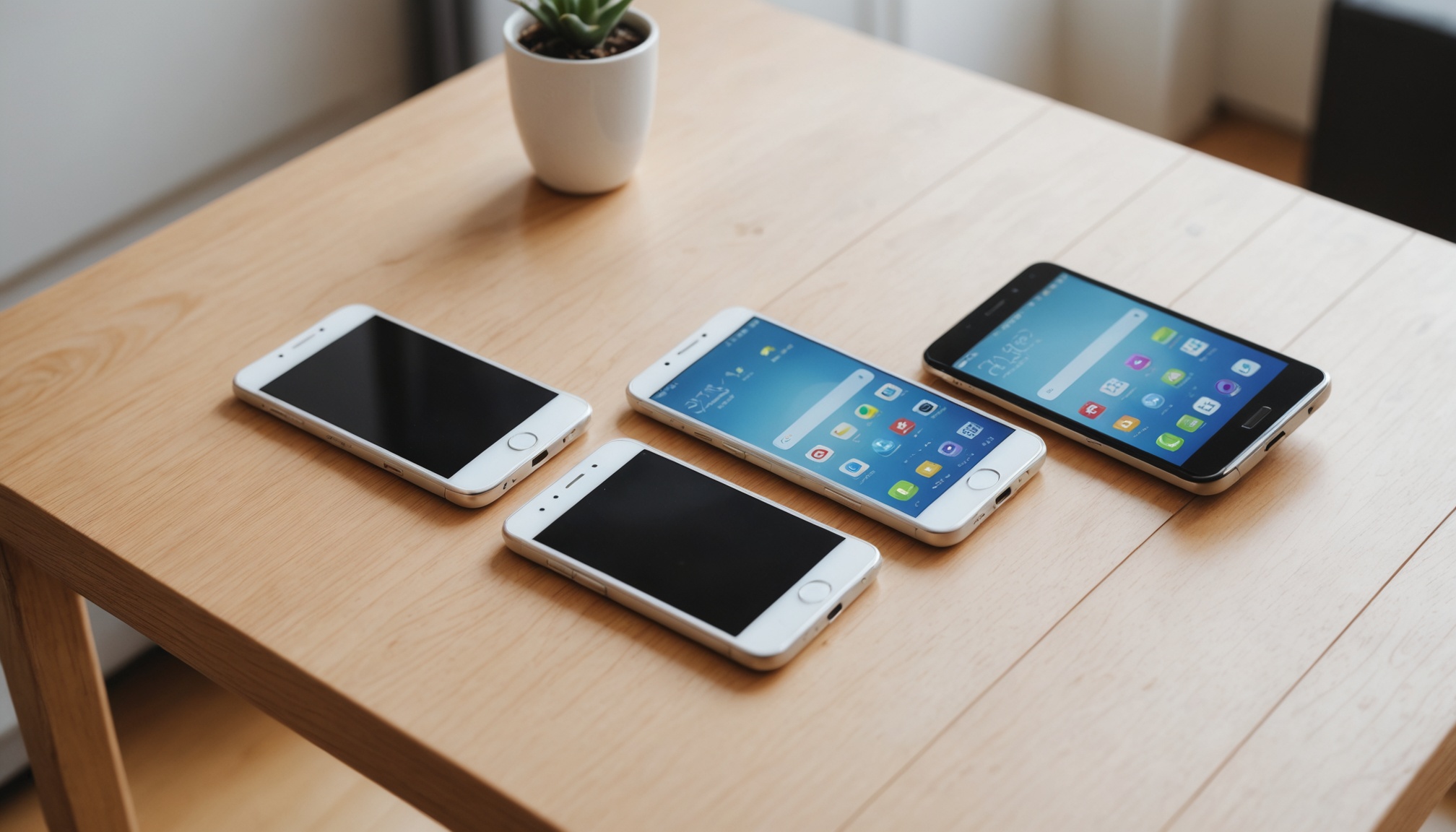
Samsung’s Galaxy Z Fold8 lineup, unveiled at the London Unpacked on July 22, is not one phone but a split into two. The Fold8 Ultra pairs an 8.0-inch main display with a 200MP camera and the Snapdragon 8 Elite Gen 5 (256GB, 2,577,000 KRW); the Fold8 adopts a new 7.6-inch, 4:3 form factor and drops weight to 201g (2,278,000 KRW). By the maker’s own spec sheet, the two aim in different directions — “bigger screen and top specs” versus “wider ratio and portability.” Which fits depends on what you do with the unfolded screen.
Add the clamshell Galaxy Z Flip8 (180g, Exynos 2600, 1,683,000 KRW) and, per Samsung’s announcement, the foldable range is a three-model lineup for the first time. This is not a hands-on review — it separates the two Fold models on the published spec sheet alone.
With the foldable lineup splitting into three, the choice is no longer “to fold or not” but “what do you unfold it for.”
What Split: The Spec Coordinates of the Two Fold8s
The Fold8 Ultra is the true successor to last year’s Fold7. From the Unpacked specs compiled by Inven, it carries an 8.0-inch (203.1mm) main display, 4.1mm unfolded thickness, 215g weight, a 200MP main plus 50MP ultra-wide camera, a 5,000mAh battery with 45W charging, and the Galaxy-tuned Snapdragon 8 Elite Gen 5. It keeps a one-hand folded size while pushing camera and chipset to the flagship top tier.

The Fold8, by contrast, is a new so-called “passport” form factor. Its 7.6-inch (193.2mm) main display uses a 4:3 ratio, closer to square when unfolded than the tall screens of prior Fold models. At 201g it is lighter than the Ultra, but its camera is a 50MP dual and its battery 4,800mAh — ceding the spec ceiling to the Ultra. Same “Fold8” name, two products with different goals.
| Item | Fold8 Ultra | Fold8 (wide) | Ref: Fold7 |
|---|---|---|---|
| Main display | 8.0-inch | 7.6-inch (4:3) | 8.0-inch |
| Weight | 215g | 201g | 215g |
| Unfolded thickness | 4.1mm | — | 4.2mm |
| Main camera | 200MP | 50MP | — |
| Battery | 5,000mAh | 4,800mAh | — |
| Chipset | Snapdragon 8 Elite Gen 5 | — | Snapdragon 8 Elite |
| Price (256GB) | 2,577,000 KRW | 2,278,000 KRW | — |
Three Places the Spec Sheet Actually Diverges
First is the screen ratio. Unlike the 21:9 cover-screen line that ran through the Fold7, the Fold8’s 4:3 main display favors tasks where vertical information density matters — documents, web, e-books. Video, on the other hand, gains black bars top and bottom. Even from specs alone, “a screen for seeing wide” and “a screen for seeing long” are different uses.
Second is camera resolution. The Ultra’s 200MP main has more headroom for high-resolution crops and 8K video than a 50MP sensor. Still, megapixels are not image quality; by the maker’s own spec sheet, sensor size and aperture must be read alongside it. Third is the chipset. The Snapdragon 8 Elite Gen 5, exclusive to the Ultra, is a top tier for on-device AI and thermal management, a different class from the Fold8 and Flip8.
The generational trend is also worth noting. Per Aju Business Daily, the Fold6 was 5.6mm unfolded and 239g; the Fold7 slimmed to 4.2mm and 215g, and the Fold8 Ultra continues at 4.1mm and 215g — a sign the thickness race has nearly hit its limit.
What Does the 300,000-KRW Gap Buy?
The price gap is 2,577,000 − 2,278,000 = about 299,000 KRW. Inside that 300,000 KRW sit the 200MP camera, the Snapdragon 8 Elite Gen 5, the 5,000mAh battery, and a 0.4-inch larger main screen. Choose the Fold8 instead and you get the wide 4:3 screen and 201g lightness while giving up the top-tier camera, chipset, and battery.

In short, the 300,000 KRW is the price of “top specs,” not of “a better form factor.” If the wide-screen form factor itself is the goal, the cheaper Fold8 may be the right answer. If flagship camera and performance come first, the 300,000 KRW is a reasonable top-tier option.
Who Each One Fits
- Fold8 Ultra — you prioritize camera quality and peak performance, and want the tall 8.0-inch screen for wide-ranging multitasking and video, and can absorb the 300,000-KRW step up.
- Fold8 (wide) — the wide 4:3 screen is the core of your use (documents, web, e-books), and you prize the 201g lightness and lower price.
- Galaxy Z Flip8 — you don’t need a large-screen foldable and want the clamshell form and portability around the 1,683,000-KRW mark.
- Those who can wait — if you already use a Fold7, the Ultra’s thickness/weight change is a marginal 4.2→4.1mm, so weigh whether the camera and chipset generation jump is truly needed.

The framework for reading a flagship spec sheet against prior and rival models is the same one laid out in Galaxy S26 vs. iPhone 17 spec comparison.