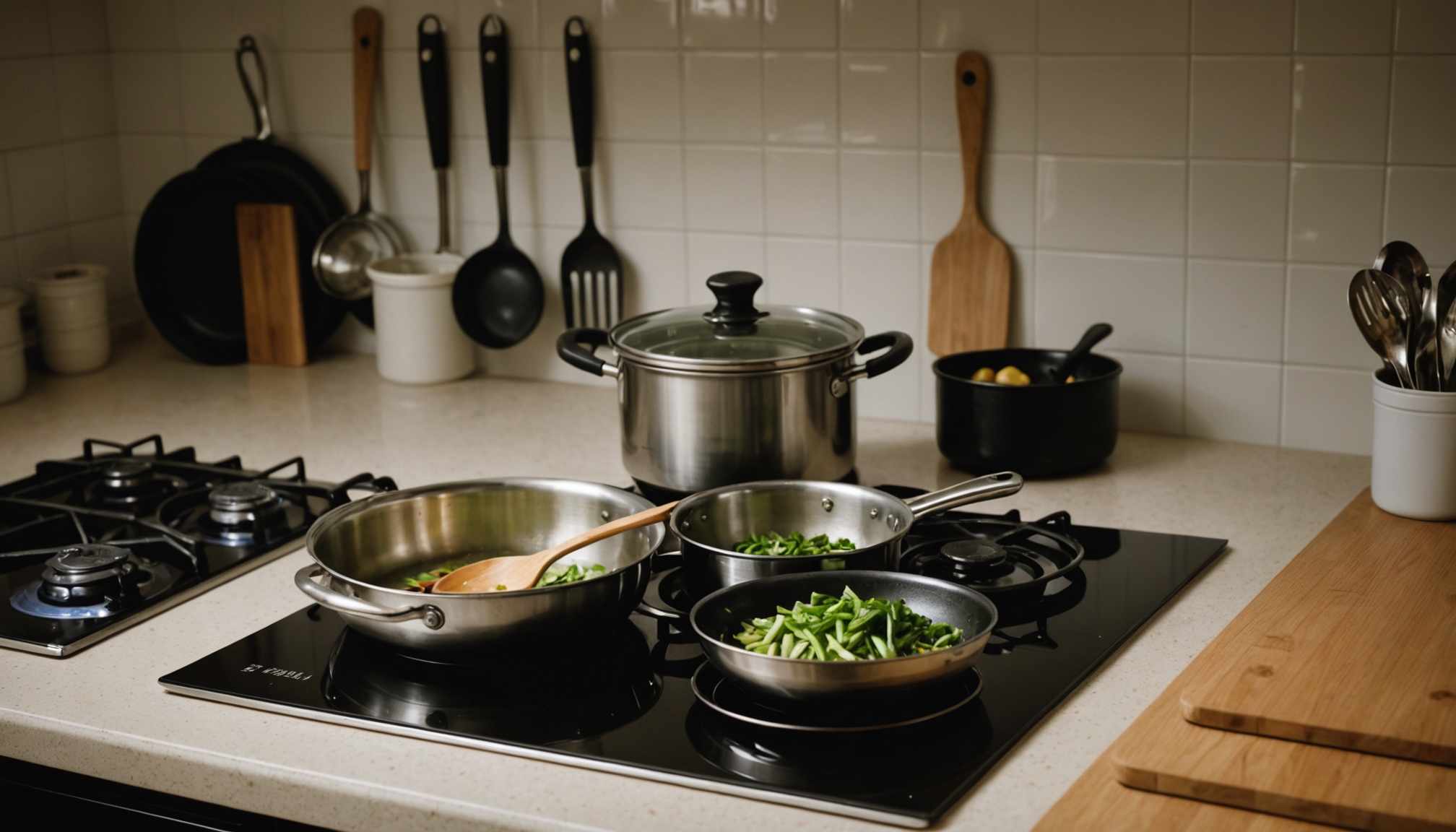
The practical difference between an induction hob and a radiant "highlight" hob comes down to one line: thermal efficiency. Published figures put induction at roughly 90% and radiant at 65-70%. The same meal therefore draws about 30% more electricity on a radiant hob — and how much that costs varies almost threefold depending on how many kilowatt-hours your household already burns each month.
The gap comes from how heat is made. Induction uses a high-frequency current around 25 kHz to generate a magnetic field, turning the cookware itself into the heating element. A radiant hob heats a coil beneath the surface, which warms the glass-ceramic top, which then passes heat to the pot. As Social Times lays out, that is two extra conduction stages, and the heat lost between them is the whole story.

90% Against 65%: What the Monthly Bill Actually Shows
Placing the published specifications side by side:
| Item | Induction | Radiant (highlight) |
|---|---|---|
| Heating method | Magnetic induction, cookware self-heats | Coil → ceramic surface → cookware |
| Thermal efficiency | About 90% | About 65-70% |
| Heating power at equal rated output | 1.8x | 1x (baseline) |
| Compatible cookware | Ferromagnetic only (steel, cast iron, enamel) | No restriction |
| Surface heating | Indirect, from pot residual heat | Directly heated by the coil |
The efficiency figures and the 1.8x power ratio come from a Korean cooktop performance comparison. For reference, a gas burner sits near 50%.
Turning efficiency into money requires fixing one variable. Here the constant is heat actually delivered into the pot: 2.0 kWh per day, roughly one hour at 2 kW of effective output. Whatever the technology, the pot receives the same energy. What the wall socket gives up is that figure divided by efficiency.
| Item | Induction (90%) | Radiant (65%) | Radiant (70%) |
|---|---|---|---|
| Heat delivered to cookware (kWh/day) | 2.00 | 2.00 | 2.00 |
| Electricity actually drawn (kWh/day) | 2.22 | 3.08 | 2.86 |
| Monthly consumption over 30 days (kWh) | 66.7 | 92.3 | 85.7 |
| Extra versus induction (kWh/month) | — | +25.6 | +19.0 |
Most comparisons stop here. But 25.6 kWh has no fixed price. Korean residential electricity is billed on progressive tiers, so what matters is which tier the extra consumption lands in. Applying the low-voltage off-peak unit rates from the KEPCO residential tariff table — 120.0 won for tier 1, 214.6 won for tier 2, 307.3 won for tier 3 — and adding 10% VAT plus the 3.7% electricity industry fund gives this.
| Household monthly usage | Applicable rate (KRW/kWh) | Monthly difference for 25.6 kWh (KRW) | Annualised (KRW) |
|---|---|---|---|
| Up to 200 kWh (tier 1) | 120.0 | 3,490 | 41,900 |
| 200-400 kWh (tier 2) | 214.6 | 6,250 | 75,000 |
| Above 400 kWh (tier 3) | 307.3 | 8,940 | 107,300 |
The identical 25.6 kWh costs anywhere from about 42,000 to 107,000 won a year. Heavier electricity users get the efficiency back as real money; a single-person household sitting inside tier 1 has little reason to choose a hob on running cost alone. Taking the conservative 70% figure for radiant, the gap narrows to 19.0 kWh, or about 4,640 won a month in tier 2. Either way it is small next to how far a summer air conditioner pushes a household up the tiers.
The efficiency gap between cooktops is settled not in kilowatt-hours but in tariff tiers. The same 25.6 kWh costs 3,490 won in tier 1 and 8,940 won in tier 3.
Households straddling a boundary need extra care. A home using 390 kWh that crosses 400 kWh with a radiant hob pays the tier 3 rate on the excess only, producing a blend of the middle and top rows. Reading the last three bills to see which row applies is the accurate starting point.
What Induction Refuses and Radiant Accepts
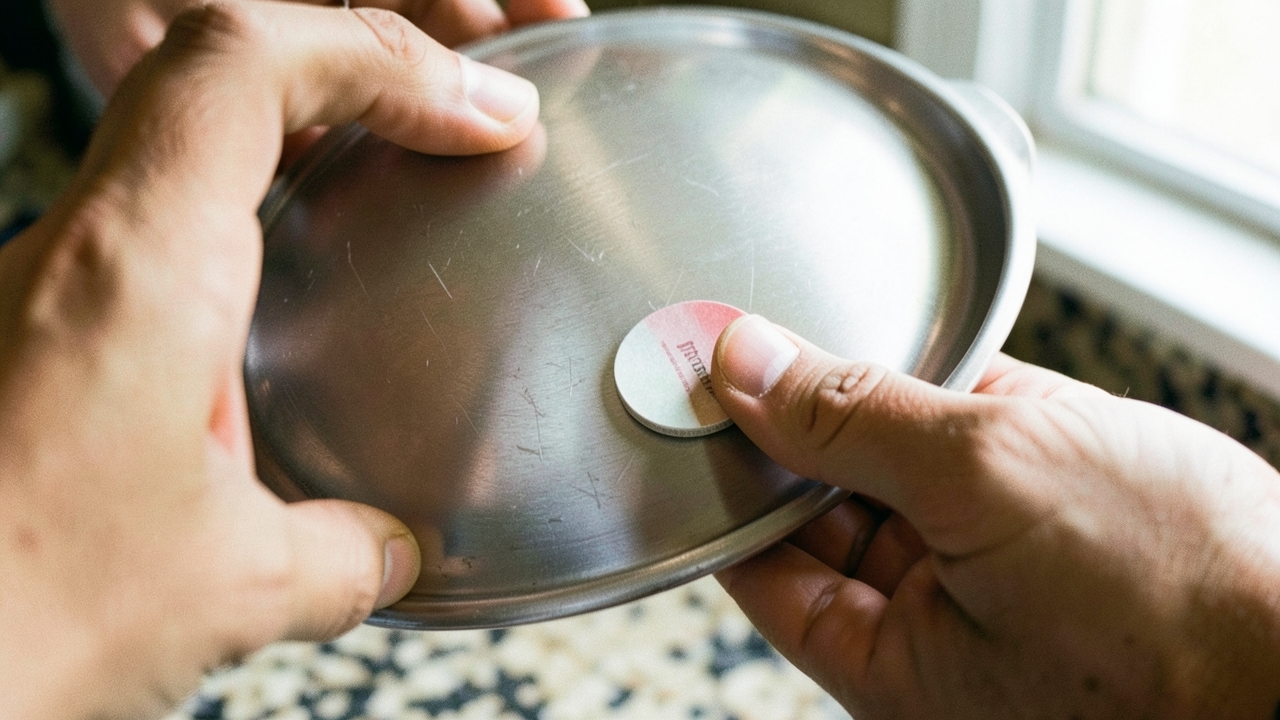
The price of efficiency is cookware. Induction only heats ferromagnetic bases, which rules out glass, aluminium, copper and traditional earthenware pots. The test is simple: if a magnet sticks to the base, it works. Some stainless grades are non-magnetic, so a magnet beats reading the material label.
Radiant hobs carry no such limit. Because the surface itself heats, material is irrelevant, and a kitchen that regularly uses earthenware or stone plates gains real practicality in exchange for efficiency. Unit prices also tend to be lower. Conversely, if switching to induction means replacing pots and pans, that outlay belongs in the calculation. Put the 42,000-107,000 won annual saving next to the cost of new cookware and the payback period appears.
Why Power Drops When All Three Zones Run
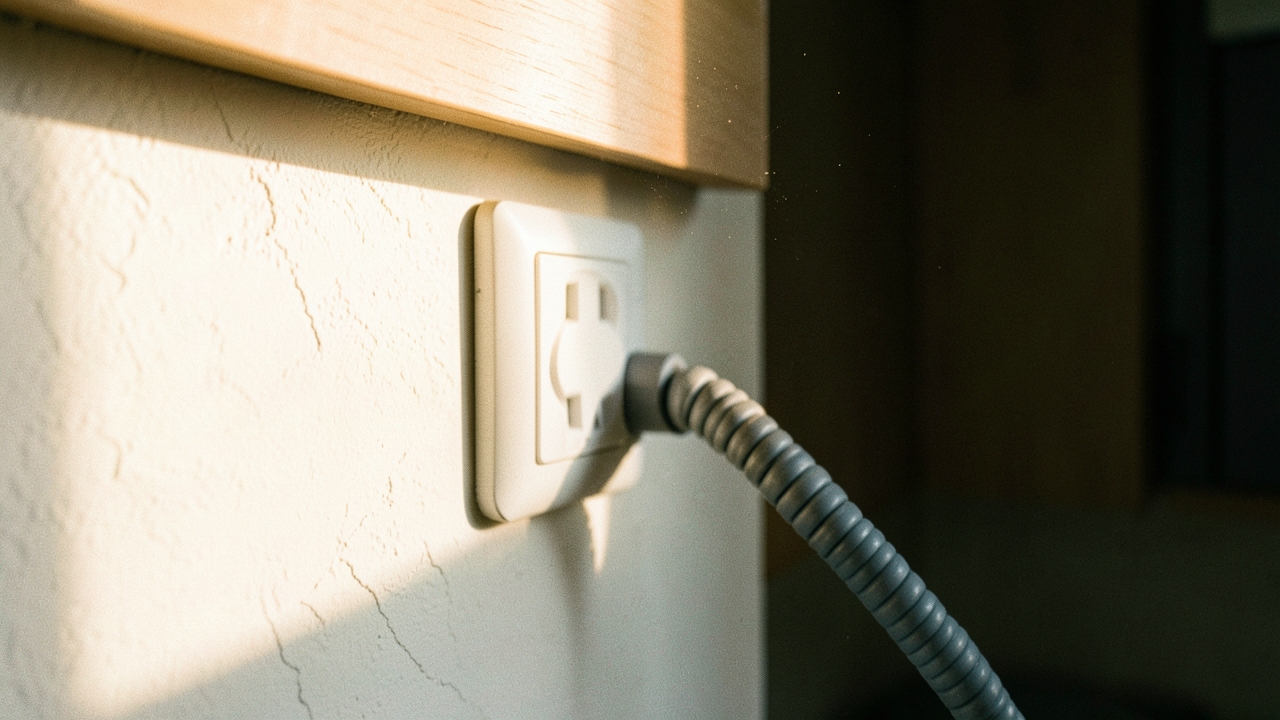
This is the specification line most buyers miss. A Korean domestic outlet is rated for 3,300 W, while the combined rated output of three cooking zones easily exceeds that. Appliances therefore throttle themselves so total draw stays under the ceiling: a single zone may reach level 9, but running two at once caps them around level 8.
Published maximum output is a single-zone figure. If your habit is a stew on one zone while stir-frying on another, what matters is not the headline wattage but how the appliance divides power. Some models relax the limit on a dedicated circuit, so installation conditions belong in the same decision.
Induction Surfaces Get Hot Too: 85°C Residual Heat
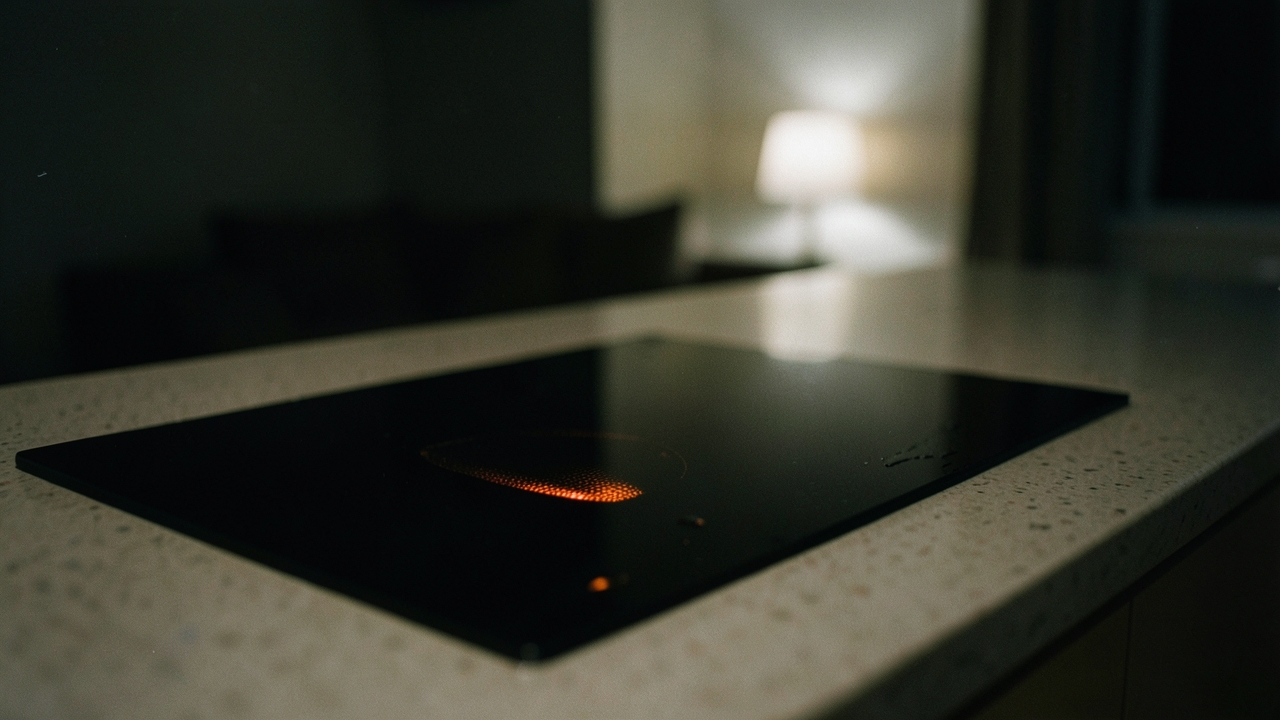
The claim that induction is safe because the surface does not heat is only half right. Testing by the Korea Consumer Agency found induction surfaces averaging above 85°C after cooking, taking more than 26 minutes to fall to 40°C — heat conducted back down from the pot.
Waiting for the residual-heat indicator to clear is still the rule if children are around. Radiant hobs are worse on this count, since the coil heats the surface directly, so both the peak and the duration are greater. If the plan is to use leftover heat for a final simmer, radiant helps; if safety comes first, induction wins by a margin, not by a category.
Who Each One Suits
- Induction fits households above 300 kWh a month, cooking often, that already own or will buy magnetic cookware. In tier 3 the annual saving of over 100,000 won funds the switch
- Radiant fits kitchens that lean on earthenware, glass or aluminium, sit inside tier 1, and prioritise a lower purchase price. At around 42,000 won a year the saving rarely overturns the price difference
- Wait if every pot needs replacing and cooking is infrequent — replacement cost outruns the saving and the payback stretches out
Three things to check before buying: monthly usage on the last three bills, whether the kitchen outlet sits on a dedicated circuit, and whether a magnet sticks to the pots you own. If the efficiency label itself is unclear, read the Korea Energy Agency efficiency management programme alongside how to convert an efficiency grade into an annual bill.