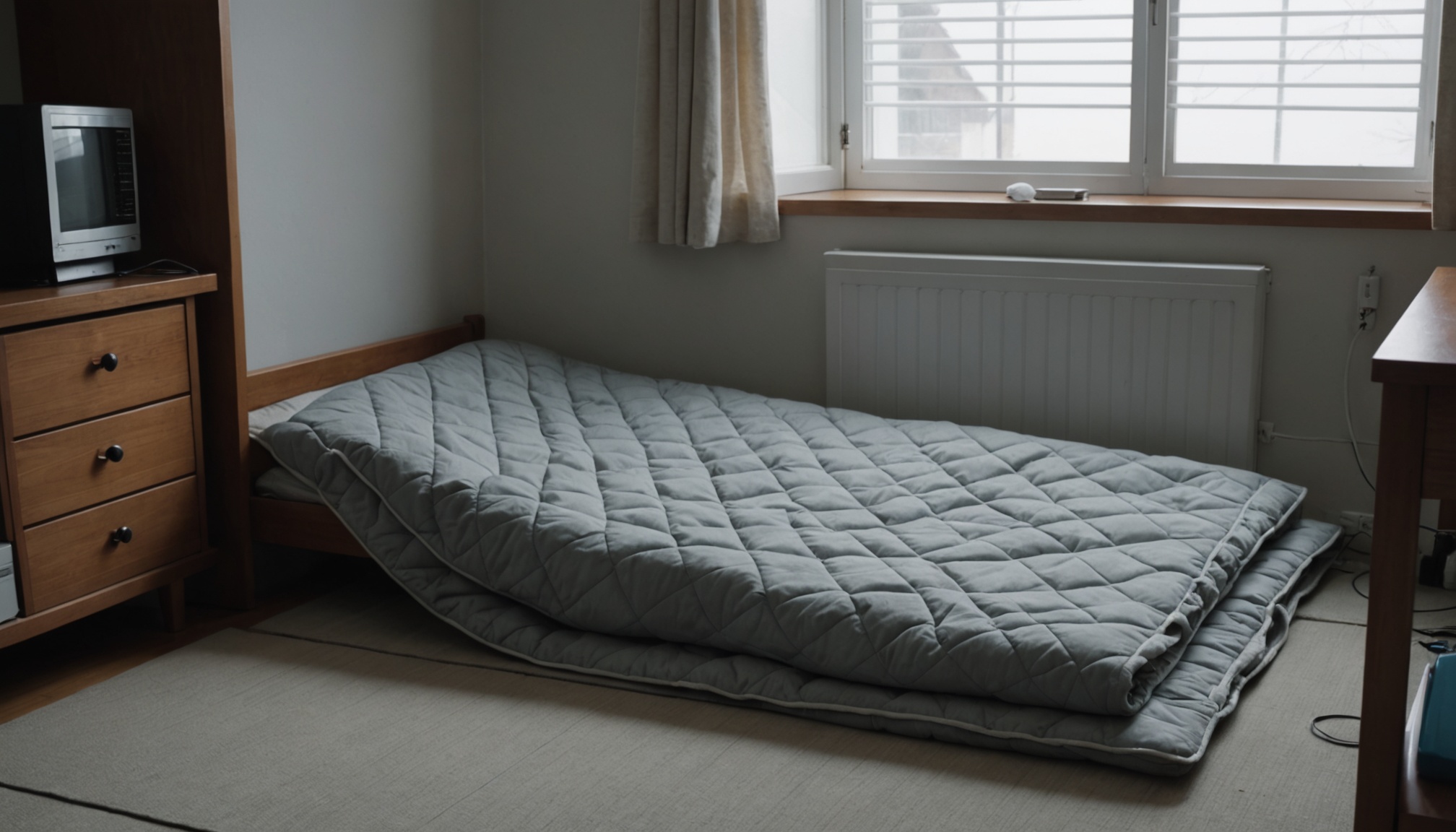
A two-person electric heating mat rated at 150W, run eight hours a day, draws roughly 18kWh over a month. In a household already using 150kWh a month, that adds about 2,700 won to the bill. Under the same conditions a two-person water-circulating mat rated at 300W draws about 28.8kWh, or somewhere near 4,400 won. The gap in rated power is twofold, but the gap in actual cost is far narrower — and even that is dominated by how much electricity the home was already using.
Rated power is the figure the heater draws at full output. A mat cycles on and off once it reaches its set temperature, so average draw sits below the rating. Multiplying the spec-sheet wattage by 24 hours always overstates the result. The calculation below states the duty cycle first, then applies the utility tariff on top.
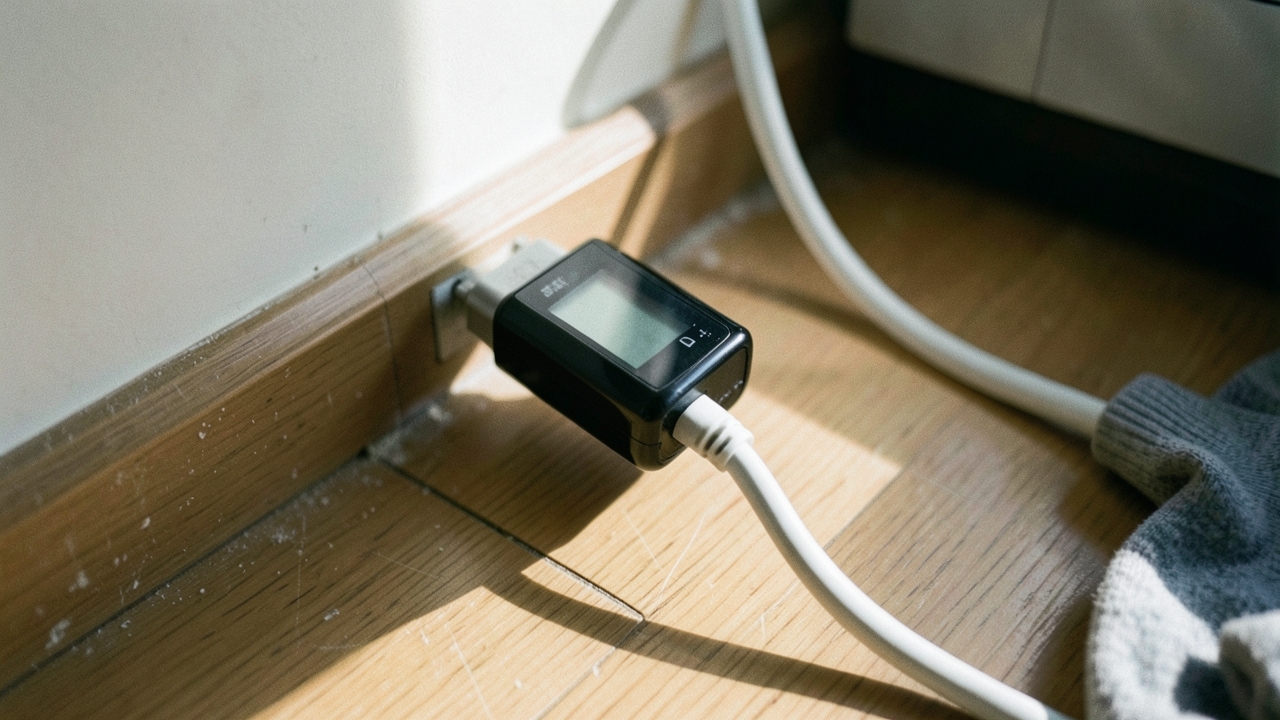
Three steps from rated watts to a monthly bill
There are only three. First, multiply rated power by a duty cycle to get average draw. Second, multiply average draw by daily hours and number of days to get kWh. Third, multiply those kWh by your household's marginal rate. Duty cycle varies with the product, the insulation and the room temperature, and manufacturers do not publish it, so the figures here assume 50% for wire-element mats and 40% for water-circulating mats. A water mat runs its boiler near full output during preheating and then falls back to mostly pump load once the target temperature is reached, which is why its average duty cycle typically lands below that of a wire mat.
| Product (rated power) | Assumed duty cycle | Average draw (W) | 8 hours a day (kWh) | Per 30 days (kWh) |
|---|---|---|---|---|
| Single heating pad, 60W | 50% | 30 | 0.24 | 7.2 |
| Two-person electric mat, 150W | 50% | 75 | 0.60 | 18.0 |
| Two-person water mat, 300W | 40% | 120 | 0.96 | 28.8 |
| Electric room heater, 1,000W | 100% | 1,000 | 8.00 | 240.0 |
The last row is the benchmark. While mats consume 7 to 29kWh a month, a resistive room heater burns 240kWh. Mats feel cheap not because they are efficient but because they warm only the surface a body touches rather than the air in the whole room. The same logic governs cooking appliances, and the arithmetic follows the same skeleton as the thermal-efficiency comparison between induction and radiant cooktops.
Where the two designs diverge
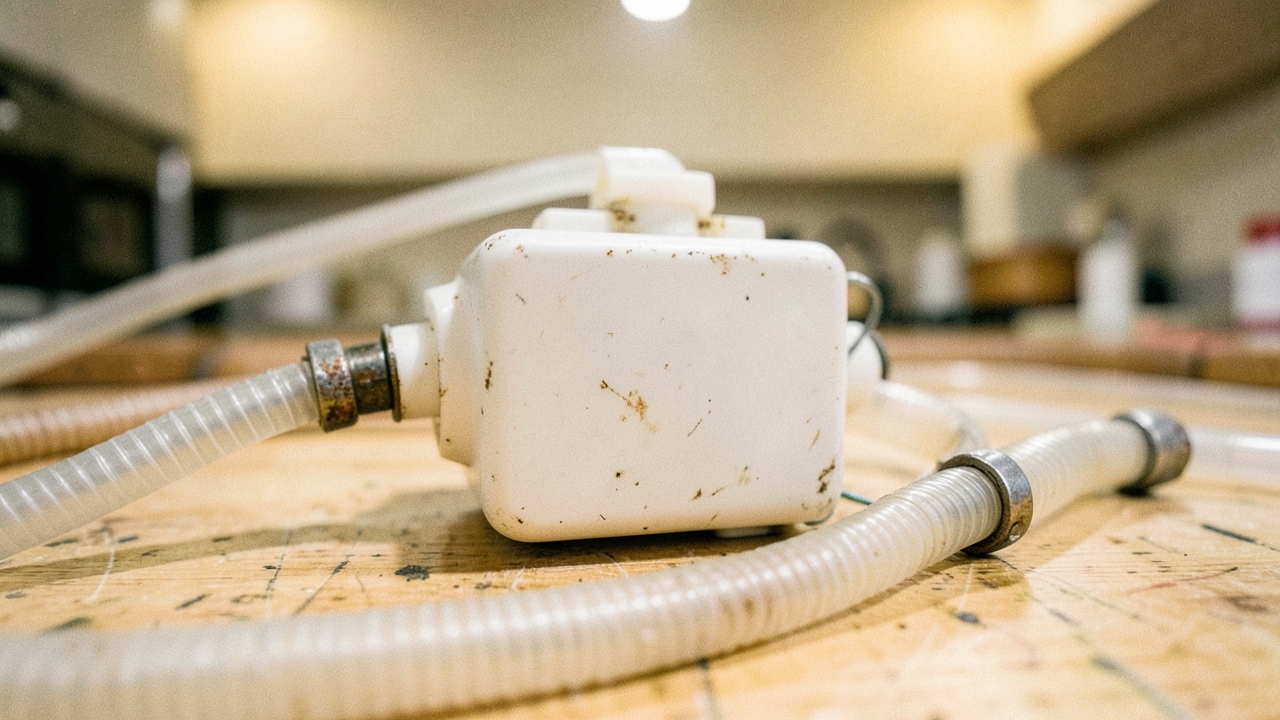
A wire-element mat runs current through heating wire laid inside the pad. The design is simple, the rating is low, it warms quickly and standby draw is small. A water mat instead uses a separate boiler unit to heat water and a pump to circulate it. It concentrates power during the preheat phase, then settles into maintaining temperature and driving the pump. The 300W rating describes the preheat phase; steady-state draw is far below it.
On cost alone the wire mat wins, but the two products separate on grounds other than cost. Based on published specifications:
- Lower rated power and roughly half the monthly kWh
- No boiler or hoses, so it is thin and folds away easily
- Reaches temperature quickly with fewer failure points
- Concentrates power draw during the boiler preheat phase
- Adds water refills, hose leaks and pump noise as maintenance items
- The boiler unit takes weight and storage space
In exchange, water mats carry no heating wire, which removes the electromagnetic-field question, and heat carried by water spreads more evenly. Neither is categorically better. The real choice is what to trade for a cost gap of roughly 2,000 won a month: maintenance convenience, or how the heat is delivered.
Why the same mat costs 2.4 times more in one home
The kWh a mat consumes is fixed, but the price attached to those kWh is not. Residential electricity in Korea is charged on progressive tiers, so every additional kWh is billed at the highest tier the household has already reached. As Ajunews reported, low-voltage residential energy charges run 120 won for the first tier, 214.6 won for the second and 307.3 won for the third; on top of that come a climate-environment charge of 9 won per kWh and a fuel-cost adjustment of 5 won per kWh, then 10% VAT and a 3.2% electricity industry fund levy. Per the KEPCO residential tariff table, the tier boundaries sit at 300kWh and 450kWh during July and August, and at 200kWh and 400kWh for the rest of the year — which is the mat-using season.
Multiply those together and the effective marginal rate comes out at 151.7 won in tier one, 258.8 won in tier two and 363.7 won in tier three. Applying the consumption from the first table:
| Existing monthly use (Sept–June) | Tier applied to the increment | Effective marginal rate (won/kWh) | Electric mat +18kWh | Water mat +28.8kWh | Monthly gap |
|---|---|---|---|---|---|
| 150kWh | Tier 1, 120 won | 151.7 | 2,730 won | 4,369 won | 1,639 won |
| 300kWh | Tier 2, 214.6 won | 258.8 | 4,658 won | 7,453 won | 2,795 won |
| 420kWh | Tier 3, 307.3 won | 363.7 | 6,547 won | 10,475 won | 3,928 won |
What sets a mat's electricity cost is not the mat but the household meter. The same electric blanket costs 2,730 won a month in one home and 6,547 won in another.
A household using 420kWh a month that adds a water mat clears 10,000 won. A one- or two-person household in the 150kWh band pays around 4,400 won even with the water mat. Rather than agonizing over which mat is cheaper, it matters far more to check whether your home sits near the 400kWh boundary. If gas heating runs alongside it, put the efficiency gap between condensing and conventional boilers next to this to see total heating cost.
What to check on the spec sheet: certification and low-temperature burns
Accident statistics give a sharper buying criterion than the electricity bill. According to The Public, a consumer safety alert from the Korea Consumer Agency and the Fair Trade Commission counted 4,154 heating-product incidents reported to the national injury surveillance system over 2020 to 2024. Fire and overheating accounted for 2,043 cases (49.2%) and product defects for 1,501 (36.1%). By product, electric mats and pads led with 2,666 cases (64.2%), followed by water mats at 684 and electric heaters at 276.
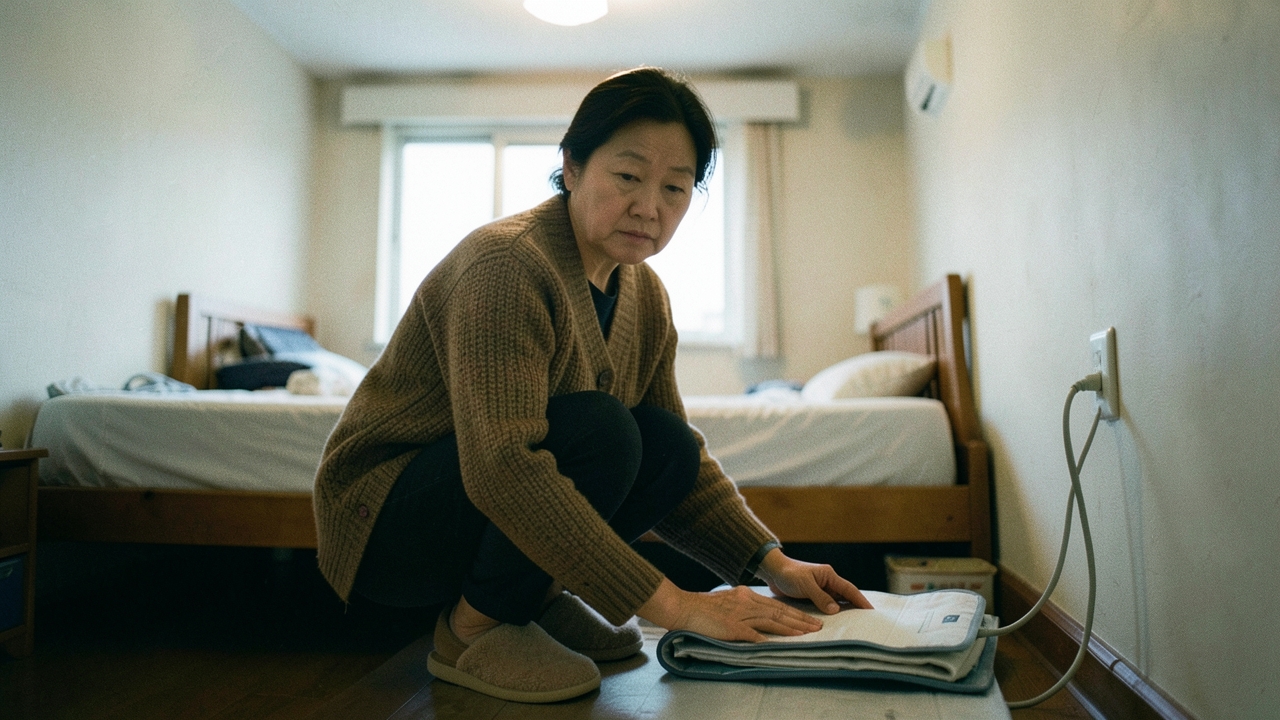
The injury pattern is the part worth reading twice. Of 579 recorded physical injuries, 494 (85.3%) were burns. On mats these are mostly low-temperature burns. Even at temperatures in the low forties Celsius, prolonged contact on the same spot damages deeper skin layers, and because it never feels hot the damage progresses during sleep. Two of the agency's prevention points are directly actionable: buy KC-certified products, and never lay a latex mattress or thick bedding over an electric mat, because trapped heat leads to overheating.
That fixes what to look for on the spec sheet — whether a KC certification number is printed, how many temperature steps the controller has and whether it cuts off automatically, and for water mats whether the refill interval and leak cutoff behavior are stated. If electromagnetic fields are a concern, look for the separate EMF certification mark issued alongside KC.

Who it fits, and who should wait
- A wire-element mat fits households that regularly pass 400kWh a month, small rooms where the mat gets folded away at the end of the season, and anyone unwilling to add maintenance chores.
- A water mat fits one- or two-person households in the sub-200kWh band, buyers who want no heating wire in direct contact, and anyone with space for the boiler unit and patience for refills.
- Wait on any product that omits rated power from its specifications or shows no KC certification number, and on any that will not publish its temperature steps and automatic cutoff conditions. The risk visible in the accident data outweighs the cost difference.
- One last check before buying — pull the monthly kWh figure off the last three electricity bills. Which row of the table above that number lands on affects the cost more than the choice of mat does.