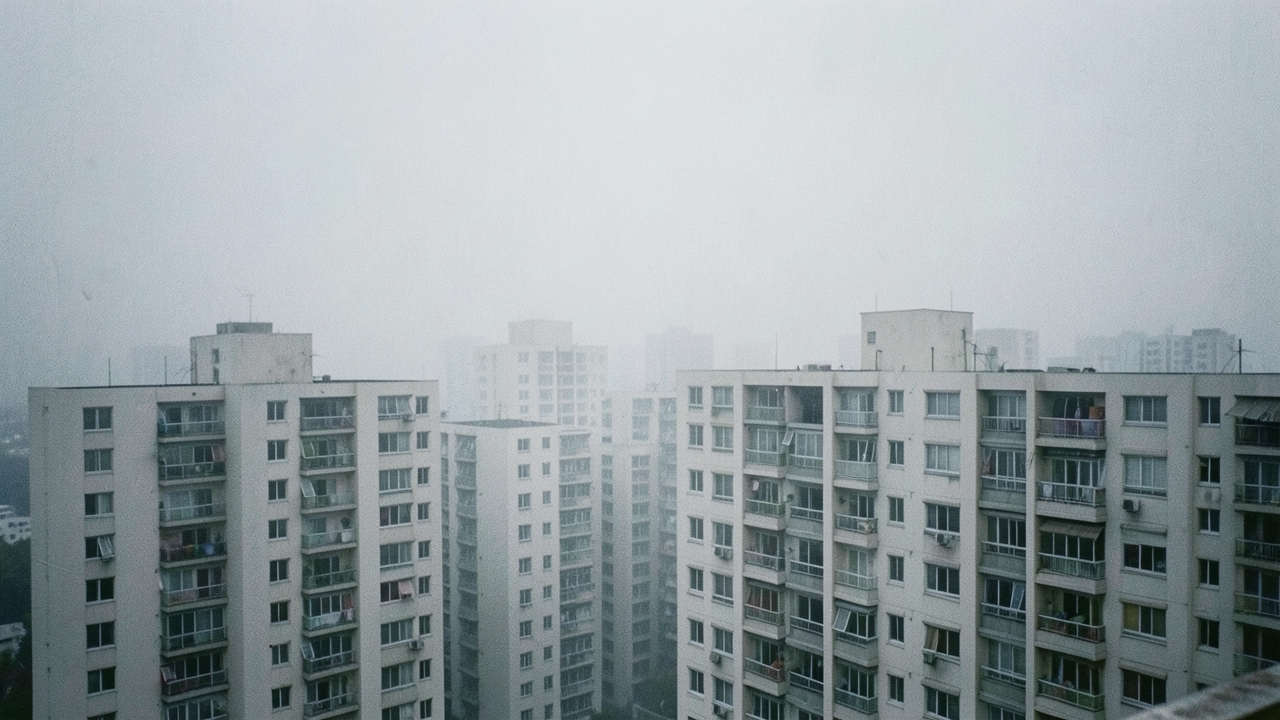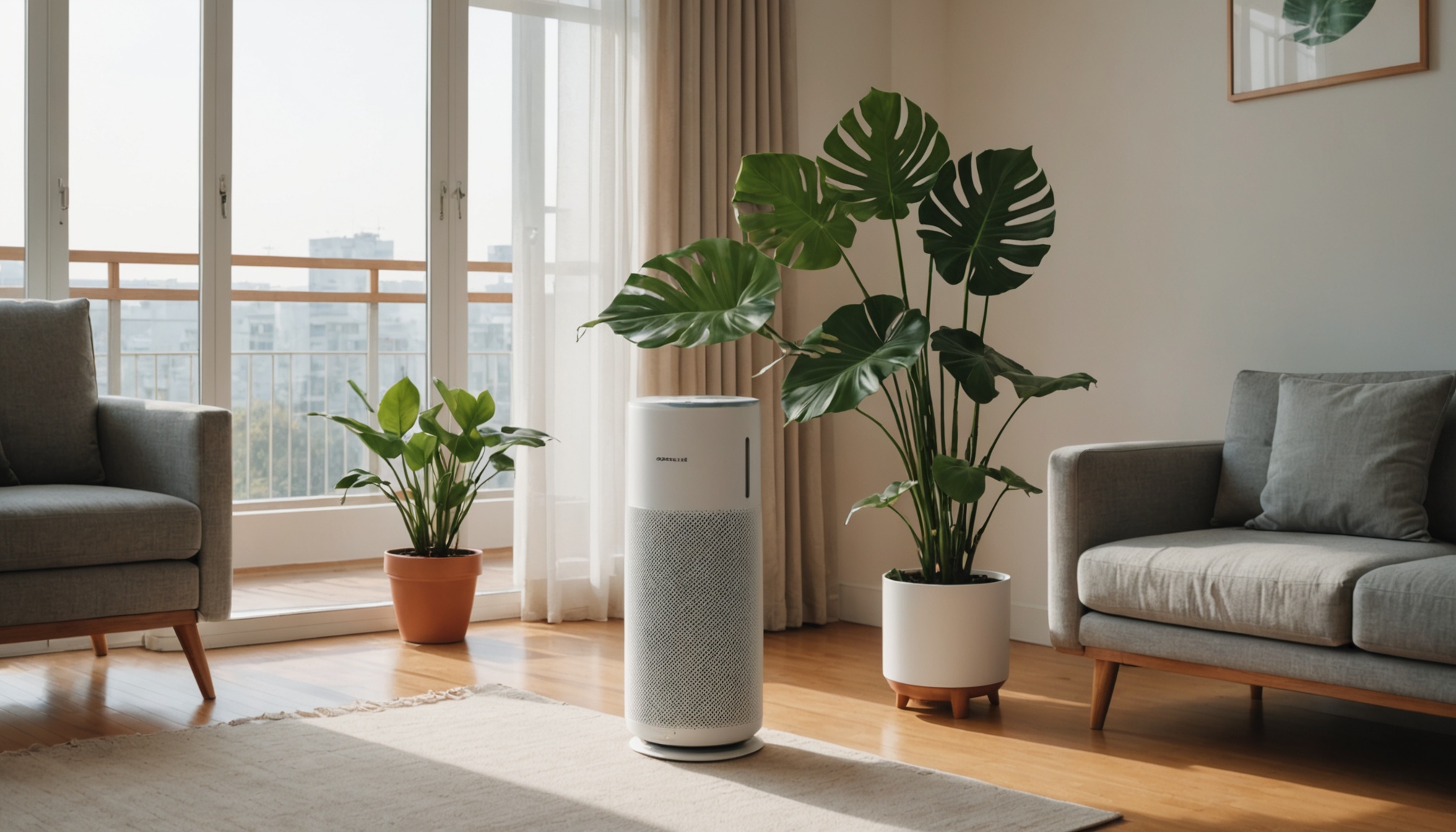
The rated coverage area printed on an air purifier box is not the floor area of a home it can handle. It is a performance figure measured in a sealed test space of roughly 30 cubic metres, run at maximum fan speed for 20 minutes, then converted into an area. In testing published by the Korea Consumer Agency through Consumer24, eight units rated between 34.0 and 47.2 square metres — 10.3 to 14.3 pyeong, the Korean unit of about 3.3 square metres.
So handing an entire 30-pyeong apartment to a unit marketed as a "30-pyeong model" does not hold up. The test runs one closed room at full power. A real living room has open doors, people moving through it, and a fan usually turned down because of noise. The published test conditions are the reason the arithmetic has to be redone.
Where the rated area comes from
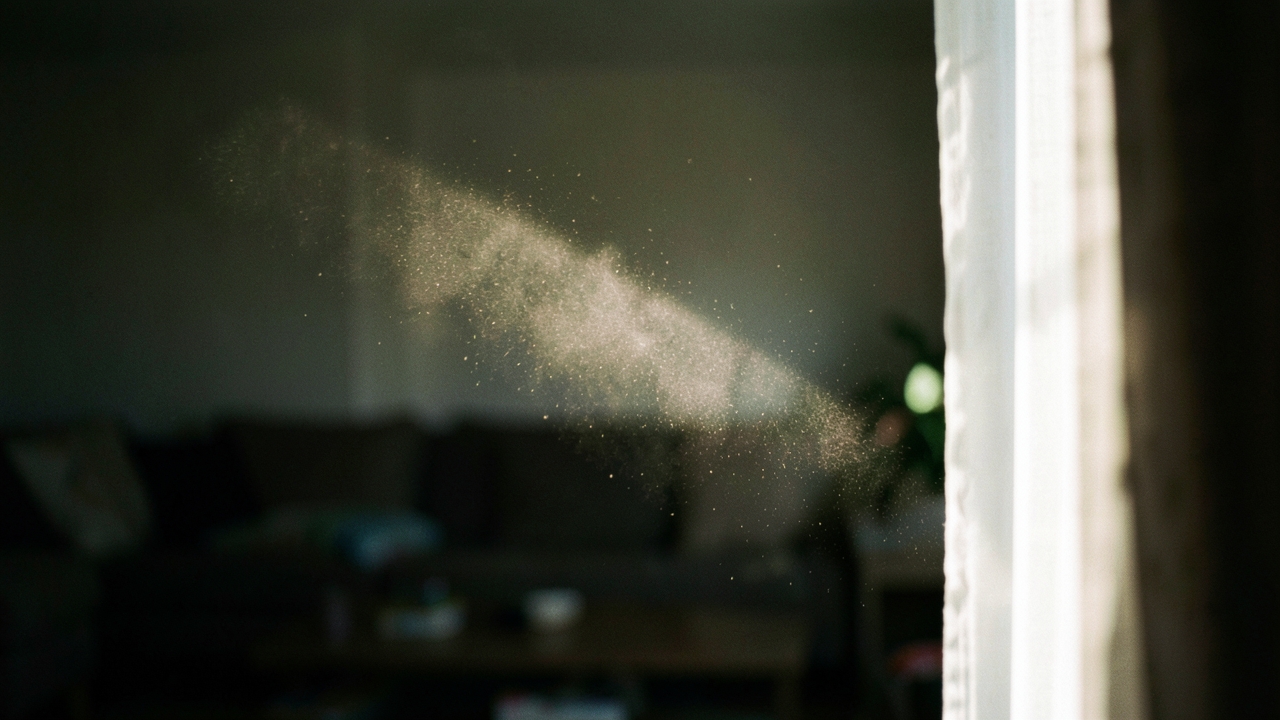
Measurement starts with CADR, the clean air delivery rate — how many cubic metres of purified air a unit produces per minute. Korean testing expresses it in m³/min. The Consumer Agency test targeted particles 0.3 micrometres across, ran units at maximum fan speed for 20 minutes in a space of about 30 m³, and converted the removal performance into an area figure.
The conversion factor used in Korea to turn CADR into rated area is 7.7. A Korean appliance guide documents multiplying CADR by 7.7 to obtain the rated area. Working the Consumer Agency figures backwards, 34.0 m² corresponds to a CADR of roughly 4.4 m³/min and 47.2 m² to about 6.1 m³/min.
To convert rated area into pyeong, divide by 3.3058. The Korea Consumer Agency recommends buying a unit rated for 1.3 times the space actually being treated, and the air purifier industry association recommends 1.5 times, because fresh pollutants enter through doors and windows and few people run the fan flat out. Applying both published margins gives the following.
| CADR (m³/min) | Rated area (m²) | In pyeong | With 1.3x margin (m²) | In pyeong |
|---|---|---|---|---|
| 4.4 | 33.9 | 10.3 | 26.1 | 7.9 |
| 6.1 | 47.0 | 14.2 | 36.2 | 10.9 |
| 8.0 | 61.6 | 18.6 | 47.4 | 14.3 |
| 10.0 | 77.0 | 23.3 | 59.2 | 17.9 |
| 13.0 | 100.1 | 30.3 | 77.0 | 23.3 |
Most of the eight tested units sit near the first two rows. As labelled, that is 10 to 14 pyeong; with the 1.3x margin applied, roughly 8 to 11 pyeong — a single room.
Why apartment pyeong and purifier pyeong are different units
The 30 pyeong quoted for a Korean apartment is supply area, which includes shared space such as stairwells and corridors. An 84 m² exclusive-use unit is commonly called 34 pyeong for that reason. Even counting exclusive-use area alone, the living room and kitchen together take up far less than the headline number. The same mismatch — treating floor area as if it were a performance unit — shows up in this conversion of dehumidifier capacity into litres per pyeong.
The larger issue is that a purifier operates in open space, not test conditions. A 30-pyeong apartment with every door open is not one large room but a volume in which air keeps mixing and new pollutants keep arriving. Rated area, a sealed-chamber figure, does not describe that state.
Judged on published specifications, there are two workable approaches: place one unit rated 77 m² or more — CADR of at least 10 m³/min — in the living room and keep bedroom doors shut, or split duties between a living-room unit and a smaller bedroom unit. The second is not a matter of adding the two rated areas together; it works because each closed room is handled separately.
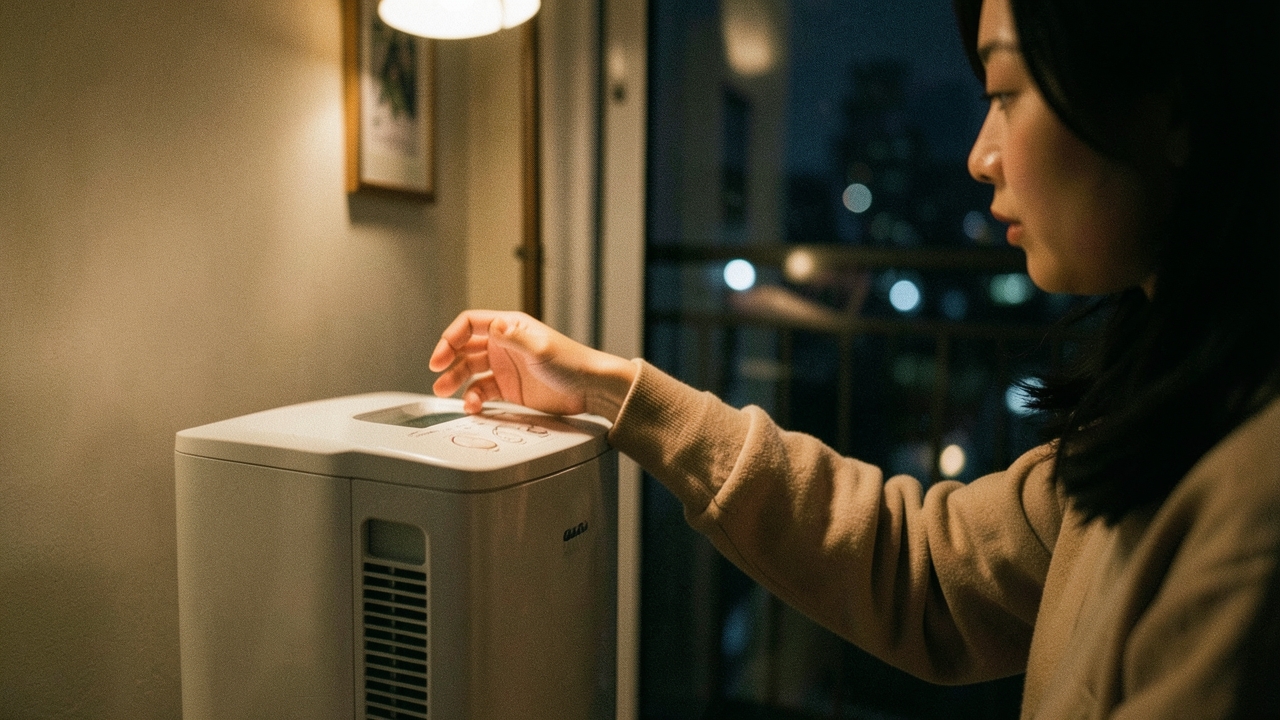
Rated area is the number for one room with the door shut. It is printed in the same unit as a home's floor area, but it is not measuring the same thing.
Units rated 200 m² or under carry an efficiency grade
Rated area is a declared figure, not a marketing line. According to Kmecnews and Electimes, from March 2020 the energy efficiency grade labelling requirement was extended to air purifiers rated at 200 m² or less. Manufacturers and importers must have consumption measured by an accredited laboratory and file the result with the Korea Energy Agency before shipment or customs clearance. That means a catalogue figure can be checked against the filed one.
Where grades differ, running costs differ. In the Consumer Agency test, annual energy cost ranged from 8,000 to 16,000 won — a factor of two — and filter replacement cost from 28,900 to 60,000 won, a factor of 2.1. Annual CO₂ output spanned 24 kg to 42 kg, a factor of 1.8. Assuming one filter change a year, five years of ownership makes the gap concrete.
| Measure | Lowest | Highest | Note |
|---|---|---|---|
| Rated area | 34.0 m² | 47.2 m² | 10.3–14.3 pyeong |
| Coverage with 1.3x margin | 26.2 m² | 36.3 m² | 7.9–11.0 pyeong |
| Noise at maximum fan speed | 45 dB(A) | 50 dB(A) | Quiet office to conversation |
| Annual energy cost | 8,000 won | 16,000 won | 2x spread |
| Filter replacement (one) | 28,900 won | 60,000 won | 2.1x spread |
| Five-year running cost (calculated) | 184,500 won | 380,000 won | One filter change per year |
A 200,000 won difference in purchase price is largely returned over five years, since the running-cost gap reaches 195,500 won. The same method — converting an efficiency grade into an annual bill — is applied to washing machines in this breakdown of washing machine energy grades.
What 45–50 dB does to the rated figure
Rated area is a maximum-fan-speed number, and maximum fan speed measured 45 to 50 dB(A) in the Consumer Agency test. Forty-five decibels is a quiet office and fifty is close to ordinary conversation, neither of which is easy to sustain overnight in a bedroom. Drop a step or two in practice and CADR falls with it, so the labelled area no longer describes what the unit is doing.
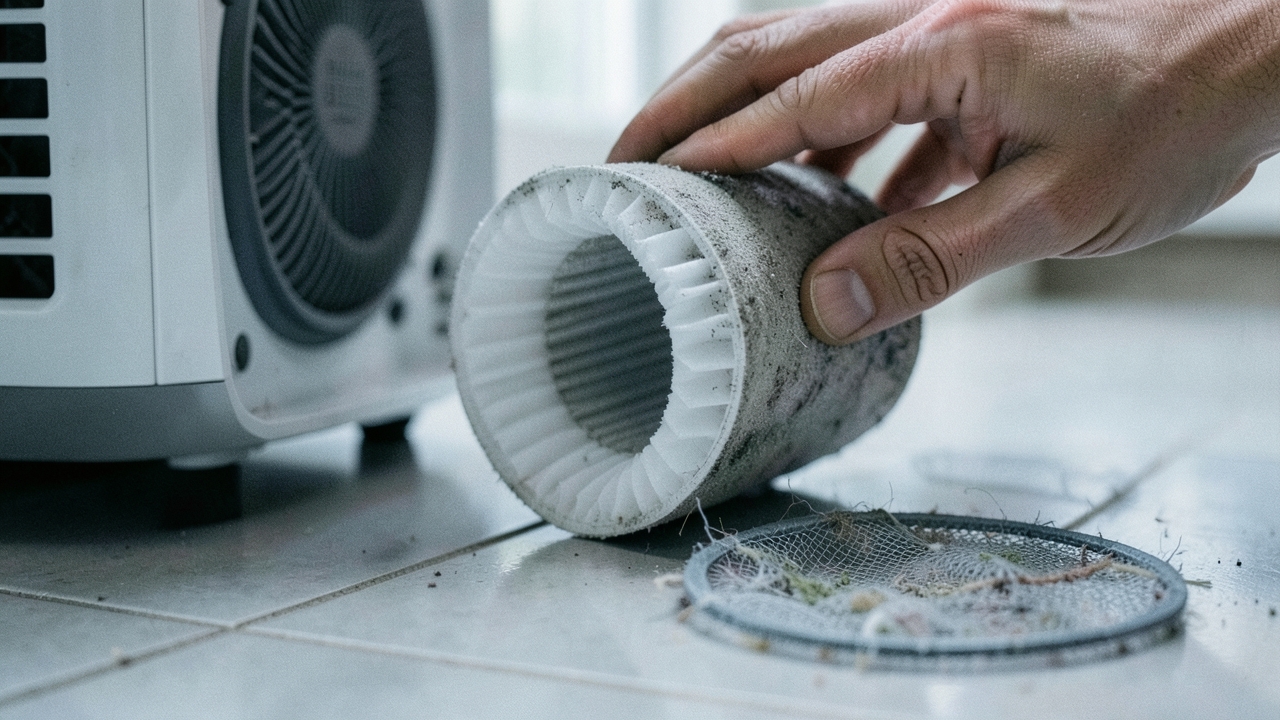
The 1.3x and 1.5x margins exist to cover that gap. For a bedroom unit, the sleep-mode noise figure and the airflow quoted at that setting matter more than peak performance. Filter replacement is generally quoted at six months to a year; running a larger unit at a lower setting spreads that load as well.
Who this suits, and when to wait
- For a single room used with the door closed, rated area of 34–47 m² is sufficient — that is the band the tested units occupy
- To cover a whole home from the living room, 77 m² of rated area and a CADR of 10 m³/min is the arithmetically consistent floor
- For bedroom use, check the airflow quoted at the quiet setting before the headline maximum
- If purchase prices differ by under 200,000 won, weigh the efficiency grade and filter price — the five-year running-cost gap reaches 195,500 won
- A unit advertising a large coverage figure with no verifiable Korea Energy Agency filing is not worth rushing