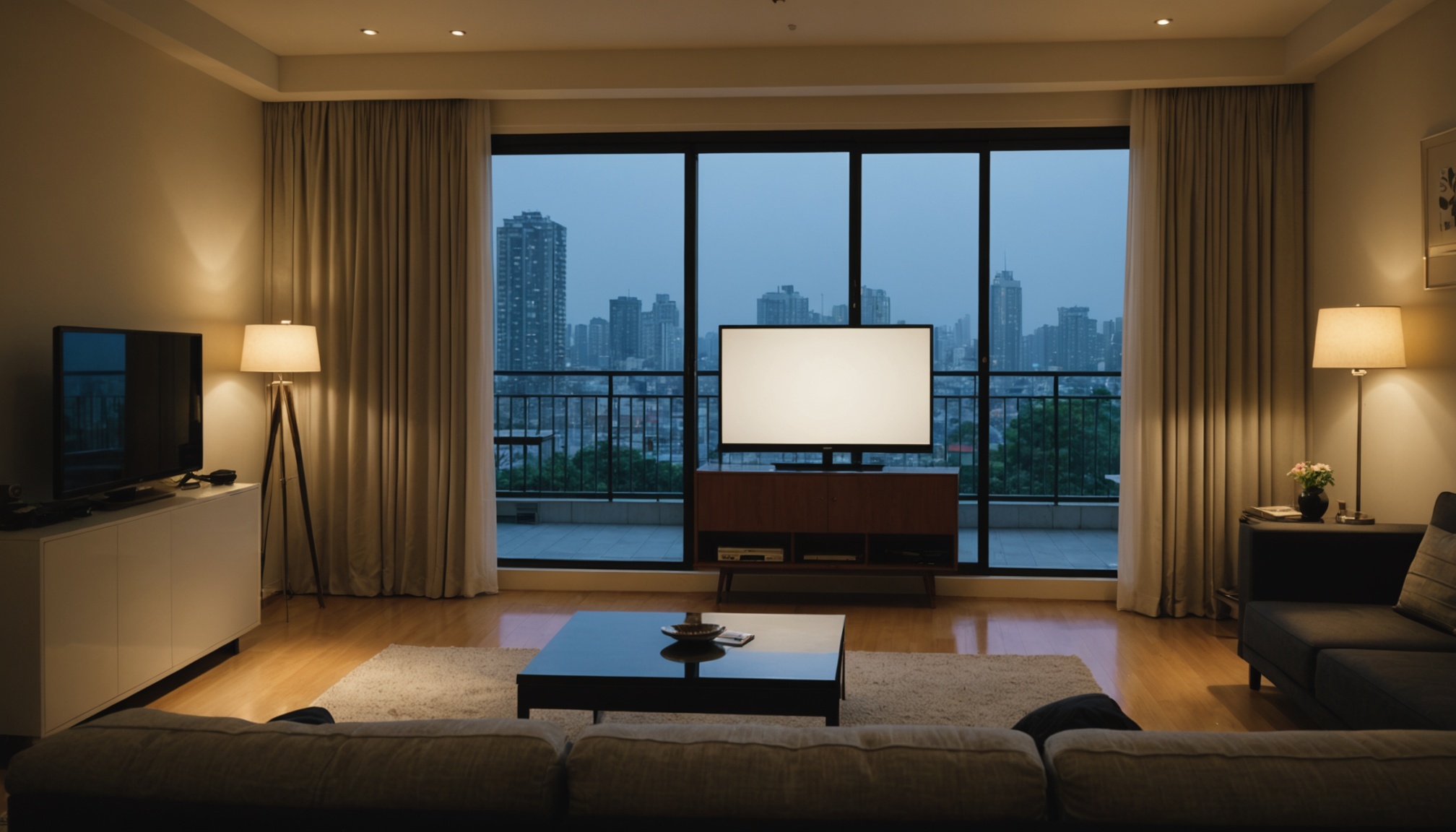
Working out how far to sit from a TV takes one multiplication. Multiply the screen diagonal in inches by 4.13 and the result is the recommended distance in centimetres. A 65-inch set gives 268cm; a 75-inch set gives 310cm. That constant comes from applying the 30-degree viewing angle used as a reference by SMPTE to a 16:9 screen.
Run the same maths at 40 degrees — the immersive end — and the multiplier drops to 3.04. Now 65 inches means 198cm and 75 inches means 228cm. The question is not which standard is correct, but where the sofa already sits between those two numbers, because that decides the largest screen that makes sense.
Reversing the calculation makes it sharper. In a typical Korean living room with 2.7m between sofa and screen, the 30-degree rule points to 65 inches while the 40-degree rule allows 89 inches. Same room, 24 inches apart. That gap is the entire TV-size argument.
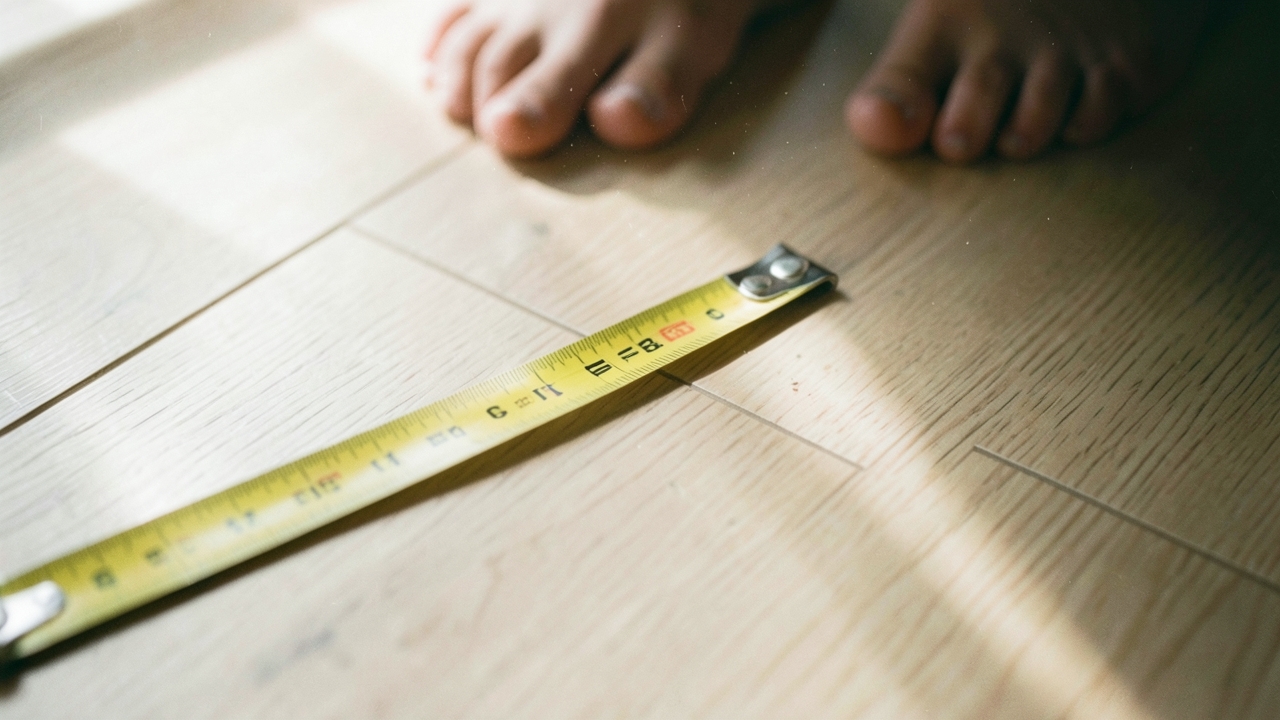
Where the 4.13 multiplier comes from
On a 16:9 panel the diagonal and the width are locked together: width = D × cos(arctan(9/16)) = D × 0.8716. As the viewing-distance reference sets out, the distance that produces a viewing angle θ is (width ÷ 2) ÷ tan(θ/2). At 30 degrees you divide by tan(15°) = 0.2679, which reduces to D × 1.626 inches, or D × 4.13 centimetres.
Three standards compete. SMPTE EG-18 recommends 30 degrees, THX sets a 36-degree minimum, and review outlets such as RTINGS suggest 40 degrees for 4K material. Thirty degrees is the broadcast-comfort end for long sessions; forty is closer to a cinema. Change only the angle in the same formula and the multipliers become 4.13, 3.41 and 3.04.
| Diagonal (in) | Screen width (cm) | 40° immersive (cm) | 36° THX (cm) | 30° SMPTE (cm) |
|---|---|---|---|---|
| 55 | 121.8 | 167 | 187 | 227 |
| 65 | 143.9 | 198 | 222 | 268 |
| 75 | 166.0 | 228 | 256 | 310 |
| 85 | 188.2 | 259 | 290 | 351 |
| 98 | 217.0 | 298 | 334 | 405 |
The column to watch is the spread between 40 and 30 degrees. At 55 inches it is 60cm; at 98 inches it widens to 107cm. The larger the panel, the more the choice of standard costs you — which is why regret clusters in the big-screen tier.
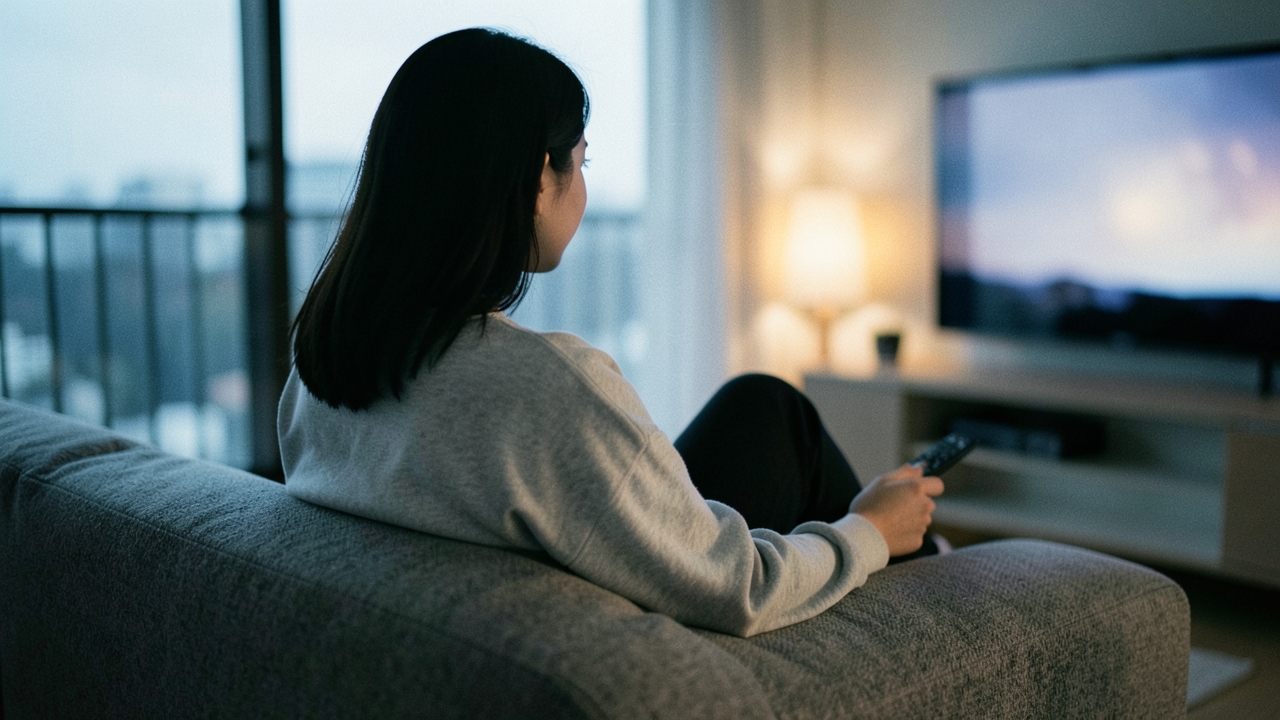
At 2.7m the answer splits between 65 and 89 inches
Real purchases run the other way, from distance to inches. Measure from the eye to the screen rather than from the back of the sofa, then divide by the constant: 4.13 for 30 degrees, 3.41 for 36, 3.04 for 40.
| Viewing distance (cm) | 30° SMPTE (in) | 36° THX (in) | 40° immersive (in) |
|---|---|---|---|
| 200 | 48 | 59 | 66 |
| 250 | 61 | 73 | 82 |
| 270 | 65 | 79 | 89 |
| 300 | 73 | 88 | 99 |
| 350 | 85 | 103 | 115 |
A 2.5m room yields 61 inches at 30 degrees. Since 61-inch sets do not exist, the real choice is 55 or 65, and picking 65 puts the viewing angle at 32 degrees. At 3m the 30-degree rule lands on 73 inches, so 75 slots in naturally. The 200cm row carries its own warning: in a studio flat or bedroom, 65 inches is already at the ceiling even by the 40-degree rule.
The variable most often forgotten is mounting height. Hanging the panel high on the wall offsets the screen centre from eye level and slightly lengthens the effective distance, which is why the same diagonal feels different on a stand and on a bracket. If a wall-sized image is on the table instead, the brightness figures projectors are sold on are the first thing to pin down.
Room size does not set the diagonal — the viewing-angle standard you accept does. 2.7m is the distance for a 65-inch screen and for an 89-inch screen at the same time.
Where 4K actually starts paying off
Resolution is a separate axis from viewing angle. Normal 20/20 vision is conventionally treated as resolving one arcminute, and a 4K panel stacks 2,160 rows. For a screen of height H, the distance at which one pixel row subtends one arcminute is H ÷ (2,160 × tan(1/60°)). Beyond that distance the pixel grid disappears. It reduces to diagonal × 1.98cm for 4K and twice that, diagonal × 3.96cm, for 1080p.
| Diagonal (in) | 4K pixels invisible beyond (cm) | 1080p pixels invisible beyond (cm) | 30° SMPTE distance (cm) |
|---|---|---|---|
| 55 | 109 | 218 | 227 |
| 65 | 129 | 258 | 268 |
| 75 | 149 | 297 | 310 |
| 85 | 168 | 337 | 351 |
The point of the table is that the 1080p column is always slightly shorter than the SMPTE column. Sit at the 30-degree distance and even a 1080p panel hides its pixels. Four-K earns its keep only closer in, somewhere in the 36-to-40-degree band. Viewing a 65-inch screen from under 129cm is rare in a living room, but the same calculation on 85 inches gives 168cm, and that distance is entirely plausible in a small flat.
Put differently, the reason to buy a bigger screen is angle, not sharpness. Justifying extra inches on resolution does not hold up on published specifications alone. What moves perceived picture quality is contrast and local control, and that is decided by how much area a single dimming zone has to cover.
Why 65 inches has led for five straight years
According to Danawa Research tallies, 65 inches held the top single-size share of Korean TV sales from 2022 through May 2026, taking 17.8% between January and May 2026. The 55-to-70-inch band together accounts for 32.5% of sales. Feed that into the earlier maths and 65 inches is the 268cm screen — the size that sits closest to how Korean living rooms are actually laid out.
The centre of gravity is drifting upward, though. On Omdia figures, sets of 60 inches and above took 27.5% of global shipments, up 1.2 percentage points year on year, while 80 inches and above rose from 2.4% in 2023 to 4.1%. The same report cites Samsung's internal analysis finding that around 75% of buyers chose a set averaging 13 inches larger than their previous one.
Thirteen inches translates, at 30 degrees, into sitting 54cm further back — and living rooms do not lengthen. Going from 65 to 78 inches at 2.7m pushes the viewing angle from 30 degrees to roughly 35. The market is drifting away from the SMPTE reference toward the THX end, and it is being received as a preference rather than a discomfort.
Who this fits, and who should drop a size
- The 40-degree rule fits viewers whose watching is mostly films and live sport, whose sofa cannot move, and who read "scanning the whole frame" as immersion. At 2.7m that opens 85 to 89 inches
- The 30-degree rule fits households that leave news and variety programming on for hours, seat several people side by side, and read subtitles often. At 2.7m, 65 inches is the ceiling
- Drop a size if the viewing distance is 2m or less, if the set will be mounted high on a wall, or if the screen width exceeds the sofa width — compare the width column against your sofa directly
- Do not fix the diagonal yet if a move or a furniture rearrangement is due within six months. A 30cm change in distance shifts the recommended size by seven to ten inches