A robot vacuum's tier is decided by just four spots on the spec sheet—suction (Pa), navigation sensor, mopping style, and dock features. As AJD's published-spec breakdown shows, anything over 2,000Pa handles everyday dust, and the other three decide price and convenience. Pick by one number alone and you'll regret it on the features you use every day.
Suction is the pulling pressure, written in pascals (Pa). But a robot vacuum runs at only 10–20% of a corded stick vacuum in normal mode, so the right range for your floor matters more than the raw Pa figure. To avoid confusing Pa with a stick vacuum's unit, it helps to read it alongside the AW vs Pa labeling of cordless vacuums.
Suction: 4,000Pa is plenty without carpet or pets
By published specs the recommended ranges split like this: 2,000–3,000Pa for light dust, 3,000–4,000Pa once you count hair and general cleaning, and 4,000Pa-plus for carpets or heavy pet hair. So most hardwood or vinyl-floor homes are fine around 4,000Pa, and higher numbers matter mainly with carpets and rugs. A cheap model with only high suction loses to the sensor and dock below when it comes to real-world satisfaction.
Navigation: where LDS LiDAR and camera (vSLAM) part ways
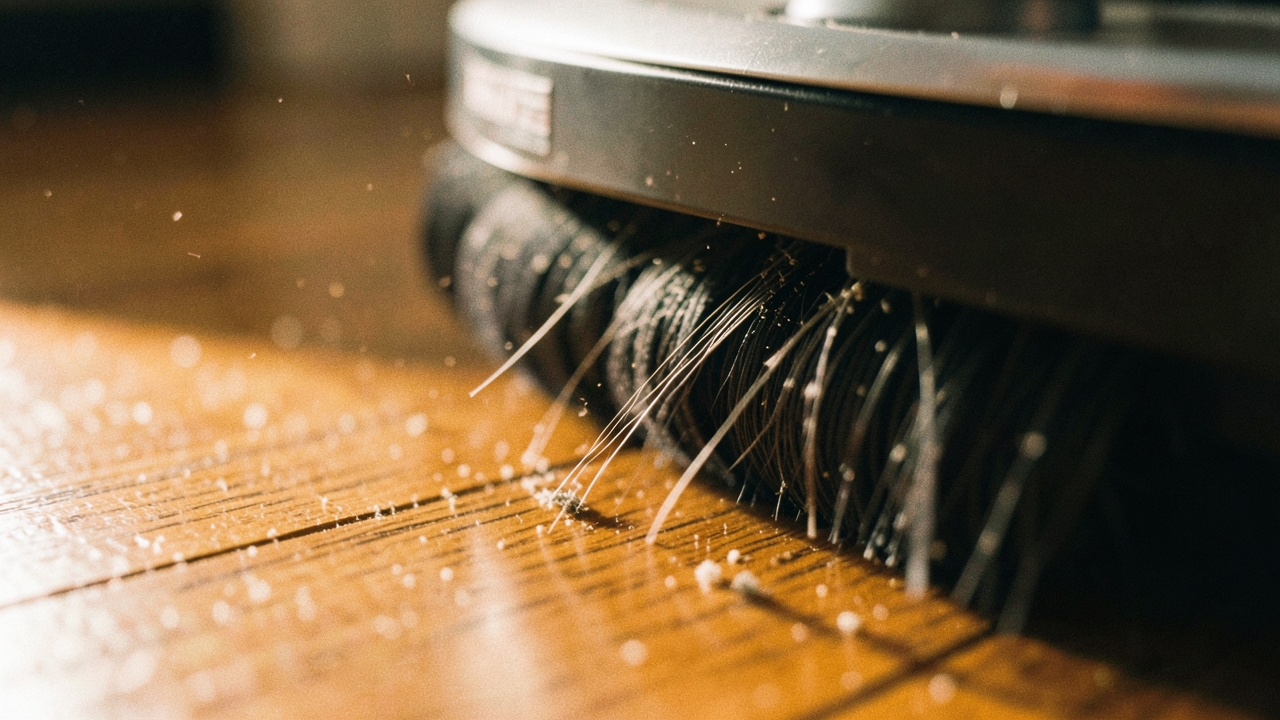
How fast and accurately the robot sweeps a floor is set by its navigation sensor. Moving AJD's published specs into a table makes each type's character clear.
| Sensor type | How it senses | Clean time (8 pyeong) | Rough price |
|---|---|---|---|
| LDS (LiDAR) | Laser space scan | ~10 min | 600k–900k won |
| ToF (laser) | Horizontal/vertical ranging | ~10 min | 900k won+ |
| Camera (vSLAM) | Image-based mapping | ~16 min | 400k–600k won |
| Gyro | Distance dead-reckoning | ~12 min | 200k–400k won |
LDS and ToF recognize space about 1.5 times faster than gyro or camera. A camera (vSLAM) is cheaper but can waver in a dark room, and gyro draws no map—it moves by distance alone, so it tends to miss spots in a large home. To minimize regret, start your shortlist from models that carry at least LDS.
Mopping and dock: the real reason the price jumps
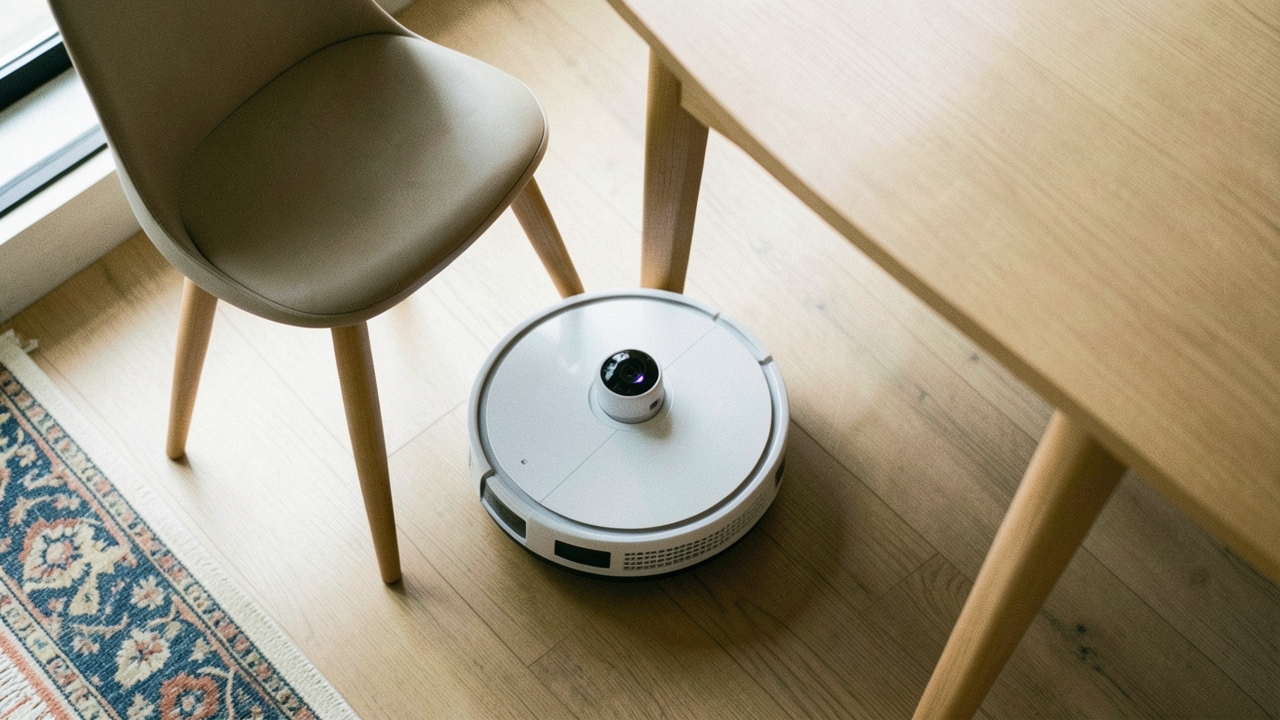
Mopping splits by mechanism. Rotating pads spin to scrub and do better with more pressure—per Danawa's benchmark, removing caked grime needs at least 1.8–2.3kg of pressure—while vibrating pads clean by ultrasonic motion with less noise. A drag-along flat pad only wipes moisture and is weak on grease. Danawa's premium comparison also flags the dock's automatic mop washing and hot-air drying as the core of hygiene and convenience. Each dock feature added (auto dust emptying → auto mop washing → hot-air drying → hot-water washing) raises the price by roughly 1.5 times.
Even cheap models print big suction numbers—the real reason price jumps lies in LiDAR navigation and the mop-washing dock.
Map these three onto your environment and the needed spec falls out. The table below matches situations by combining the published specs.
| Environment | Suction | Sensor | Mop / dock |
|---|---|---|---|
| Studio/small, no carpet | 2,000–3,000Pa | Gyro/vSLAM | Flat pad + auto dust empty |
| ~30 pyeong, pets | 4,000Pa+ | LDS/ToF | Rotating (2kg+) + auto wash/hot-air dry |
| Large home, frequent grease | 4,000Pa+ | LDS + 3D avoidance | Rotating (hot water) + hot-water wash/dry |
For reference, thresholds over about 0.5cm are hard to cross, and the robot can't go under furniture lower than its own height (usually 7–15cm). To size battery needs by area, gauge your room first using the floor-area sizing rule, and you'll avoid over-spec'ing.
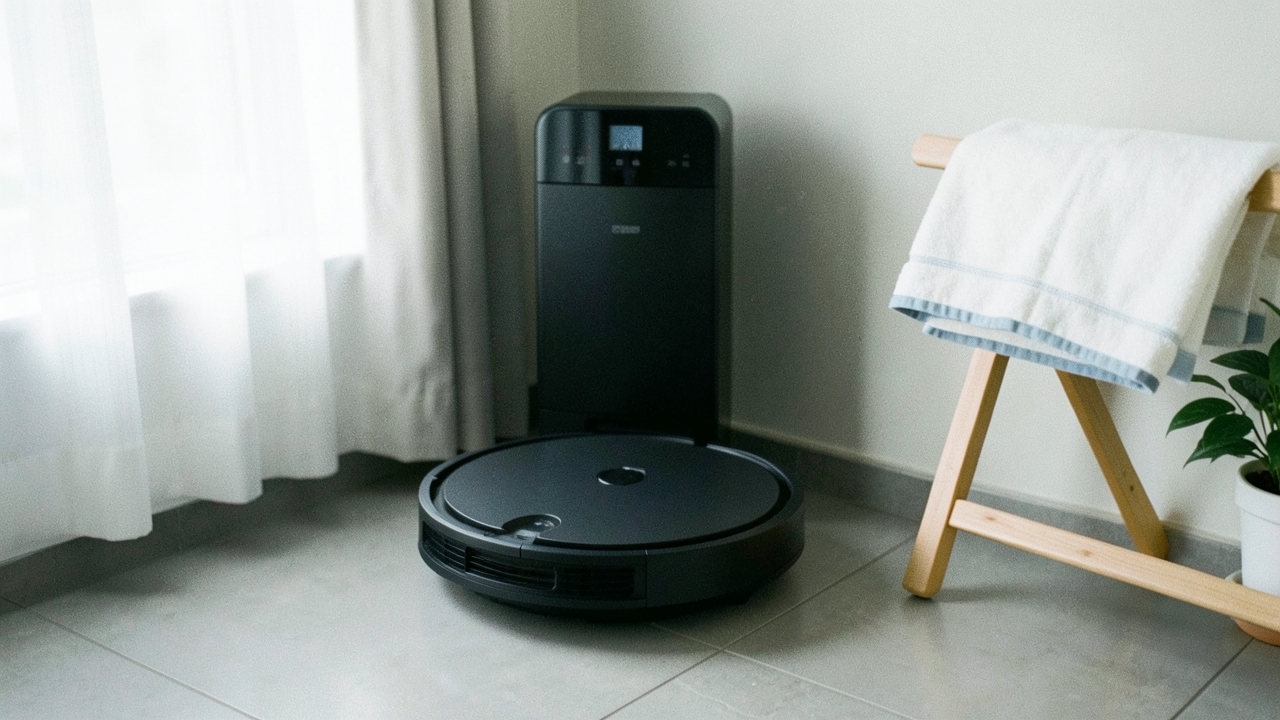
Who it fits / who can wait
- Studio/single household: gyro or vSLAM with a flat-pad mop is enough—you can skip the pricey dock
- ~30 pyeong with pets: 4,000Pa-plus, LDS LiDAR, a rotating mop, and an auto-wash/hot-air-dry dock decide real-world satisfaction
- Homes with frequent grease: prioritize hot-water washing and 2kg-plus rotating pressure
- Reasons to wait: recheck the sheet on cheap models that tout only suction and skimp on sensor and dock details