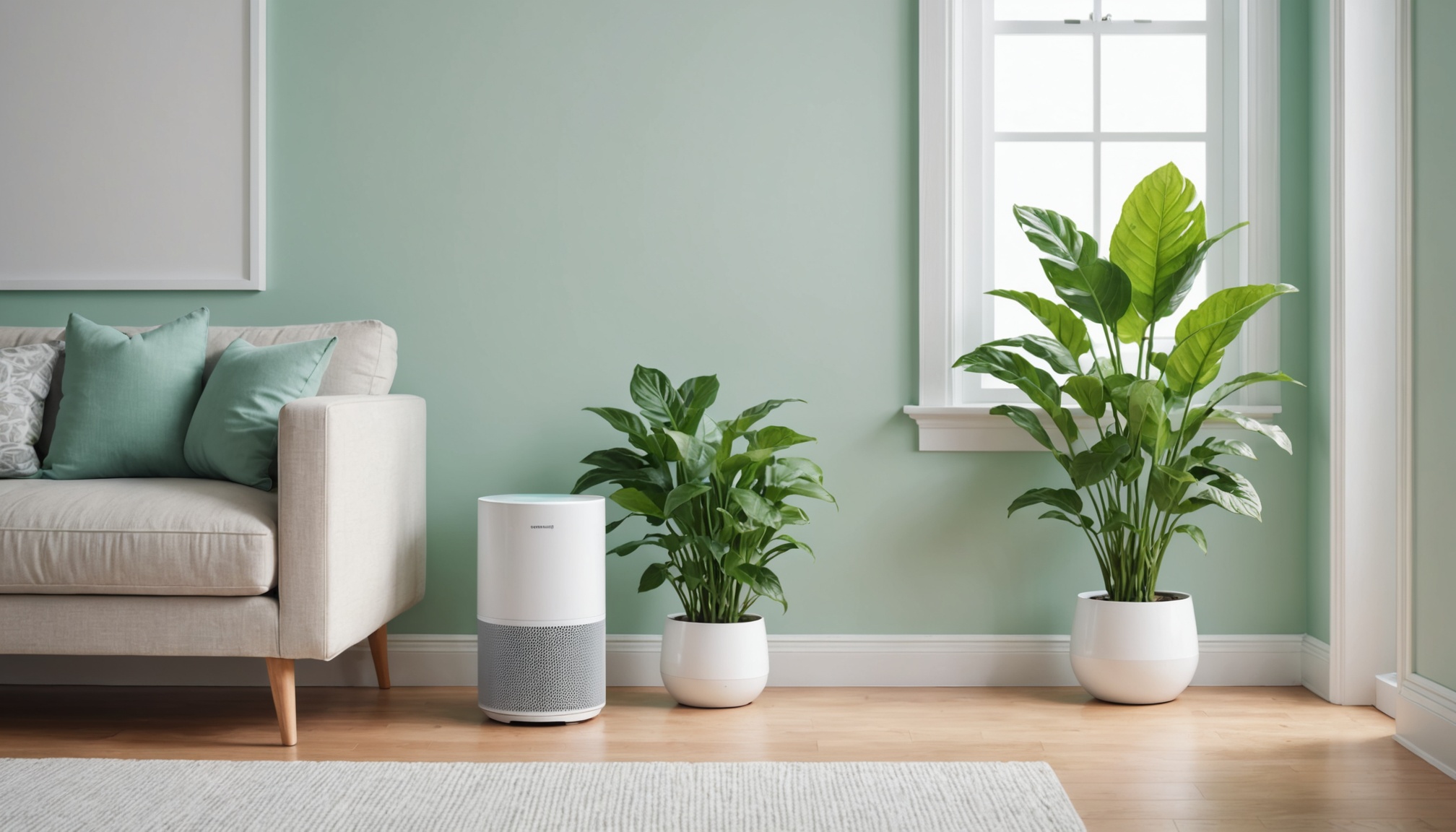
The "10-pyeong" or "15-pyeong" labels on air purifier spec sheets use conversion standards that differ by manufacturer, making direct comparisons unreliable. As a home appliance buying guide points out, two products both labeled "for 10 pyeong" can have actual purification capacity (CADR) that differs by nearly double. The numbers that actually matter for a purchase decision are different ones — the Standard Usage Area (표준사용면적), measured and published under KS regulations, and CADR, the volume of air cleaned per minute.
This post explains in sequence what Standard Usage Area means, why you should choose a unit rated for 1.3–1.5x your actual space, and what numbers to check on the spec sheet. This is a summary of published regulations and buying-guide criteria, not an evaluation of any specific product.
Standard Usage Area — The Common Yardstick Created by KS C 9314
According to the Nosearch buying guide, most air purifiers sold domestically undergo testing under the KS C 9314 standard, with results including the Standard Usage Area (in m²) mandatorily disclosed to the Korean Energy Agency. The test is conducted in a 30 m² test chamber (ceiling height 2.4 m), and the result is converted into the area in which the unit can reduce indoor fine-dust concentration by 50% within 10 minutes of operation under conditions of one natural air change per hour.
The key is that this figure is produced under the same test conditions regardless of brand. Unlike the floor-plan labels manufacturers attach arbitrarily, it becomes a common yardstick for comparing products from different brands side by side. If only the pyeong label appears on the spec sheet, the first step is to find the m² figure in the detailed specs or on the energy label. Since 1 pyeong is approximately 3.3 m², you can cross-check whether a "15-pyeong" label corresponds to a Standard Usage Area of about 50 m².
Why 1.3–1.5x Your Actual Space?
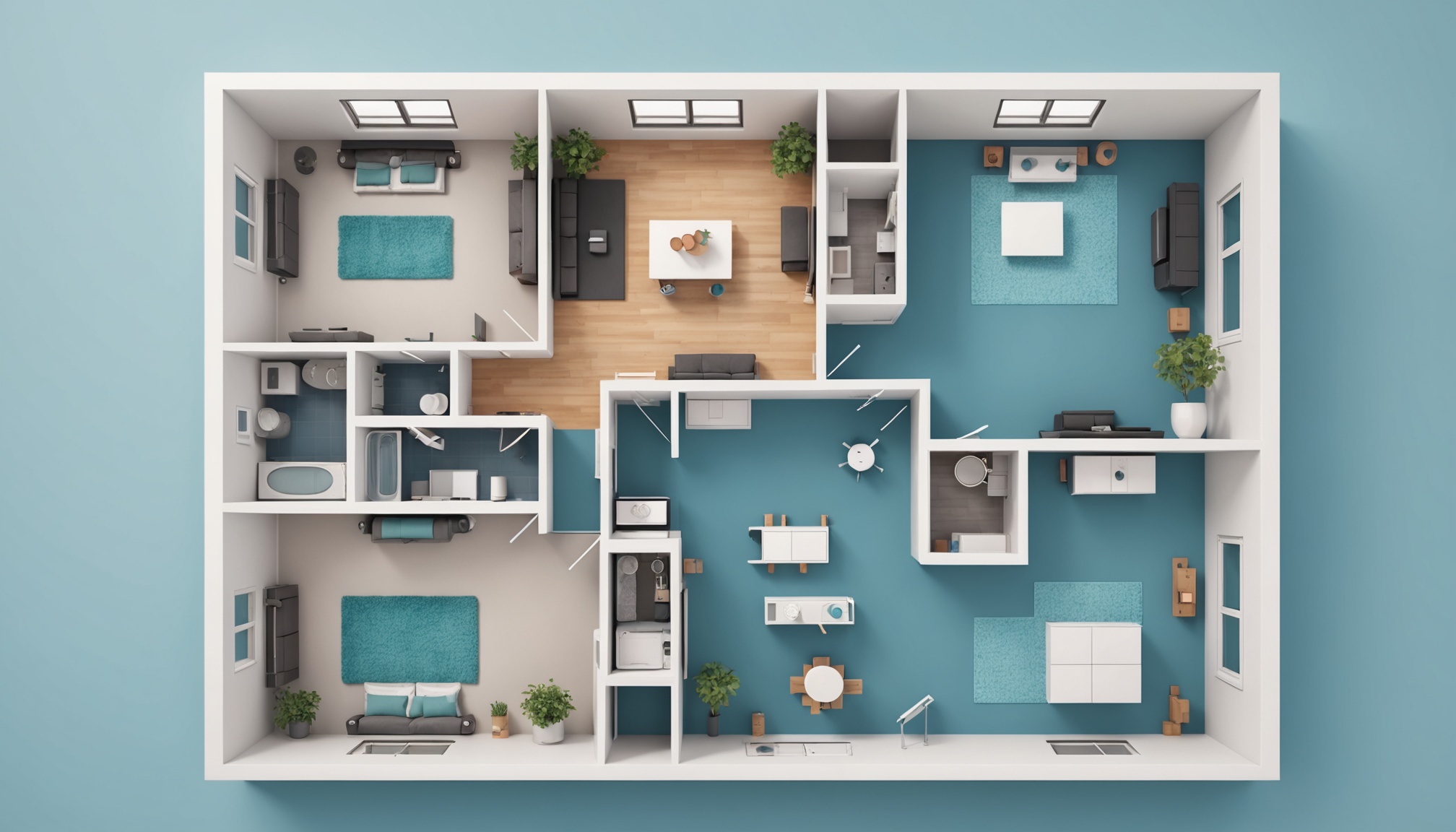
The Standard Usage Area test is conducted under controlled conditions with no additional pollution sources. Real living spaces have worse conditions. Doors open and close constantly, cooking and activity continuously generate dust, and in an open-plan layout with a combined living room and kitchen, the volume of air that needs to be purified is inherently greater than in the test conditions.
This is why buying guides recommend choosing with a margin. Nosearch suggests a product with 1.5x the floor area of the usage space (a 20-pyeong living room calls for a 30-pyeong model), while the home appliance buying guide presents "the 1.3–1.5x actual area rule" as its benchmark. The wording differs but the direction is the same — discount the spec-sheet figure by the losses that arise in real-world conditions.
There is one formula for choosing air purifier capacity — not checking the pyeong label, but confirming that the Standard Usage Area is 1.3–1.5x the usage space.
Recommended Standard Usage Area by Room Size
Applying the 1.3–1.5x rule, the recommended figures by room size are calculated as follows (using 1 pyeong = 3.3 m²).
| Usage space | Area (m²) | Recommended Standard Usage Area (m²) |
|---|---|---|
| Bedroom / studio, 5 pyeong | 16.5 | 21–25 |
| Small living room, 10 pyeong | 33 | 43–50 |
| Living room + kitchen, 15 pyeong | 49.5 | 64–74 |
| Large living room, 20 pyeong | 66 | 86–99 |
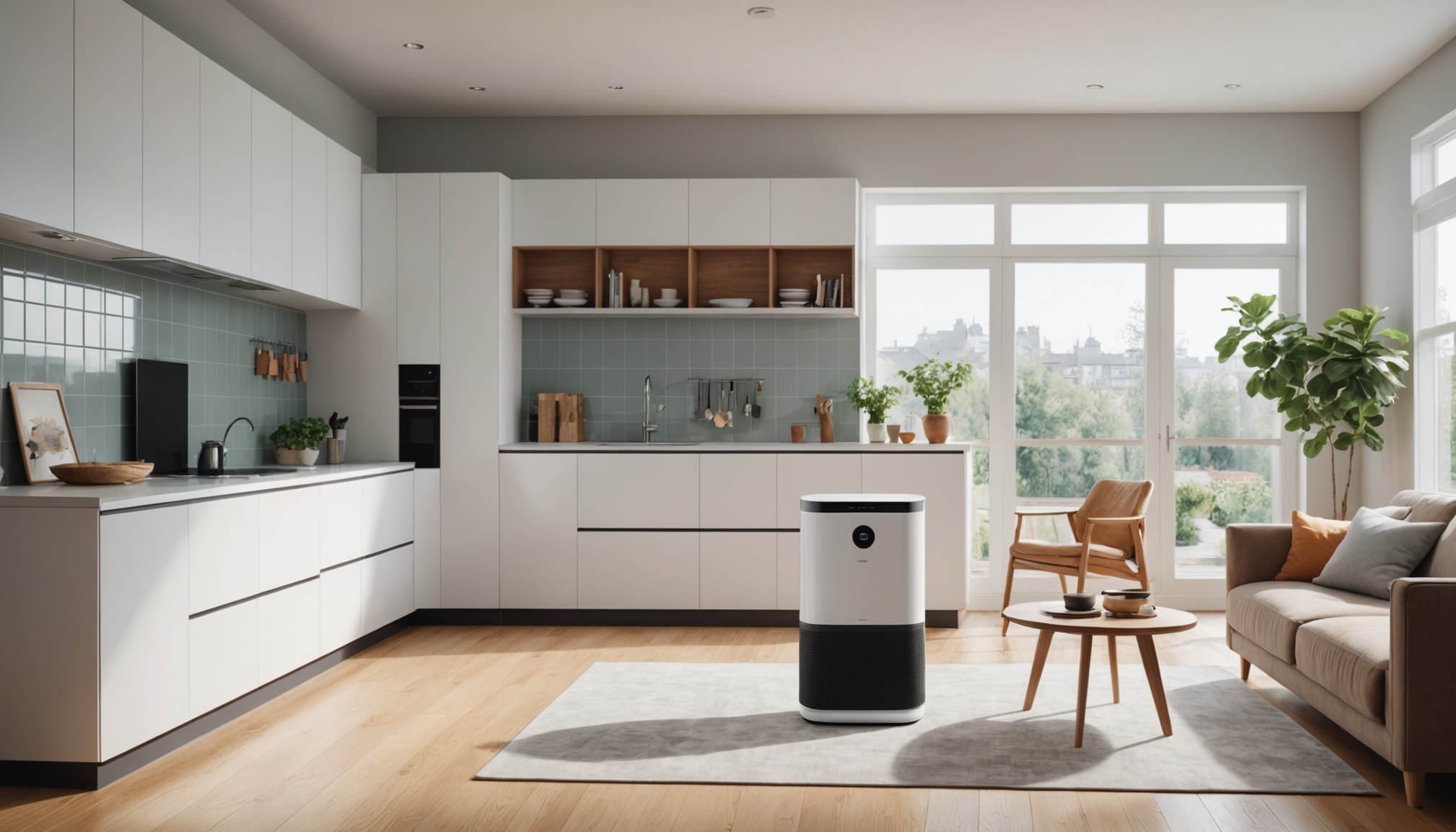
One important caveat: the "usage space" in the table is not the total floor area of the apartment but the area of the room where the air purifier will be placed. Even in a 30-pyeong apartment, if you are buying a unit for a bedroom with the door kept closed, the bedroom area is the baseline. Conversely, if the living room, kitchen, and hallway form an open-plan space, the entire connected area must be added together. This is precisely why trying to cover an entire home with a single unit so often falls short — air does not circulate past walls and closed doors.
Standard Usage Area is ultimately the result of combining filter performance and airflow. Even with the same grade of filter, different airflow levels produce different figures, so guessing capacity from filter specifications alone reverses the correct order of analysis. The right sequence is to look at the published area figure first, then compare filter grade, noise, and maintenance costs afterward.
CADR and Certification Marks — Tools for Cross-Checking the Numbers
CADR (Clean Air Delivery Rate) is the volume of air purified per minute (m³/min) — the higher the number, the faster the same space is cleaned. If the Standard Usage Area is the number for "how far does it reach," CADR is the number for "how quickly does it get there." For overseas products purchased through direct import, where no domestic disclosure exists, CADR is effectively the only common benchmark.
Certification marks are also useful cross-checking tools. According to a summary by an appliance information outlet, domestic air purifier certifications include the CA mark (a group-standard certification from the Korea Air Cleaning Association), the KC safety certification, and a CADR certification. Since the CA mark indicates the product has passed the Association's performance standards, checking it alongside the published Standard Usage Area figure helps filter out inflated claims.
Spec Sheet Checklist — Check in This Order
- Is the Standard Usage Area (m²) 1.3–1.5x the usage space? — Compare by the m² figure, not the pyeong label
- If the living room and kitchen are open-plan, did you add the entire connected area together?
- For directly imported products with no domestic disclosure, did you compare using CADR (m³/min)?
- CA and KC certification — cross-check against the published figures
- Noise at maximum airflow (dB) — if placing in a sleeping space, also check the noise level in quiet mode
- Filter replacement interval and cost — the real price includes annual maintenance costs
To summarize: if you plan to place a single unit in the living room, buying generously at the 1.5x rule is the calculation that makes sense; if you plan to distribute units room by room, placing multiple compact units at around 1.3x each room's area is the right approach. A product whose Standard Usage Area is smaller than the usage space cannot deliver its rated performance no matter how attractive the price — waiting for a higher-capacity option is better.