The number that separates humidifiers is not the price tag but the running cost. As The Public reported, Korea Consumer Agency testing of 13 popular humidifiers found hourly output ranging from 182ml to 606ml — a 3.3-fold spread — while annual running costs, combining electricity and filter replacement, differed by more than 40 times. Output varies 3.3x but cost varies 40x, which means the two numbers do not move together.
What drives the gap is the method used to turn water into vapour. Ultrasonic, steam (heated), evaporative and hybrid units do the same job with completely different cost structures.
Three ways of turning water into vapour
Ultrasonic units use a vibrating plate to break water into a fine mist. Nothing is heated, so power draw is low and visible mist appears immediately. The structural weakness is that whatever sits in the tank goes straight out into the air.
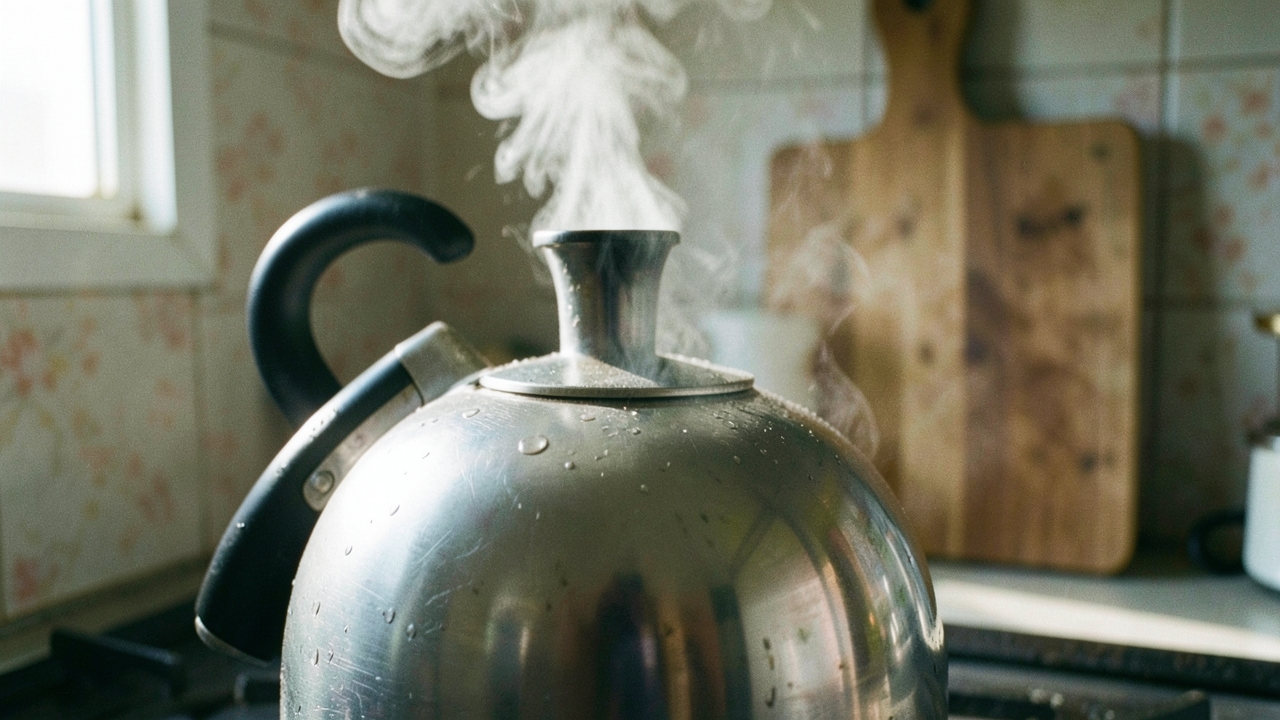
Steam units boil the water and release the vapour. Boiling sterilises, and what emerges is pure water vapour — but the electricity needed to take water to 100°C lands directly on the bill.
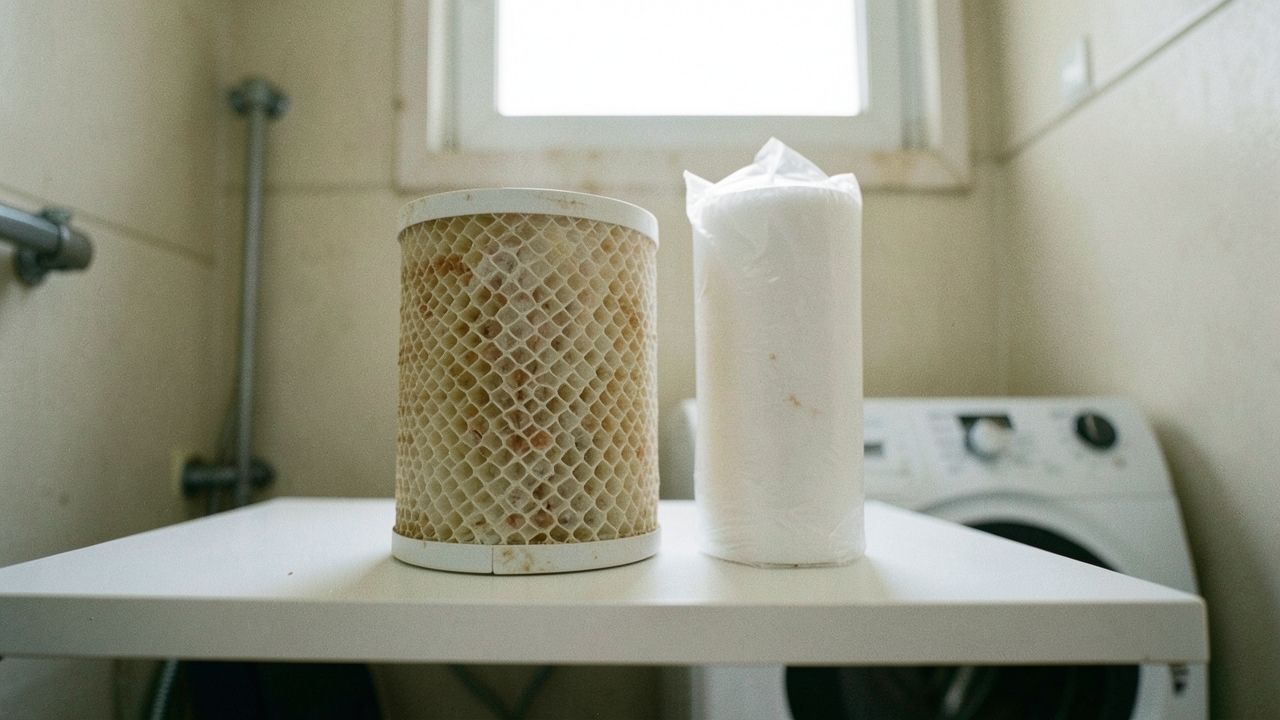
Evaporative units blow air with a fan across a wet filter to accelerate natural evaporation. Only the fan draws power, so electricity is lowest, but the filter is a consumable with a replacement cost. Hybrid units combine the two: water is heated to sterilise, then dispersed ultrasonically.
Output by type: how far each one goes
The best performer within each type in the Consumer Agency test is shown below. The overall maximum of 606ml came from a hybrid unit; the minimum of 182ml came from an ultrasonic-family product.
| Type | Top unit in category | Hourly output (ml) |
|---|---|---|
| Ultrasonic | Miro MH7000 | 267 |
| Steam | LZEN LZHD-H85 | 499 |
| Evaporative | Xiaomi CJSJSQ02 XYKR | 433 |
| Hybrid | LG Electronics HY704RWUAB | 606 |
These are measured values, not catalogue specifications. Variation within a single type is wide enough that a blanket claim such as "ultrasonic units produce less" does not hold. Comparing the top of each category, however, ultrasonic sits lowest and hybrid highest.
What one millilitre of output costs per year
Looking at output and running cost separately settles nothing. Divide one by the other into the annual cost of securing 1ml per hour of output and each type's cost structure becomes visible. The figures below divide the Consumer Agency's published annual running-cost range for each type by that type's top output from the table above.
| Type | Annual running cost (KRW) | Reference output (ml/h) | Annual cost per 1ml/h (KRW) |
|---|---|---|---|
| Evaporative | 5,330 – 108,330 | 433 | 12.3 – 250.2 |
| Ultrasonic | 4,640 – 6,420 | 267 | 17.4 – 24.0 |
| Hybrid | 15,780 – 189,290 | 606 | 26.0 – 312.4 |
| Steam | 72,750 – 91,070 | 499 | 145.8 – 182.5 |
One caveat on reading it: the cost figure is a range across several products of that type while the output figure comes from a single top performer, so the upper end of each range looks worse than reality. The direction is still clear.
Ultrasonic has the narrowest band at 17.4–24.0 won, meaning cost is predictable whichever model you pick. Evaporative and hybrid, by contrast, span roughly twentyfold — choose a model with expensive filters and the type's advantage disappears. Steam has a narrow band but sits high: 145.8–182.5 won is about eight times the bottom of the ultrasonic range, and almost all of that comes from electricity.
The real difference between ultrasonic and steam is not how the mist is made, but the order of magnitude leaving your account each year.
Noise of 37–62dB, and steam at 99°C
In the same test relayed by KTV, noise ranged from 37dB to 62dB, with steam units rising to 55dB during the boil phase. Given that a quiet library is commonly cited at around 40dB, that is a difficult number for a bedside table. An earlier Consumer Agency briefing found 5 of 10 tested units louder than a refrigerator at 40dB, and noted that combined air-purifier models are structurally prone to noise.
On safety, the temperature of steam units is the sticking point. Vapour was measured at 99°C, and tank water reached 100°C during the boil phase. In a household with small children, placing one on the floor or a low side table has to be reconsidered with those figures in mind — the sterilising benefit and the burn risk come from the same principle.
Will one unit cover the living room?
Hourly humidification area in the test ranged from 12.9㎡ to 42.9㎡ — roughly 3.9 to 13.0 pyeong (1 pyeong ≈ 3.3㎡). Even a top-end unit cannot cover an entire 84㎡ apartment, about 25 pyeong, on its own. Splitting coverage between the living room and a bedroom is what the performance figures actually support.
The arithmetic is the same as for other air appliances: catalogue numbers have to be mapped onto real floor area before they mean anything.

Who each type suits
- Running all day in a living room: evaporative — only a fan draws power. Check the specific model's filter price and replacement interval first; the upper bound of this type's running cost reaches 108,330 won.
- Predictable cost: ultrasonic — the narrowest annual range at 4,640–6,420 won. The trade-off is diligent tank cleaning.
- Maximum output: hybrid — the test's highest figure of 606ml came from this type. The cost band is wide, so price the consumables before buying.
- Steam, conditionally — sterilisation and pure vapour are genuine advantages, but annual running cost sits at 72,750–91,070 won and the vapour is 99°C. With young children at home, decide the placement height before the model.
Choose on sticker price alone and you can end up spending more on running costs in the first year than on the unit itself. That is why the Consumer Agency concluded that performance did not necessarily track price.