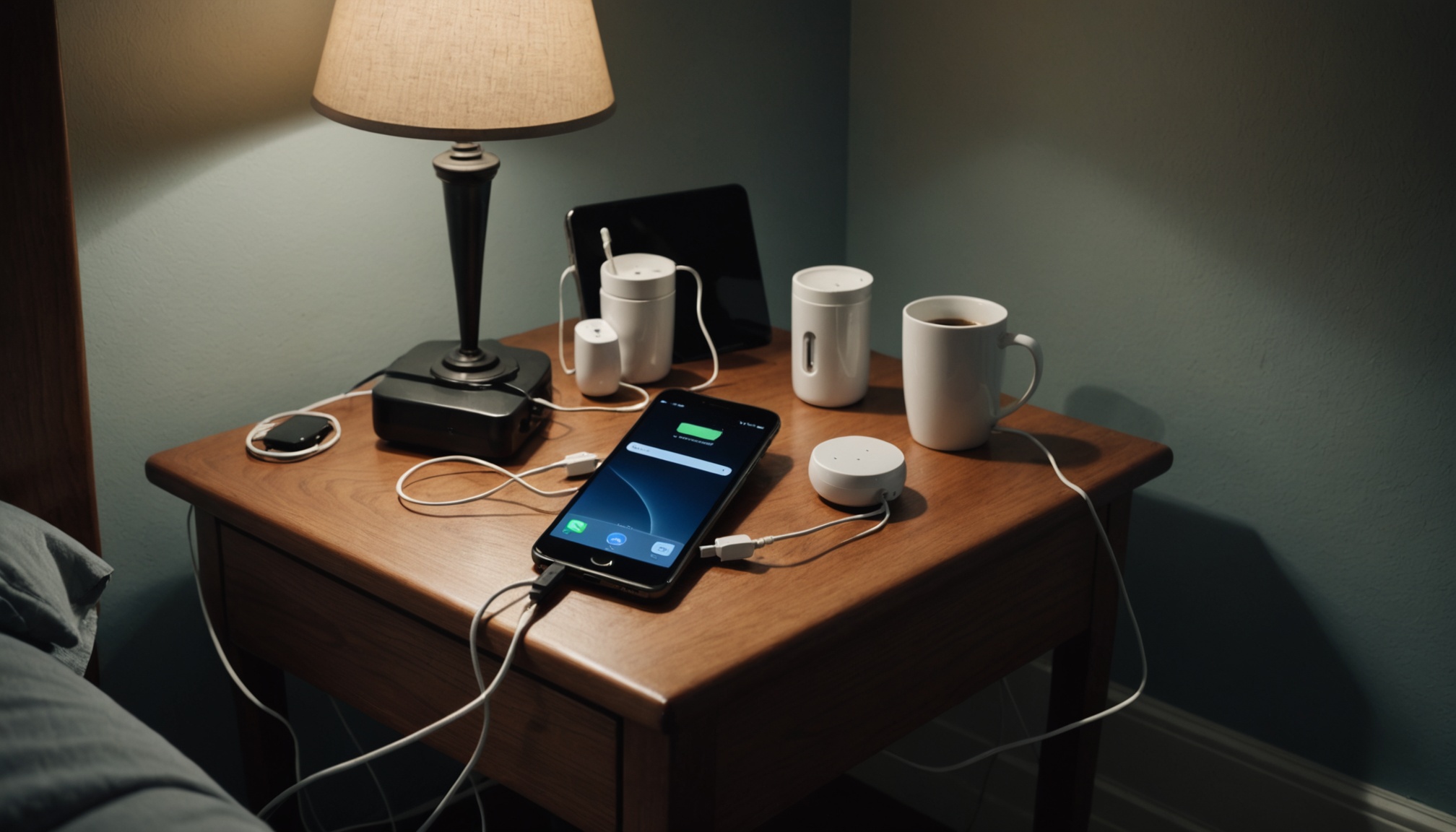
Battery lifespan is now a printed specification. Since 20 June 2025 the EU has required an energy label on every smartphone and tablet placed on its market, and that label carries a charge cycle count. The floor set by the European Commission is 800 cycles while retaining 80% of rated capacity.
The trouble is that 800 conveys nothing about time. For someone who drains 70% of the battery daily, 800 cycles arrives in 3.1 years; a 1,500-cycle device lasts 5.9. Start with what a cycle actually means and the label number converts cleanly into your own years of use.
A Cycle Is Cumulative Discharge, Not a Plug-In Count
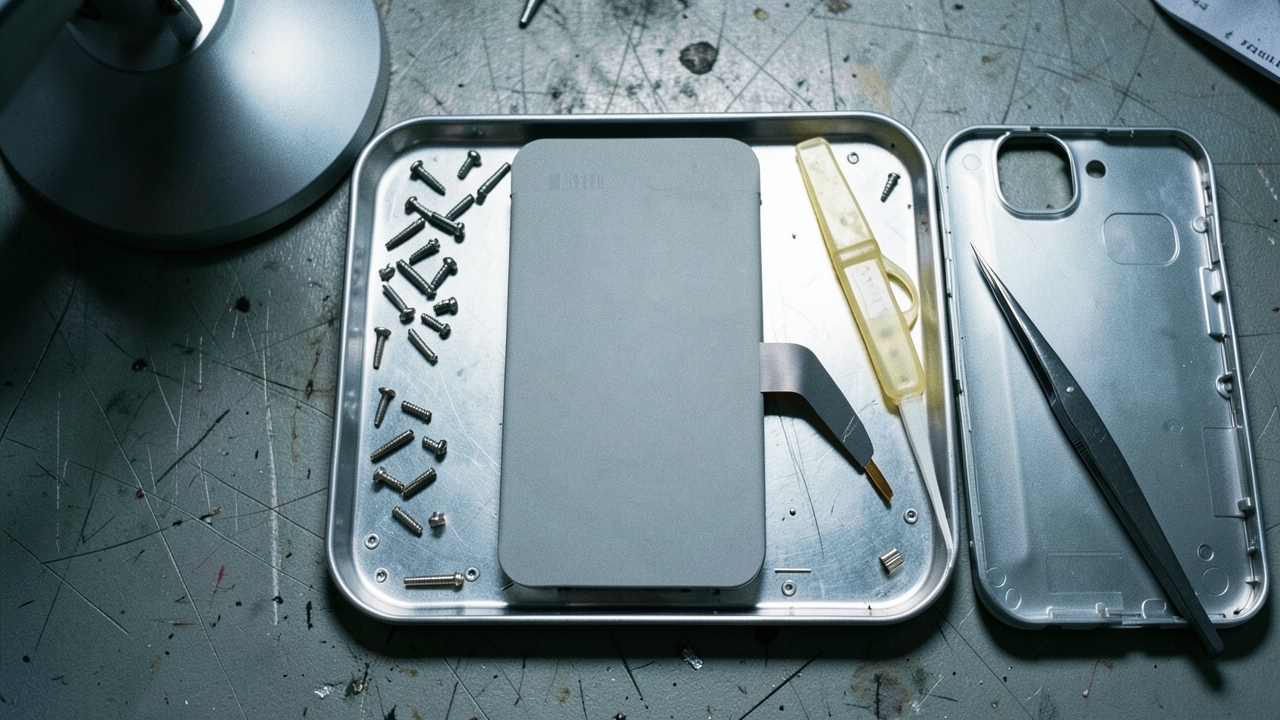
The most common misreading treats every trip to the charger as one cycle. A cycle counts one full rated capacity's worth of discharge. Running from 80% down to 30% and charging back up is half a cycle; do it twice for one. Plug in three times in a day and, if total consumption was 60% of capacity, that day cost 0.6 cycles.
The label specification summarized by GSMArena uses the same definition: the number of charge and discharge cycles a battery withstands before usable capacity falls to 80% of its as-new rating. An 800-cycle marking does not mean the phone dies after 800 charges — it means capacity should not drop below 80% before that point.
Converting the label figure into years therefore requires knowing daily drain. Consume 3,500mAh a day from a 5,000mAh battery and that is 0.7 cycles, or 255.5 cycles a year.
| Daily battery drain | Cycles per year | 800 cycles (years) | 1,000 cycles (years) | 1,500 cycles (years) |
|---|---|---|---|---|
| 50% (light use) | 182.5 | 4.4 | 5.5 | 8.2 |
| 70% (average use) | 255.5 | 3.1 | 3.9 | 5.9 |
| 100% (one full charge daily) | 365.0 | 2.2 | 2.7 | 4.1 |
| 150% (heavy use) | 547.5 | 1.5 | 1.8 | 2.7 |
What the table shows is that the 800-cycle floor amounts to roughly three years for an average user. Given that carrier contracts typically run 24 months and actual ownership stretches longer, a device that just clears 800 will spend its final year or two below 80% capacity.
A 1,500-cycle device reaches the same point at 5.9 years under identical use. Over a decade of ownership, the 800-cycle phone needs three battery replacements while the 1,500-cycle phone needs one. At roughly 100,000 won per replacement, that is a 300,000 won versus 100,000 won difference across ten years.
Unlike capacity, cycle count is a number that only helps as it grows. Milliamp-hours are bought with weight and thickness; cycles are the product of cell chemistry and charge control.
The Six Fields on the Label
As Fraunhofer IZM explains, the label covers not only energy efficiency but reliability, durability and repairability. Based on the published specification, each field reads as follows.
| Label field | Notation | How to read it |
|---|---|---|
| Energy efficiency class | A–G | Consumption efficiency under the standard use scenario; A is best |
| Battery endurance per cycle | Hours:minutes | Standard-scenario runtime from one full charge |
| Battery endurance in cycles | Cycles | Charge/discharge cycles to 80% capacity; minimum 800 |
| Repeated free fall reliability class | A–E | Drop resistance; A is the most robust |
| Repairability class | A–E | Ease of disassembly and part replacement; A is easiest |
| Ingress protection | IP code | Protection level against solids and liquids |
The drop requirement is spelled out precisely: a device must remain fully functional after 45 drops from one metre, with functionality checked at 45, 90, 180 and 270 drops. A class A rating therefore sits well above that floor. The ingress field carries no letter grade — the IP code goes in directly, and what each of its two digits blocks is covered in the difference between IP68 and IP48.
Requirements outside the label matter too. Critical spare parts must ship within 5 to 10 working days, and that obligation runs for seven years after the model leaves the EU market. Operating system updates must be provided for at least five years from the last unit sold. A long cycle rating buys nothing once OS support ends, so the two numbers belong side by side.

Finding These Numbers Outside the EU
Korea imposes no equivalent labelling requirement. Devices sold in the EU, however, are registered in the European Product Registry for Energy Labelling (EPREL), and the regulation covers Android and iPadOS smartphones, tablets from 7 to 17.4 inches, feature phones and cordless phones. Rollable-display devices and high-security handsets are exempt.
Where a domestic model and its EU counterpart share the same hardware generation, the EPREL entry effectively describes the same cell. Regional model names differ and battery suppliers sometimes split between them, so matching the model number first is the accurate approach.
Manufacturer software offers a partial view as well. The maximum capacity percentage shown under battery health is the accumulated result of cycling, not the cycle count itself; read together, the two give a workable estimate of remaining life. Converting cumulative wear into a lifespan figure follows the same structure as TBW math for SSDs, and expressing durability as a repetition count belongs to the same family as the 200,000-fold rating on foldables.
Who Should Weigh Cycle Count — and Who Shouldn't
Cycle count belongs in the buying decision for anyone planning to keep a device four years or longer, anyone whose daily drain exceeds 100%, or anyone who intends to resell. As the table shows, a heavy user hits the 80% mark on an 800-cycle device in 2.2 years, and under those conditions the gap between 1,000 and 1,500 cycles widens to 1.4 years.
Other fields matter more for someone on a two-year replacement rhythm — 800 or 1,500, either stays above 80% until the trade-in. For that buyer, endurance per cycle, drop class and ingress rating shape day-to-day satisfaction far more.
A workable order of checks before buying:
- Establish your own daily drain first — the seven-day average under battery usage in settings
- Drop the candidate's labelled cycle count into the table above to convert it into years to 80%
- If that figure falls short of your expected replacement interval, add a battery replacement to total cost of ownership
- The shorter of OS support duration and cycle years is the real service life
- When cycle counts tie, compare endurance per cycle, then drop class, then repairability class
References
- New EU rules for durable, energy-efficient and repairable smartphones and tablets start applying (European Commission)
- New standards for durable electronics: The EU energy label for mobile devices (Fraunhofer IZM)
- EU energy labels for smartphones become mandatory (GSMArena)
- Smartphones and Tablets — Energy efficient products (European Commission)