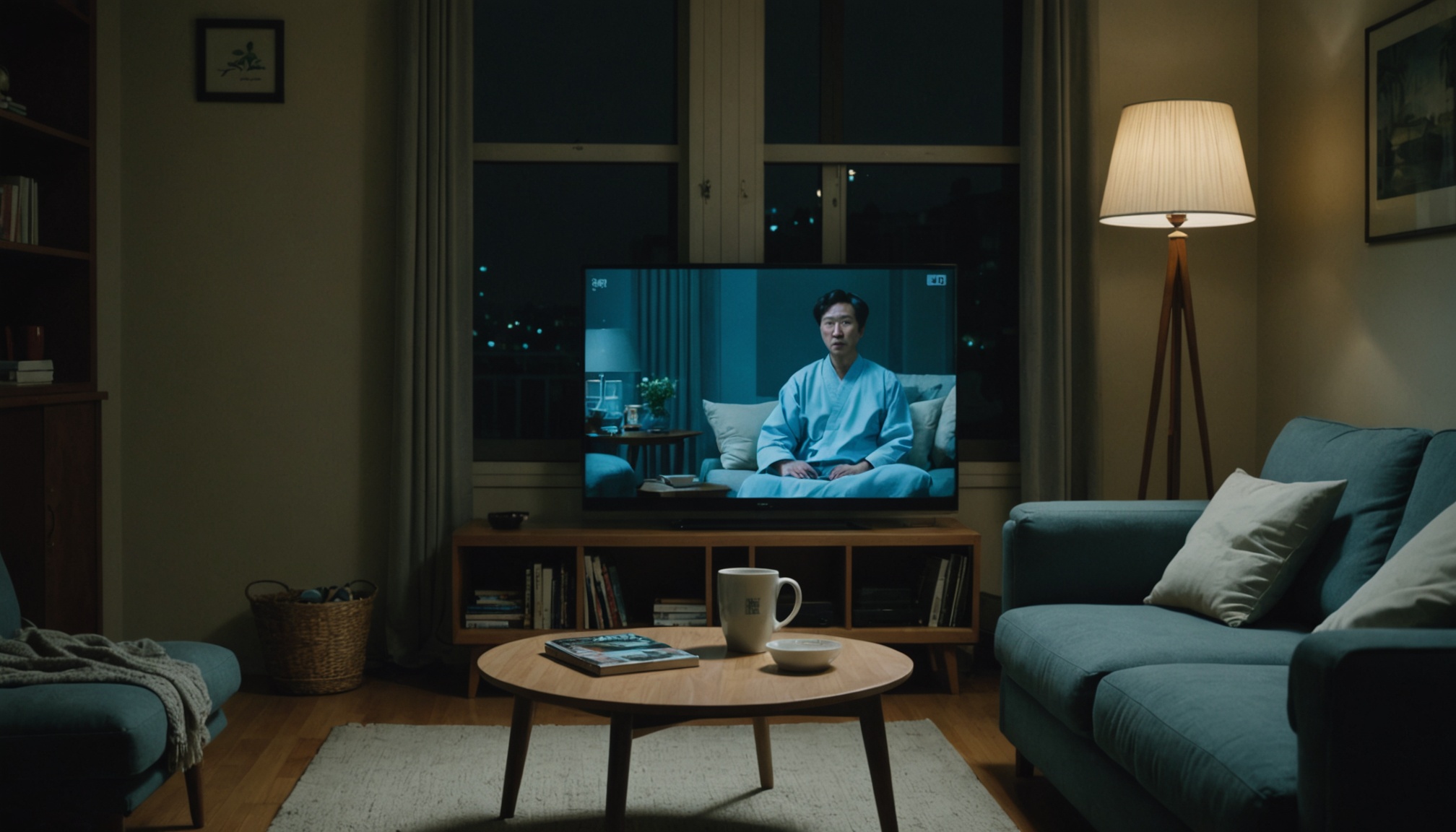
The difference between mini LED and OLED comes down to how many pieces the screen is cut into before the light is switched off. Mini LED dims by zone; OLED dims by pixel. On published specifications, a 75-inch set with 504 zones gives each zone an area roughly 5.5cm on a side to handle on its own.
On a screen of the same size, a 4K OLED switches off 8.29 million pixels independently. Whether the control unit is a 5.5cm square or a 0.04cm square is a difference of several orders of magnitude, and it separates black level, blooming, burn-in risk and peak brightness all at once. A zone count on a spec sheet tells you nothing about how dense it is relative to screen size, so the division is done here.
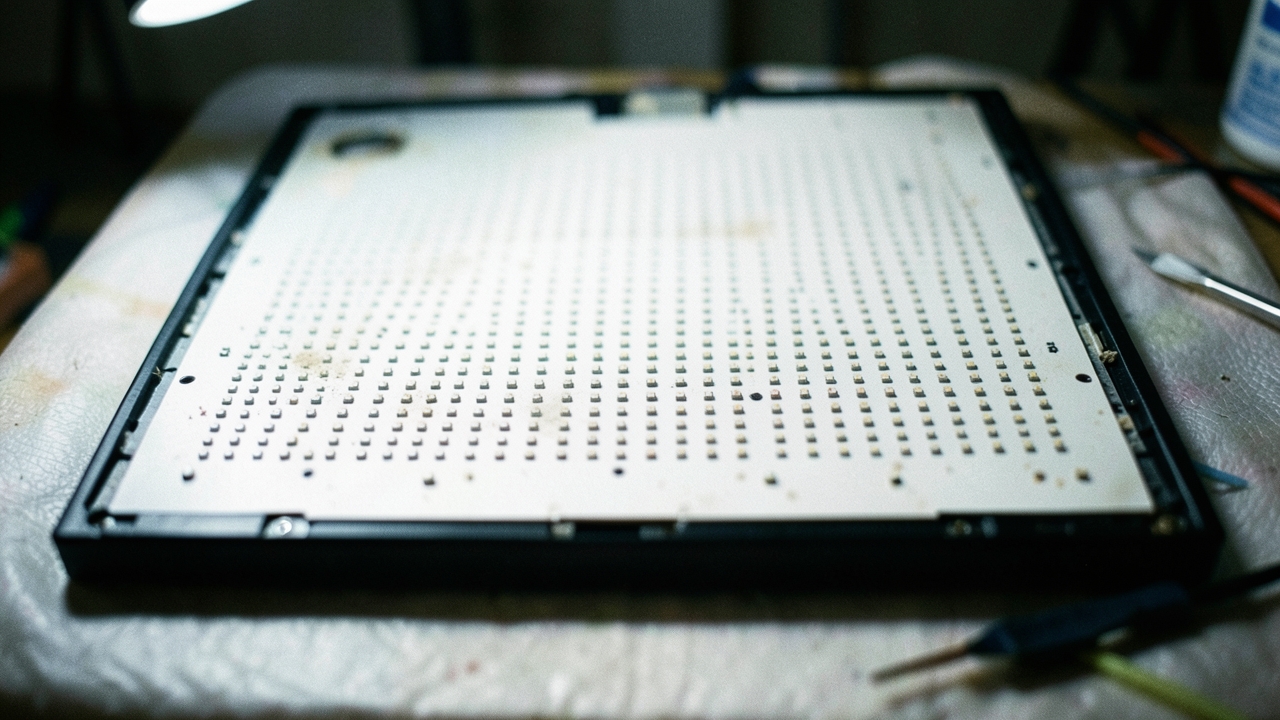
Backlight or no backlight decides the rest
Samsung's TV buying guide describes mini LED as a backlight technology using LEDs smaller than conventional ones, and OLED as a technology in which each pixel emits its own light, requiring no backlight. Mini LED is still LCD. Light is fired from behind and the liquid crystal in front blocks it to make black. It never blocks completely, so a halo lingers around bright objects.
Cutting the LEDs smaller and adding more of them reduces that. But LED count and dimming zone count are two different numbers. One 75-inch Korean model states that its 3,024 mini LEDs are grouped into 504 zones. Six LEDs rise and fall together. The smallest unit of brightness control is 504, not 3,024.
How much screen does one dimming zone cover?
The area of a 16:9 screen in square inches is the diagonal in inches squared, times 0.4273. Multiply by 6.4516 for square centimetres, then divide by the zone count. Zone counts below are taken as published by manufacturers and trade press.
| Screen | Screen area (cm²) | Control units | Area per unit (cm²) | Square equivalent, per side (cm) |
|---|---|---|---|---|
| 75-inch mini LED (504 zones) | 15,507 | 504 | 30.8 | 5.55 |
| 98-inch mini LED (1,782 zones) | 26,477 | 1,782 | 14.9 | 3.85 |
| 75-inch mini LED, 2,000 zones assumed | 15,507 | 2,000 | 7.8 | 2.78 |
| 65-inch 4K OLED (per pixel) | 11,647 | 8,294,400 | 0.0014 | 0.037 |
The 98-inch figure cites the 1,782 zones reported for Samsung's Neo QLED 4K QNF90 in 98 inches. The screen is larger, but 3.5 times as many zones cut the area per unit to less than half. Comparing raw zone counts hides that relationship: 1,000 zones means something entirely different at 55 inches than at 85.
The last row is the reference point. OLED's control unit is more than twenty thousand times smaller by area than a mini LED zone. That ratio is why the gap shows up on white subtitle text against black, or stars in a night sky — small bright objects sitting on a dark field.
Brightness and burn-in sit on opposite sides

ITWorld's comparison notes that mini LED can exceed 1,000 nits at peak and hold at least 600, while OLED rarely passes 1,000 nits and cannot sustain it when it does. The same piece cites LG's claim of 100,000 hours before performance at maximum brightness halves.
The reason OLED cannot push brightness and the reason burn-in happens are the same reason. Drive organic emitters hard and their life shortens, so manufacturers cap brightness at the production stage. Mini LED uses inorganic LEDs and has no such limit, but its liquid crystal cannot fully block light, so black floats. Each side's advantage is the price the other side's physics charges.
| Item | Mini LED | OLED |
|---|---|---|
| Light structure | Backlight plus liquid crystal | Self-emissive pixels |
| Control unit | Dimming zone | Pixel |
| Peak brightness (published) | Above 1,000 nits | Rarely above 1,000 nits |
| True black | No — halo remains | Yes — pixel switches off |
| Burn-in | Effectively not a factor | Depends on usage |
| Favourable setting | Bright living room, daytime | Dark room, night |
Mini LED is a technology for switching light on; OLED is one for switching it off. A bright room favours the former, a dark one the latter.
The room decides which one fits
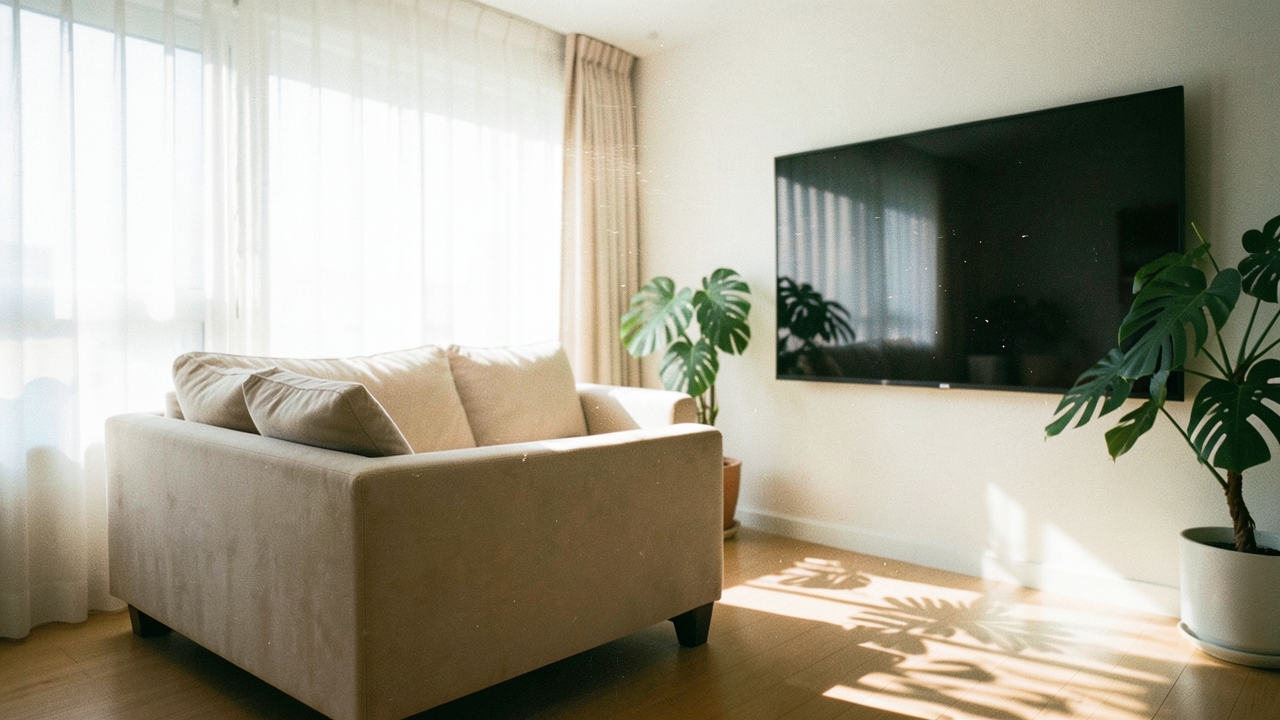
Judged on published specifications, the choice is less about a quality ranking than about where the set will live.
- A south-facing living room with the TV on through the day points to mini LED — under strong ambient light, absolute brightness matters more than black depth
- Mostly films with the lights off points to OLED — a dark screen is exactly the condition under which halos become visible
- A console or PC leaving static elements on screen for hours points to mini LED, since that is the burn-in condition. Response-time claims should be checked separately, as in the conditions behind a 1ms rating
- Choosing mini LED means asking for the zone count at that specific size and dividing it by area, as in the table above — zone counts vary by size within one lineup
- Comparing HDR on paper means using metrics with defined test conditions, such as the DisplayHDR certification tiers
There are also reasons to wait. Zone counts sometimes carry over unchanged between model years; the 98-inch set cited above kept the same count as its predecessor. A new generation does not by itself guarantee that this number improves.