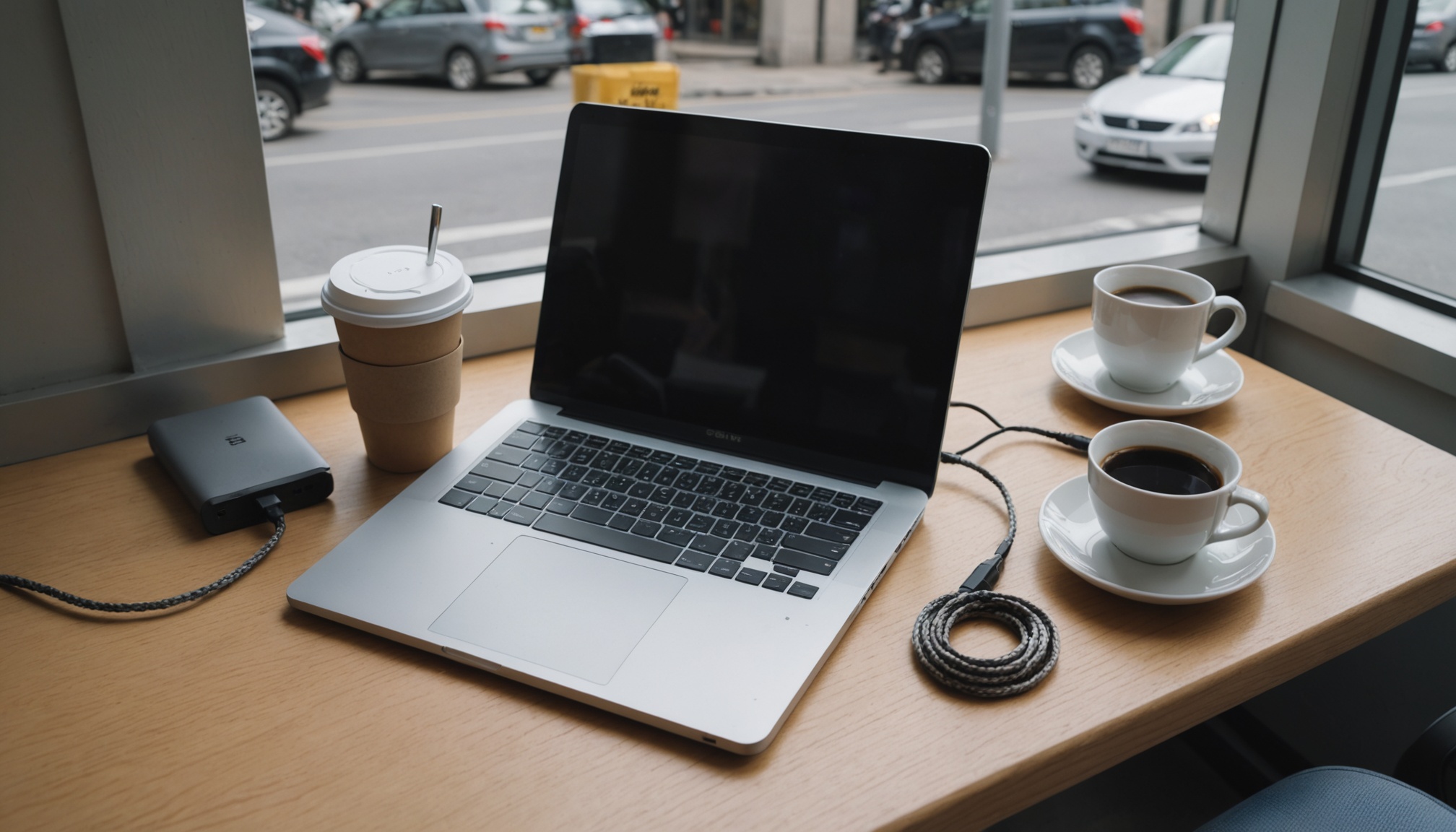
To get a laptop battery's watt-hours, divide the mAh figure by 1,000 to convert it to amp-hours, then multiply by the pack voltage. A 10,000mAh, 3.7V battery is 37Wh. Phones can get away with quoting mAh alone; laptops cannot, because cell configurations differ from model to model. As Danawa's hardware glossary explains, laptop packs wire several cells in series to reach voltages well above a single lithium-ion cell, so Wh — not mAh — is the figure that means anything.
Wh translates directly to "how many watts for how many hours." A 60Wh pack sustains 60W for one hour, or 30W for two. One number on a spec sheet gives you the ceiling on runtime — and simultaneously decides whether the battery is allowed on an aircraft.
Converting an mAh-Only Rating to Wh
There is one formula: Wh = mAh ÷ 1,000 × voltage. The trap is the voltage. A single lithium-ion cell has a nominal voltage of roughly 3.7V, and laptops stack three or four of them in series. Series wiring adds the voltages while the mAh stays put. Danawa's worked example shows exactly this: three 3.7V cells at 4,400mAh give (3.7 × 3) × 4.4 = 48.8Wh.
Below are conversions by rating format. Power banks commonly omit their cell layout and quote mAh at a 3.7V basis, which the table reflects.
| Rating | Voltage layout (V) | Calculation | Result (Wh) |
|---|---|---|---|
| 4,400mAh laptop pack | 3.7 × 3 cells = 11.1 | 4.4 × 11.1 | 48.8 |
| 5,000mAh laptop pack | 3.85 × 4 cells = 15.4 | 5.0 × 15.4 | 77.0 |
| 10,000mAh power bank | 3.7 | 10 × 3.7 | 37.0 |
| 20,000mAh power bank | 3.7 | 20 × 3.7 | 74.0 |
| 27,000mAh power bank | 3.7 | 27 × 3.7 | 99.9 |
The same 5,000mAh is 18.5Wh as a single 3.7V cell and 77Wh as a 15.4V four-cell pack — a gap of more than four times. That is the whole reason comparing two batteries by mAh alone produces no answer. Forcing a comparison across mismatched units is structurally the same problem as cordless vacuums quoting suction in Pa and W interchangeably.
How Long Does 60Wh Actually Last?
The theoretical runtime ceiling is Wh ÷ power draw in watts. Using the per-task draw ranges Danawa cites (10–20W for office work, 30–40W for graphics, 80–150W for demanding games), here are three capacities run through the math. The 72.4Wh column is the real figure from Apple's published specs for the 14-inch MacBook Pro with M4 Pro or M4 Max.
| Task | Draw (W) | 53Wh | 72.4Wh | 99Wh |
|---|---|---|---|---|
| Documents and web browsing | 12 | 4.4 hrs | 6.0 hrs | 8.3 hrs |
| Video playback | 20 | 2.7 hrs | 3.6 hrs | 5.0 hrs |
| Photo and video editing | 35 | 1.5 hrs | 2.1 hrs | 2.8 hrs |
| Demanding games | 100 | 0.5 hrs | 0.7 hrs | 1.0 hrs |
These are theoretical numbers. In practice, conversion losses, display brightness, and radio activity cut them down, and any playback figure a manufacturer publishes comes from an in-house test with brightness and content held fixed. Apple's double-digit video playback claim on that same 72.4Wh pack rests on a low-power playback path. So Wh is best read not as an absolute runtime but as a ratio between comparable machines: 53Wh versus 99Wh is a 1.87x gap in every row of the table.
Wh does not tell you how long a laptop lasts. It tells you how many times longer one lasts than another.
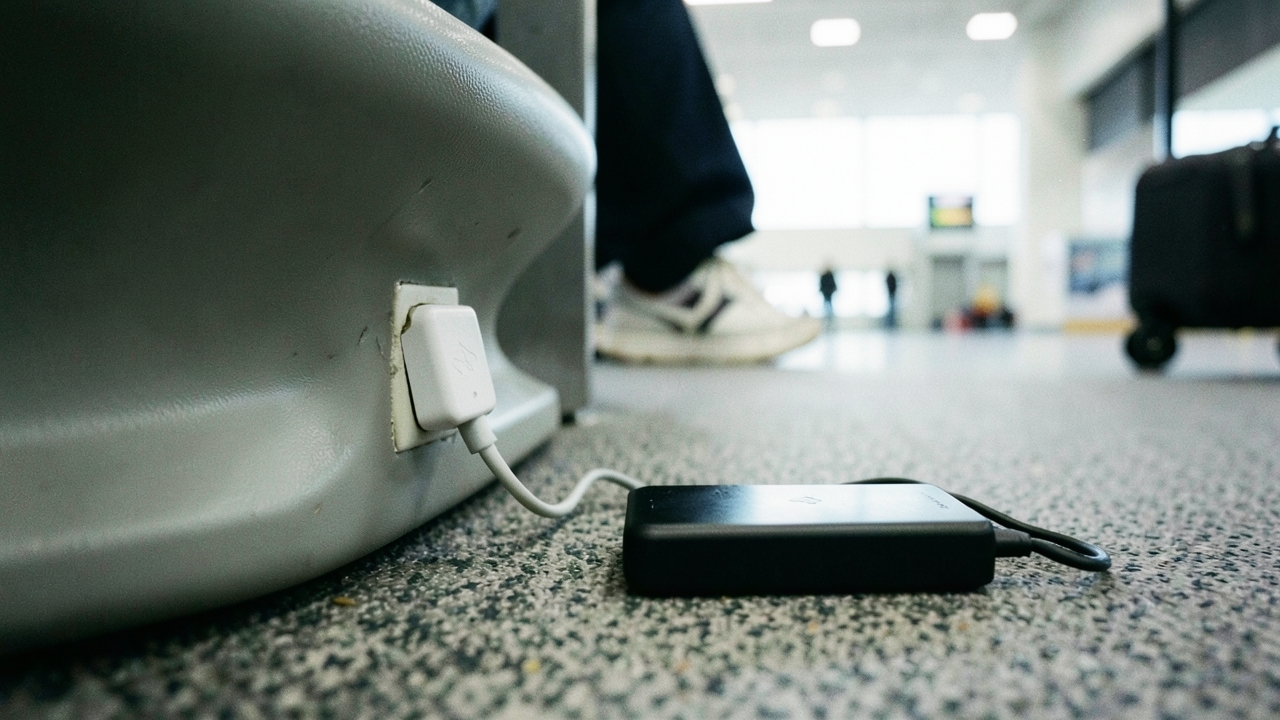
100Wh and 160Wh: The Two Aviation Thresholds
There is a second practical reason to run the conversion — air travel rules are written in Wh, not mAh. The thresholds summarized by Korea's government policy briefing are as follows.
| Capacity | Carry-on | Quantity allowed | Extra conditions |
|---|---|---|---|
| 100Wh or less | Allowed | Up to 5 | 6 or more requires check-in counter approval plus a short-circuit prevention sticker |
| Over 100Wh up to 160Wh | Allowed | 2 | Laptop and tablet class mid-size packs |
| Over 160Wh | Not allowed | — | High-capacity camping power stations and similar |
Lithium batteries cannot go in checked baggage and must be carried on the person. Once on board, they have to stay on your body or in the seat pocket — overhead bin storage is prohibited even inside a plastic bag. Charging a laptop or phone from a power bank in flight is also barred. These rules took effect as a Ministry of Land, Infrastructure and Transport standard on 1 March 2025.
That a 27,000mAh power bank computes to 99.9Wh means it just barely stays in the five-unit tier. Step up to 30,000mAh (111Wh) and it drops into the two-unit tier. Most laptop packs are designed under 100Wh, and this aviation rule effectively functions as the design ceiling: cross 100Wh and the machine runs into trouble with business-travel demand.

What Else to Check Alongside Wh
Judging by published specs alone, a few items get missed if Wh is the only number you read.
- Whether voltage is stated — an mAh figure with no voltage cannot be converted, which makes it an uncomparable number
- Charging time — a bigger pack takes longer to fill. Topping up 99Wh from a 65W adapter takes over 1.5 hours in theory, the same structure as calculating charge time at 45W
- Weight — at current lithium-ion energy density, every additional 20Wh generally adds roughly 100g of pack. That is why ultralight models sit in the 53Wh range
- Degradation — Wh is the as-new rating and falls below design capacity as charge cycles accumulate (see how to calculate battery cycles)

Who Each Tier Suits
- 70Wh and up — users who need to sustain 30W-plus work such as editing or compiling for over two hours away from an outlet. The added weight buys something real
- 53Wh class is enough — document and web-centred use that only needs to last about four hours of daily commuting. At that draw, weight is the deciding factor
- Wait on it — any product quoting mAh without disclosing voltage. If Wh cannot be back-calculated, no comparison is possible
- Avoid — power banks above 160Wh for business travel. They are simply not permitted on board