An eSIM activates by downloading a plan profile onto a chip built into the device, while a physical SIM (USIM) works by inserting a card into a slot. In Korea, the three mobile carriers began official eSIM activation on September 1, 2022, and the eSIM issuance fee is 2,750 won, about a third of the 7,700 won retail price of a physical SIM. The real differences show up in activation, dual-SIM setup, and changing devices.
Since the government announcement introducing official eSIM support, recent iPhones and Galaxy phones support dual SIM using one physical SIM and one eSIM at once. So the choice is usually not one or the other, but how to combine two lines.
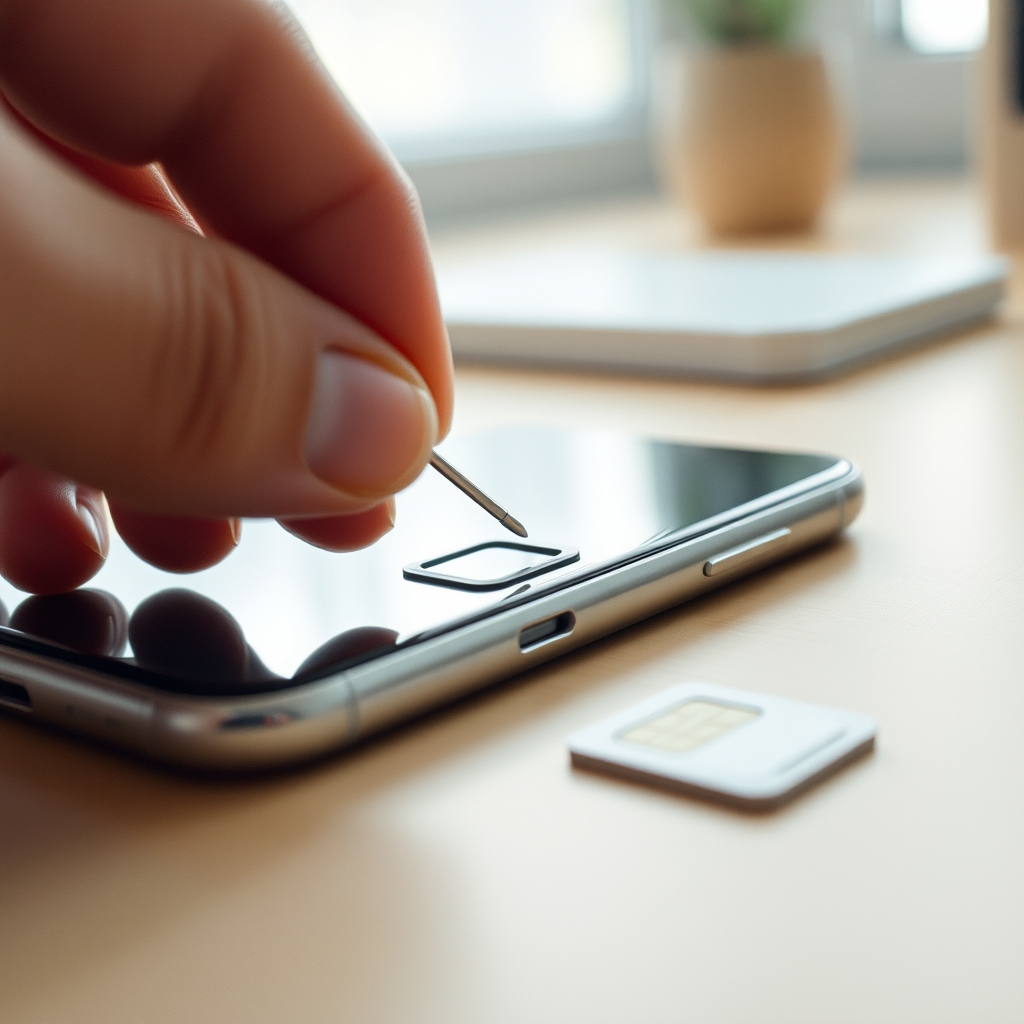
eSIM versus physical SIM: what differs
Based on public carrier policy and manufacturer guidance, here is an item-by-item comparison. Samsung explains that on supported Galaxy models you activate by downloading an eSIM profile via a QR code or the carrier app.
| Item | eSIM | Physical SIM (USIM) |
|---|---|---|
| Form | Profile stored on a built-in chip | Removable card |
| Activation | Download profile via QR or carrier app | Insert card into slot |
| Domestic issuance fee | 2,750 won | 7,700 won |
| Changing devices | Reissue profile at carrier | Move the card to the new phone |
| Dual-SIM combo | Two lines at once with a physical SIM | Two lines at once with an eSIM |
| Loss or theft | Cannot be physically removed, remote suspend | Card can be removed |
On cost alone, the 2,750 won eSIM fee is 4,950 won cheaper than a 7,700 won physical SIM, a saving of about 64%. Carriers have often changed the terms, however, even waiving the first issuance fee during the 2022 rollout, so it is more accurate to check the actual quoted fee at the time you activate.
The contest between eSIM and physical SIM is decided by situation, not performance. If you swap devices often, a card is easy; if you want two numbers on one device, an eSIM is the answer.
How dual SIM is configured
Both iPhone and Galaxy can keep one physical SIM and one eSIM, up to two lines, active at once on a single device. With both lines on, texts and data arrive on the other number even while you are on a call. Common setups separate a work and a personal number, or keep a domestic number while adding local data abroad.

Some iPhone models also support dual eSIM, storing two eSIMs and running two of them at once without any physical SIM. Trip.com highlights that adding a local-network eSIM abroad keeps your domestic number active without swapping a chip, unlike inserting a foreign physical SIM, which makes it hard to receive verification texts sent to your home number.
Changing devices and losing one
An eSIM's relative inconvenience appears when changing devices. A physical SIM just moves to the new phone, but an eSIM must have its profile reissued on the new device, via the carrier app or support, and an issuance fee may apply again. Samsung's guidance also shows that moving an eSIM between devices is not as instant as swapping a card.

Loss and theft can be read the other way. A physical SIM can be pulled and abused in another device, but an eSIM is built into the phone and cannot be physically removed, so that kind of theft is harder. Either way, the first step on loss is to ask the carrier to suspend the line. When checking budget phone specs, note that eSIM support varies by model.
Who eSIM suits
The two are not better and worse but different in use. It is better to judge against your own pattern.
- eSIM fits — you want two numbers (work and personal) on one device, you travel often and want to keep a domestic number while adding local data, or you worry about losing a SIM chip.
- Physical SIM fits — you swap devices often or move a number to a spare phone, you want an instant move without reissuance, or you have an older or budget device without eSIM support.
- Check before buying — whether your device supports eSIM, whether your carrier and plan support eSIM activation, and the quoted issuance fee at that time. Latest models like foldables mostly support it, but low-cost phones vary by model.