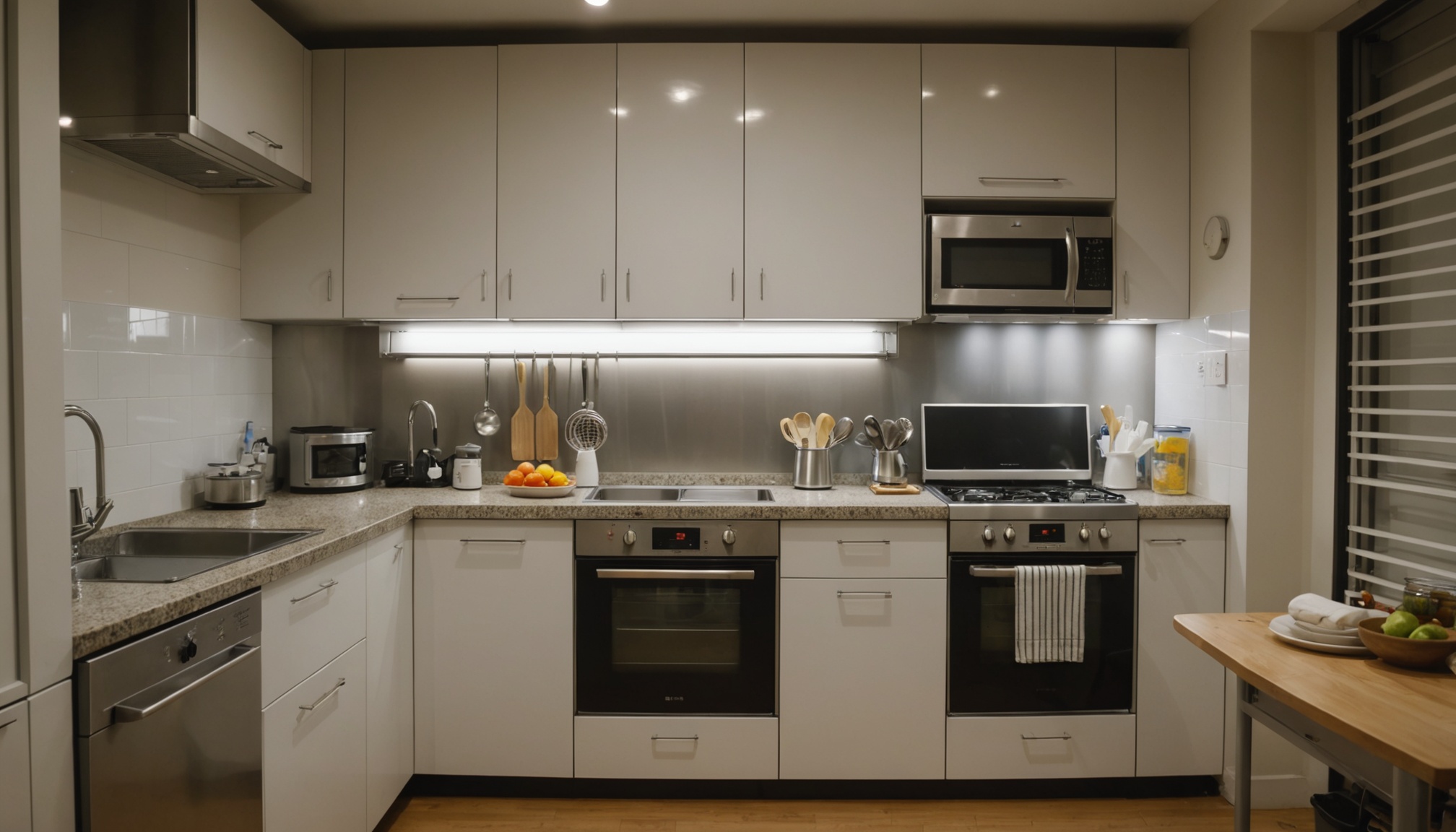
Choosing between a 6-place and a 12-place setting dishwasher barely moves your electricity bill. In the Korea Consumer Agency's September 2025 comparison of compact dishwashers, three-place models averaged 35,000 won a year and six-place models 36,000 won — a gap of 1,000 won (Consumer News). In the same test, heated-air drying averaged 43,000 won against 28,000 won for fan and passive drying, a spread of 15,000 won. Capacity decides how many dishes fit in one load; the drying method and the cycle decide what you pay every month.
What the "place setting" number means
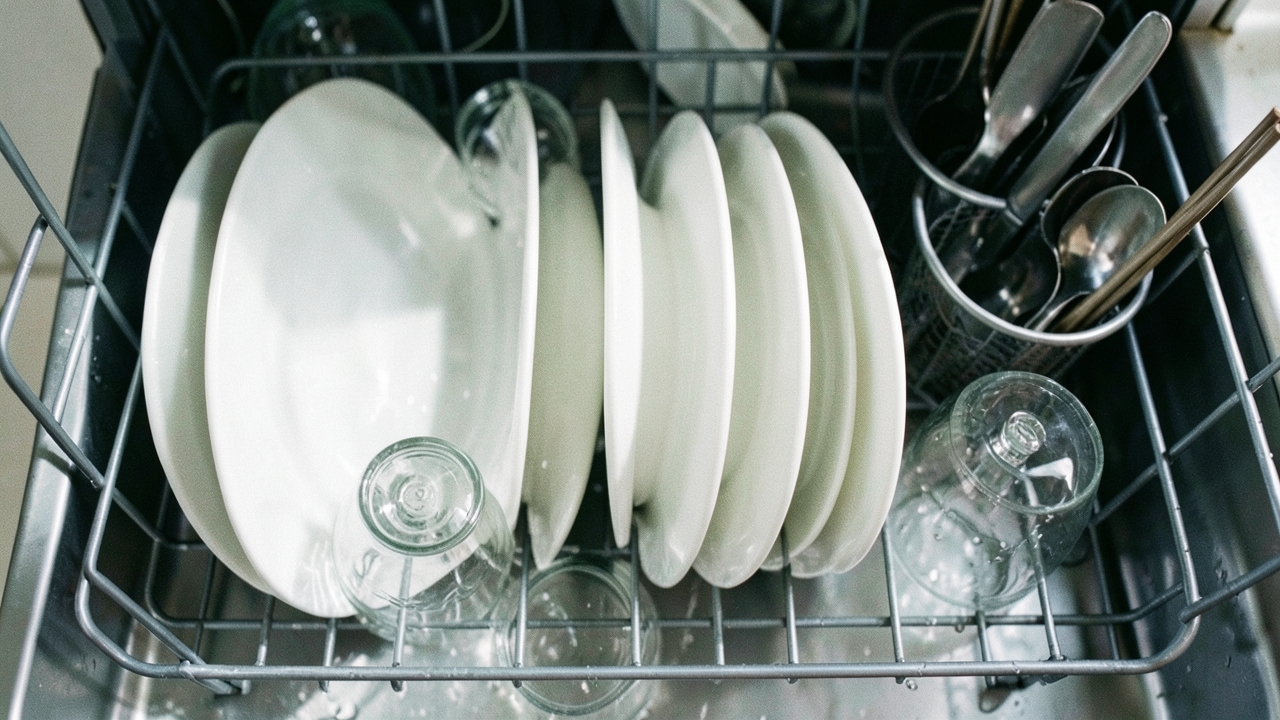
Korean dishwashers are rated in inyong — the number of people's worth of dishes one cycle can handle. A six-place unit covers plates, cups and cutlery for a one- or two-person household; twelve places and up is where pots and frying pans start to fit. On published specifications, units at six places or below generally cannot take large cookware, so hand washing continues alongside. In May 2023 the Ministry of Trade, Industry and Energy amended its efficiency regulation to bring household dishwashers of twenty places or fewer under the energy efficiency grading scheme, and from July 2024 grade declaration and label display (grades 1 to 5) became mandatory (Korea Policy Briefing). Two machines of the same capacity can carry different grades, and therefore different consumption.
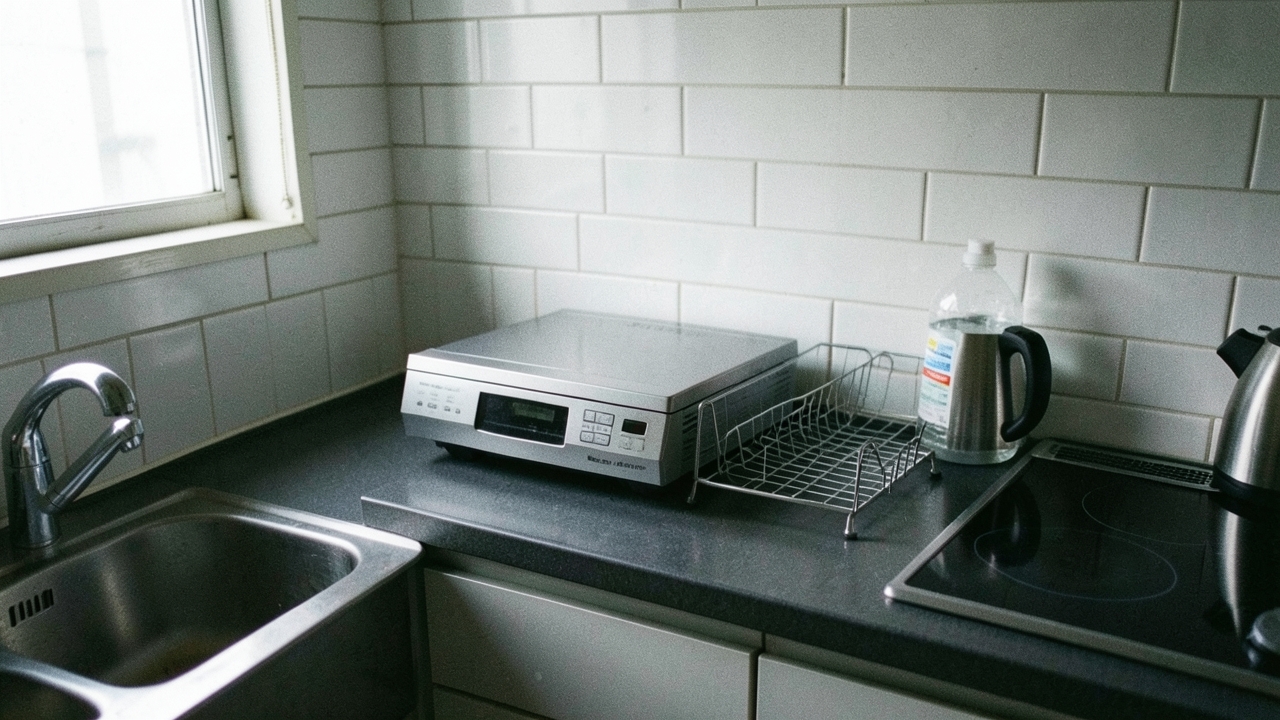
Installation follows capacity too. Four of the six compact units tested were freestanding models that sit on the countertop without plumbing work (Woman Consumer). Twelve-place machines are floor-installed by default, which means clearing a sink base cabinet and running supply and drain lines.
Drying method, not capacity, sets the annual bill
Annual electricity cost across the compact models ran from 25,000 to 47,000 won — a 1.9x spread. Capacity was not what produced it. Three-place at 35,000 won and six-place at 36,000 won are effectively the same number; heated air at 43,000 won versus fan and passive at 28,000 won is the real fork. By model, the Cuckoo CDW-A0310TW (3-place, fan) came in at 25,000 won, the Cuckoo CDW-CS0620TGPE (6-place, fan) at 27,000 won and the Samsung DW30CB300CW0 (6-place, passive) at roughly 28,000 won, while the heated-air units from Chefbon and Minix sat in the 40,000-won range.
Assuming five cycles a week — 260 a year — here is the same data converted to cost per cycle and five-year totals.
| Category | Test basis | Annual electricity (KRW) | Per cycle (KRW) | Five-year total (KRW) |
|---|---|---|---|---|
| Compact, 3-place average | KCA 2025 | 35,000 | 135 | 175,000 |
| Compact, 6-place average | KCA 2025 | 36,000 | 138 | 180,000 |
| Compact, fan/passive drying average | KCA 2025 | 28,000 | 108 | 140,000 |
| Compact, heated-air drying average | KCA 2025 | 43,000 | 165 | 215,000 |
| Full size, standard cycle (min–max) | KCA 2021 | 68,700–75,500 | 264–290 | 343,500–377,500 |
| Full size, auto cycle (min–max) | KCA 2021 | 76,200–107,800 | 293–415 | 381,000–539,000 |
Do not compare the 2021 full-size figures against the 2025 compact figures in absolute terms — the electricity tariff differed between the two test dates. What matters is the spread inside each test. Among compact units, drying method was worth 15,000 won a year. Among full-size units, cycle selection was worth 32,300 won a year (107,800 won at the top of the auto cycle range minus 75,500 won at the top of the standard range). Within the auto cycle alone, annual energy cost varied by 31,600 won between products (Newsroad). One button on the control panel outweighs a step up in capacity.
Capacity decides how many dishes go in at once. Drying method and cycle decide the next five years of bills.
Does a bigger machine use more water? Convert to per place setting
Per cycle, obviously it does. In the 2021 full-size test, auto-cycle water use ran 15.0 to 21.2 litres — up to 1.4x apart — and standard cycle 10.8 to 17.3 litres, up to 1.6x apart. The LG DFB22MA used the least on auto at 15.0 litres, the Miele G4310SC the least on standard at 10.8 litres. Divide by the rated twelve place settings and the picture changes.
| Cycle / model | Water per cycle (L) | Per place setting (L) | 260 cycles a year (L) |
|---|---|---|---|
| Standard, lowest (Miele G4310SC) | 10.8 | 0.90 | 2,808 |
| Standard, highest | 17.3 | 1.44 | 4,498 |
| Auto, lowest (LG DFB22MA) | 15.0 | 1.25 | 3,900 |
| Auto, highest | 21.2 | 1.77 | 5,512 |
The thriftiest and the thirstiest combinations are 10.4 litres apart per cycle, or 2,704 litres a year. Loaded full, a twelve-place machine lands between 0.90 and 1.77 litres per place setting. A compact unit uses less in absolute terms, but running it half-full twice erases that advantage. The agency's finding that compact dishwashers use roughly 10% of the water of hand washing also assumes one full load.
Run time and noise change where it can go
Full-size auto cycles ran from 1 hour 50 minutes to 3 hours 23 minutes — a 1 hour 33 minute spread — while standard cycles ran 1 hour 6 minutes to 2 hours. Among compact units, standard cycle run time spanned 1 hour 9 minutes to 2 hours 32 minutes, a gap of 1 hour 23 minutes. Washing itself took about an hour on every unit; drying ranged from 2 minutes to 1 hour 34 minutes. The variation in total run time is essentially drying time.
All six compact units averaged under 60dB, with the Samsung model lowest at 53dB. In a studio flat or an open-plan kitchen sharing a wall with the bedroom, a three-hour cycle combined with heated-air noise rules out overnight running. On drying performance, the 2021 test rated Samsung, SK Magic and LG — all with automatic door-opening — as excellent, and Miele and Cuckoo as good. Washing performance was rated excellent across the board in both tests, which leaves drying, time, noise and cost as the variables that actually differ. The way drying method drives the bill follows the same logic as calculating a clothes dryer's electricity cost.
Who each option suits
- One or two people, hand-washing the cookware — a freestanding six-place unit. Choose fan or passive drying and the year lands near 28,000 won
- Three or more, pots and pans included — a twelve-place built-in, but price the cabinet removal and plumbing work first
- If you need dishes fully dry — heated air, accepting 15,000 won more a year and 75,000 won over five years
- If it will run at night — read the noise rating together with cycle times. A three-hour auto cycle is hard to start before bed
- Worth waiting for — efficiency labels only began appearing after July 2024, so older stock without a grade cannot be compared on consumption. Narrowing to labelled models is the safer filter
- Already own one — switching from auto to the standard cycle alone saves around 30,000 won a year on a full-size machine. As with the efficiency gap between induction and radiant cooktops, usage conditions move the bill more than the appliance does
Sources
- Compact dishwashers: 1.9x difference in electricity cost — Consumer News
- Washing was excellent across the board; drying, cost and noise were not — Woman Consumer
- Dishwashers differ in drying performance and power draw — Newsroad
- Efficiency grading extended to dishwashers and ten other categories — Korea Policy Briefing