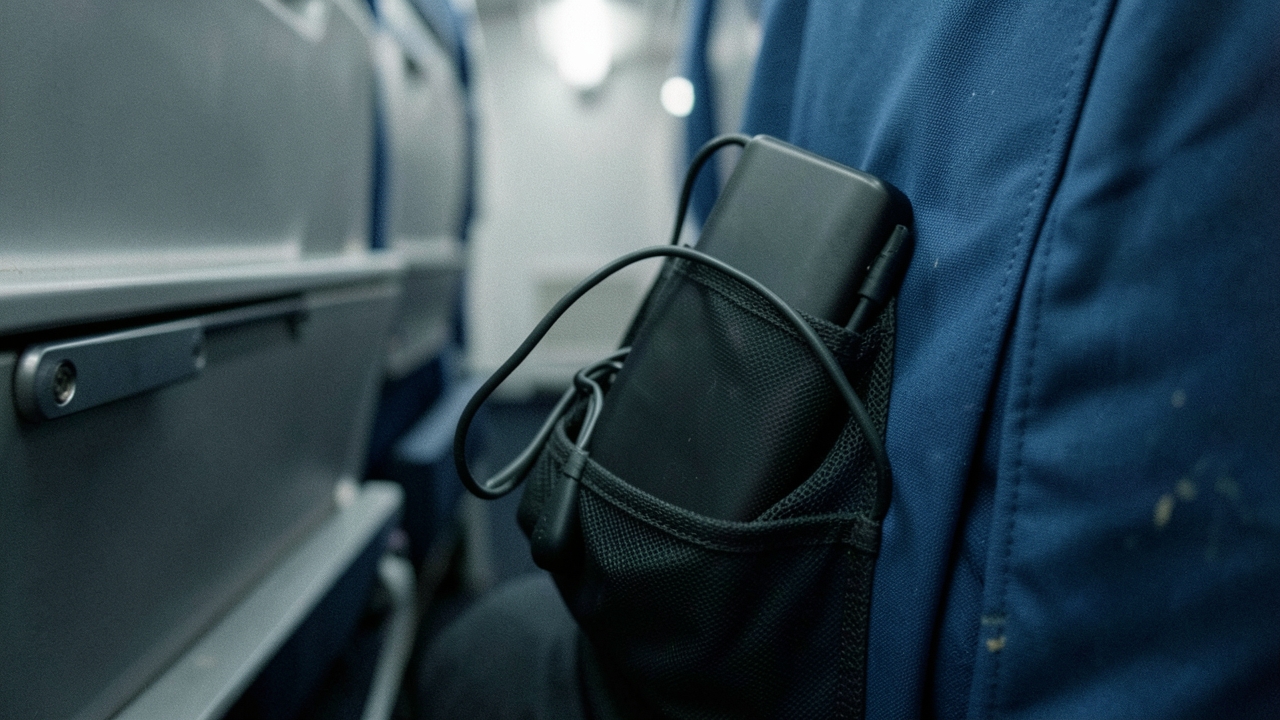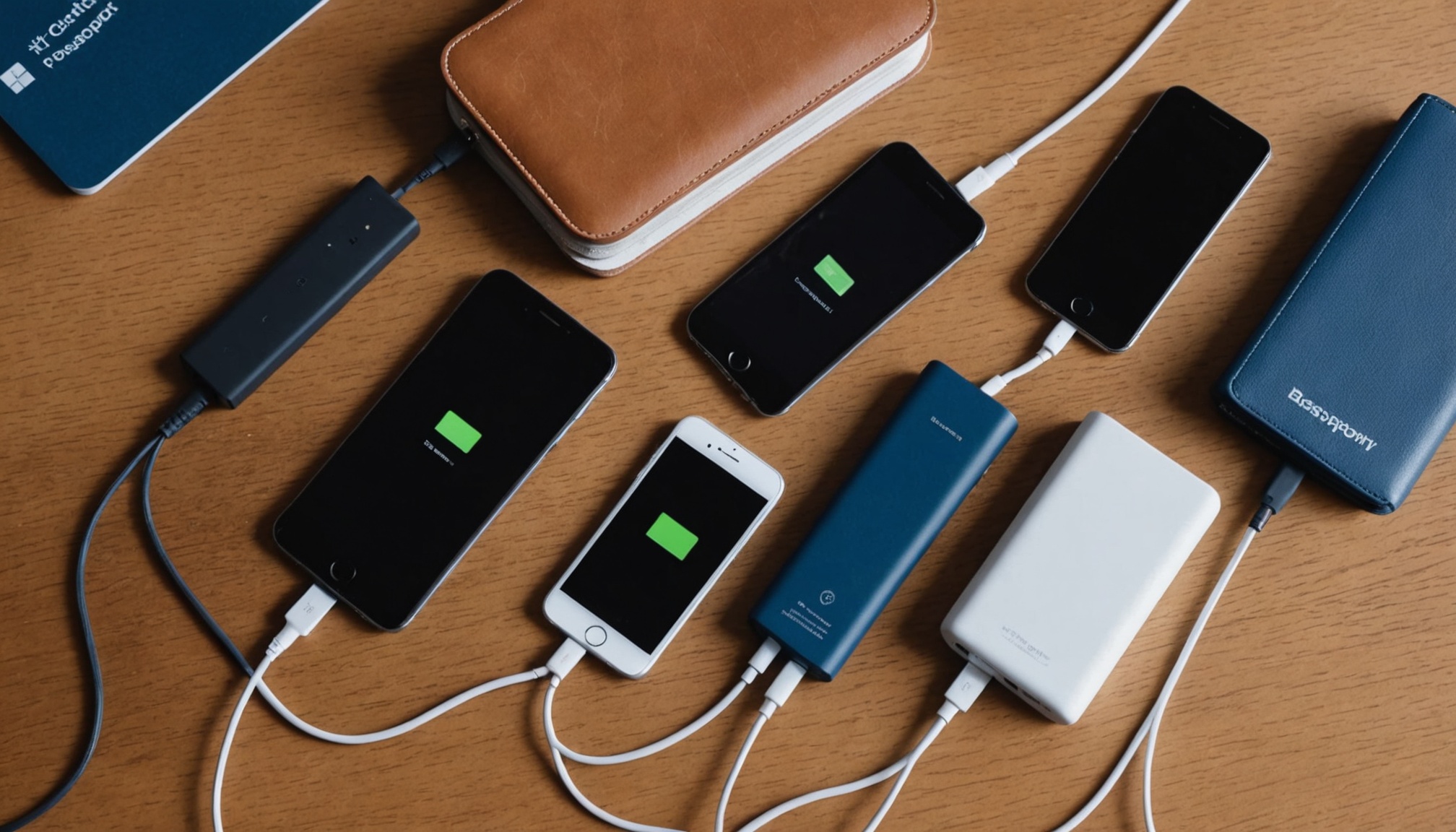
The ceiling for a power bank in an aircraft cabin is 160Wh — about 43,000mAh in labelled capacity. Even below that, from 20 April 2026 each passenger may bring only two. Charging a power bank in flight, or using one to charge another device, is banned outright.
The catch: the number printed on the box is in mAh, while the rule is written in Wh. The two do not map automatically. You need to be able to convert 20,000mAh into watt-hours before you can tell where the line falls at the gate.
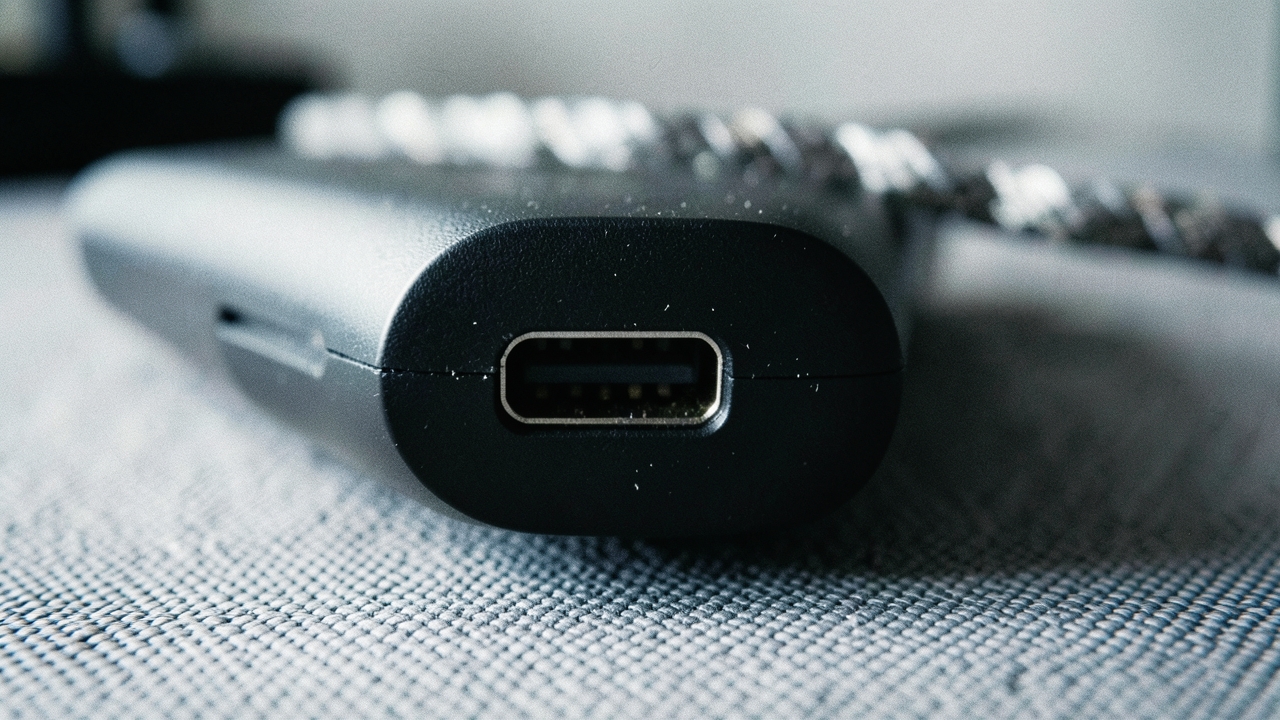
mAh is not capacity — convert to Wh to read the rule
mAh measures charge, not energy. Two 10,000mAh cells at different voltages hold different amounts of energy, and energy is what determines how much can be released in a fire. That is why aviation rules use watt-hours.
The conversion is Wh = mAh × nominal voltage (V) ÷ 1000. Lithium-ion cells are standardised at a nominal 3.7V, so absent a manufacturer figure, 3.7V is the conventional input. A 20,000mAh unit works out to 20,000 × 3.7 ÷ 1000 = 74Wh.
Reverse the formula and you get the boundaries in mAh: 100Wh ÷ 3.7V × 1000 ≈ 27,027mAh, and 160Wh ÷ 3.7V × 1000 ≈ 43,243mAh. That is the same arithmetic behind the "43,000mAh" figure quoted alongside 160Wh by Korea Policy Briefing.
Labelled capacity, converted, and whether it flies
Common labelled capacities converted at 3.7V. The last column reflects the rules in force from 20 April 2026.
| Labelled (mAh) | Energy (3.7V) | Band | Cabin status |
|---|---|---|---|
| 5,000 | 18.5Wh | Under 100Wh | Allowed, 2 per person |
| 10,000 | 37.0Wh | Under 100Wh | Allowed, 2 per person |
| 20,000 | 74.0Wh | Under 100Wh | Allowed, 2 per person |
| 27,000 | 99.9Wh | Just under 100Wh | Allowed, 2 per person |
| 30,000 | 111.0Wh | 100–160Wh | Airline approval required |
| 43,000 | 159.1Wh | Just under 160Wh | Airline approval required |
| 50,000 | 185.0Wh | Above 160Wh | Not permitted |
The real fork sits between 27,000 and 30,000mAh. At 99.9Wh the former slips under the 100Wh line with no extra step; at 111Wh the latter lands in the approval band. Under the earlier framework summarised by ZDNet Korea, units under 100Wh were capped at five, 100–160Wh units at two with airline approval, and anything above 160Wh was barred.
Some labels complicate this — a 3.6V cell rating, or multi-cell packs quoted as a sum. Where a Wh figure is printed on the housing or the spec sheet, that number governs; conversion is the fallback when it is absent.
Why a 20,000mAh pack delivers only about 12,000mAh
Labelled capacity and delivered capacity are different things. Internal cells run at 3.7V while USB output is 5V. Stepping the voltage up shrinks the charge in proportion, and conversion sheds more as heat.
The calculation: capacity at 5V = labelled mAh × 3.7 ÷ 5 × conversion efficiency. Taking a conservative 85% efficiency:
| Labelled (mAh) | Energy (Wh) | Theoretical at 5V (mAh) | At 85% efficiency (mAh) | Charges for a 4,500mAh phone |
|---|---|---|---|---|
| 10,000 | 37.0 | 7,400 | ~6,290 | ~1.4 |
| 20,000 | 74.0 | 14,800 | ~12,580 | ~2.8 |
| 27,000 | 99.9 | 19,980 | ~16,980 | ~3.8 |
That is why a 20,000mAh pack cannot fill a phone four times: roughly 63% of the label reaches the device, before cable losses and any use of the phone while charging. Anyone comparing fast-charge specs alongside this should also check how PD wattage and PPS support divide the field.
What changed between March 2025 and April 2026
Two axes moved: unit count and in-flight use. The old framework allowed five sub-100Wh units; the cap is now two regardless of capacity.
| Item | March 2025 | From 20 April 2026 |
|---|---|---|
| Units under 100Wh | Up to 5 | Up to 2 |
| 100–160Wh | 2 with airline approval | 2 with airline approval |
| Above 160Wh | Not permitted | Not permitted |
| Checked baggage | Prohibited | Prohibited |
| In-flight charging/use | Charging prohibited | Charging and use fully prohibited |
| Overhead bin storage | Prohibited | Prohibited (on person or seat pocket) |
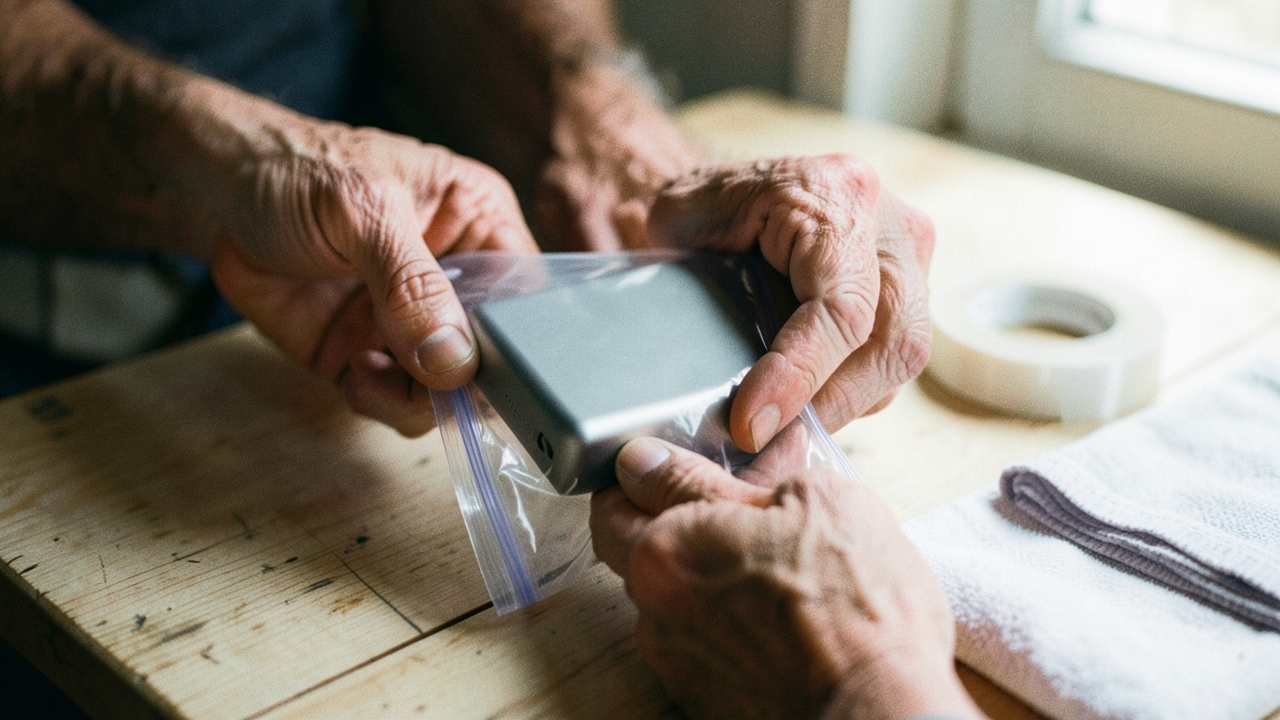
Short-circuit protection is a condition under both regimes: terminals covered with insulating tape, or the unit sealed in a protective pouch or zip-top bag. Without it, a compliant capacity can still be refused.
The rule measures energy, not capacity — until you convert mAh into Wh, there is nothing to judge.
Korea Policy Briefing notes that the tightened framework originated as a Korean proposal to ICAO and was confirmed as an international standard after council approval, which widens its reach beyond domestic routes.
Which capacity to buy
On published rules and specs, the choice splits three ways.
10,000mAh (37Wh) — for topping up a phone across a day. Delivered capacity at 5V lands in the low 6,000mAh range: one and a half phone charges plus earbuds. With the cap now at two units, carrying two of these totals the same 74Wh as a single 20,000mAh pack.
20,000mAh (74Wh) — the band to pick if a laptop top-up is in scope. It leaves 26Wh of headroom below the 100Wh line, so label tolerances never push it into approval territory. Sensible when one unit has to cover a long-haul leg.
30,000mAh and up (111Wh+) — worth waiting on if you fly often. Crossing 100Wh triggers airline approval, and procedures vary by carrier. Cell degradation cuts real capacity over time while the rule still reads the printed label, so the risk only grows. The same logic applies as in reading cycle counts and retained-capacity claims.