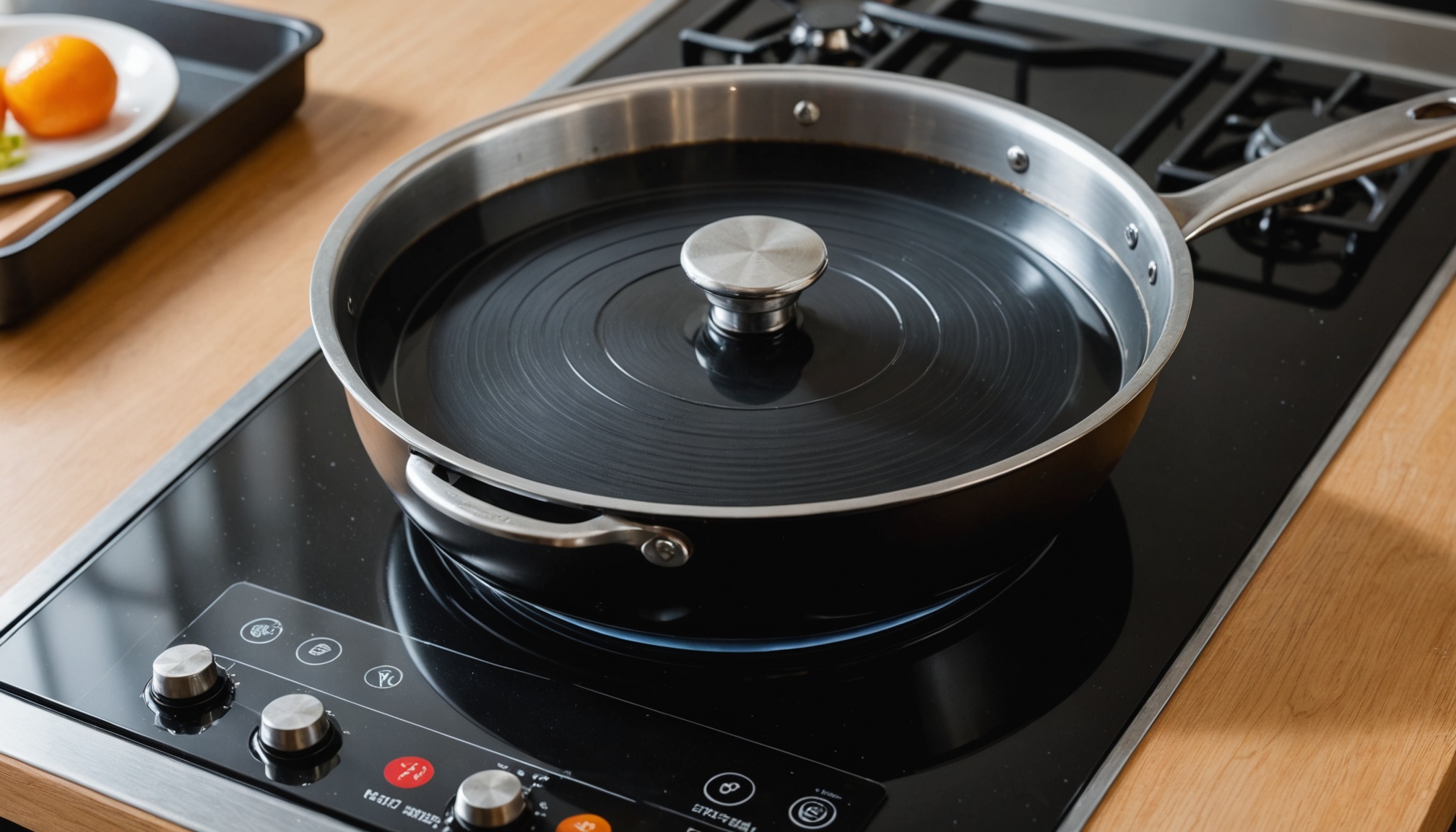
The number that separates induction from a highlight cooktop is 90% against 65%. Published comparison data rates induction at 90% thermal efficiency, highlight at 65% and gas at 50%. The same electricity reaches the pot in different amounts, and that gap shows up in both cooking time and the monthly bill. Hybrid units put both types on one surface, which makes them a different kind of decision altogether.
Heating the pot versus heating the glass
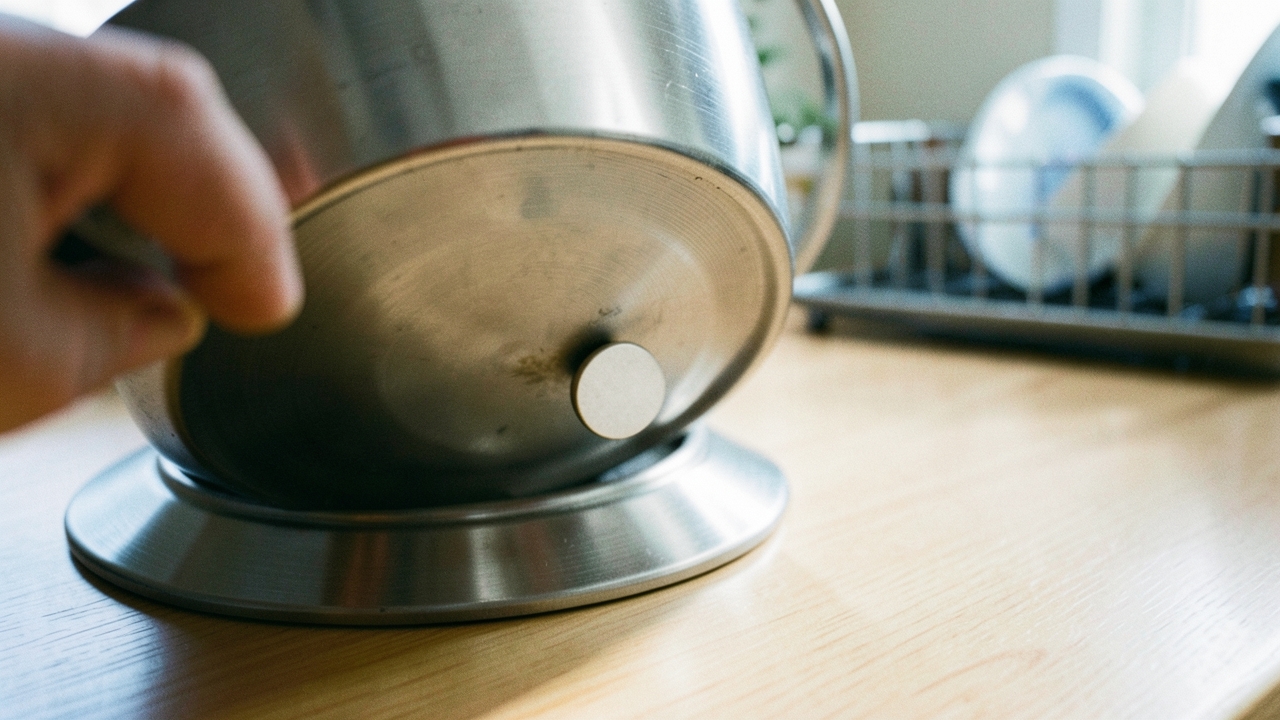
Induction uses a coil beneath the glass to induce current in the cookware itself, turning the pot into the heating element. Because heat is generated inside the thing being cooked, almost nothing is lost in transit. A highlight cooktop heats a radiant element under the ceramic surface; that heat then passes through the glass and into the pot base. Two transfer stages mean losses to the glass and the surrounding air, and that is what 65% actually describes.
Different structures bring different constraints. Induction only works with ferromagnetic cookware. By the standard summarized in 100ssd, cast iron, enamel and stainless steel qualify, while aluminum, glass and ttukbaegi (Korean earthenware pots) do not. A highlight surface heats up itself, so it accepts any vessel. In a kitchen that leans on ttukbaegi, that single line matters more than 25 percentage points of efficiency.
Same 2,300W, double the electricity bill
Equal wattage does not mean equal outcome. In published comparison testing at an identical 2,300W output, induction brought the same quantity of water to a boil in 5 minutes 40 seconds while the highlight cooktop needed 11 minutes 30 seconds. When wattage is held constant, energy consumed is simply proportional to time — so those two figures alone are enough to compute the electricity cost.
Energy equals power (kW) times hours. Induction: 2.3kW × 0.0944h = 0.217kWh. Highlight: 2.3kW × 0.1917h = 0.441kWh. Assume three sessions a day, 90 a month, and apply Korea's 2026 residential low-voltage progressive rates (tier 1: 120.0 won, tier 2: 214.6 won, tier 3: 307.3 won per kWh). Base charges, VAT and the power industry fund are excluded; this is the energy charge only.
| Item | Induction (2,300W) | Highlight (2,300W) | Difference |
|---|---|---|---|
| Time to boil the same water | 5 min 40 s | 11 min 30 s | 2.03x |
| Energy per session (kWh) | 0.217 | 0.441 | 0.224 |
| Monthly energy, 90 sessions (kWh) | 19.55 | 39.67 | 20.12 |
| Monthly charge at tier 1 (won) | 2,346 | 4,760 | 2,414 |
| Monthly charge at tier 2 (won) | 4,195 | 8,513 | 4,318 |
| Monthly charge at tier 3 (won) | 6,008 | 12,191 | 6,183 |
The same cooking, done the same number of times, costs an extra 20kWh a month — 4,300 won in tier 2, 6,200 won in tier 3. The absolute sums are small, but the direction is what counts. Those 20kWh stack on top of whatever other appliances have already consumed, so a household hovering near 400kWh may find them to be the last step over a tier boundary. 100ssd puts the monthly increase from a cooktop used 30 minutes a day at roughly 11,000 won; against that baseline, a twofold difference is not trivial. The same arithmetic exposes the assumptions behind other appliance ratings — see the conditions under which a dryer's "107 won per cycle" label holds.
Twenty-five percentage points of efficiency is not catalogue decoration; it is the number that makes the same pot take twice as long.
Reading the wattage: 3,700W against a 3,300W ceiling
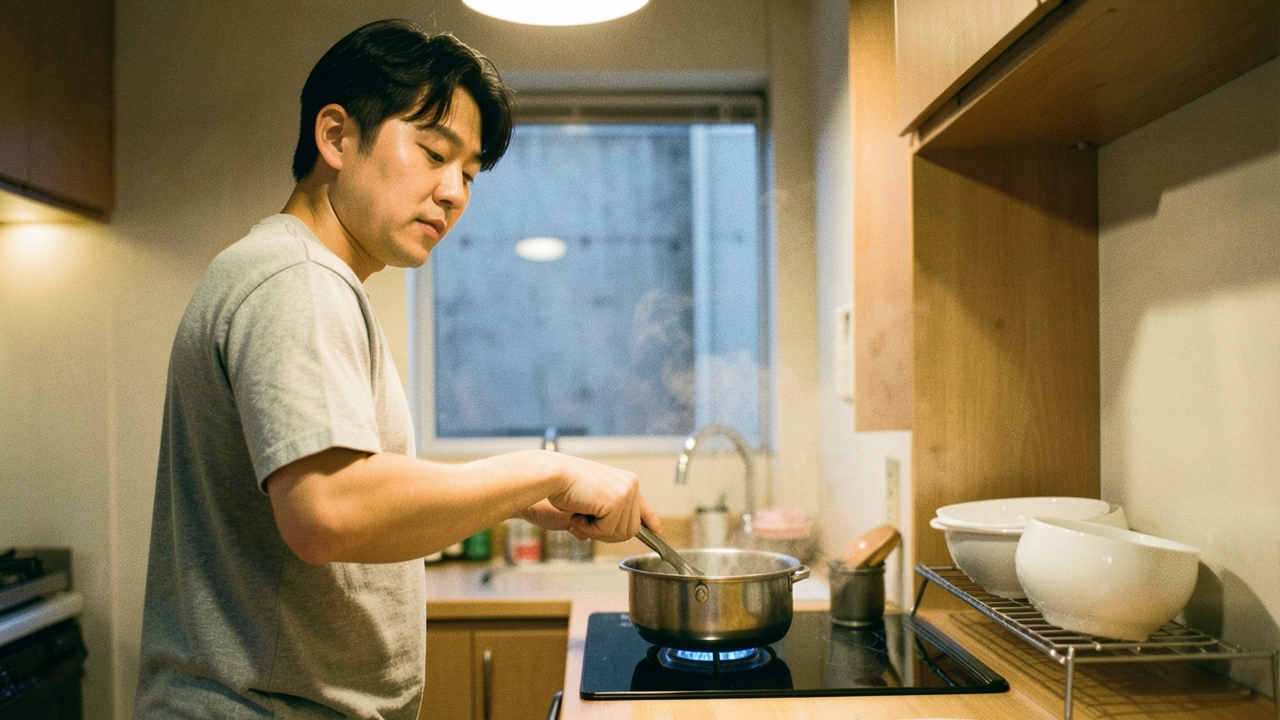
Rated output is not delivered heat. On the same comparison basis, induction produces roughly 1.4 times the cooking power of gas and about 1.8 times that of a highlight burner at equal wattage — which is where the claim of a 3,700W induction boiling two liters in 3.5 minutes comes from. But a Korean household circuit tops out around 3,300W. Run multiple zones at maximum and total draw exceeds that ceiling, at which point the unit throttles itself: with two zones active, one drops below its top setting.
So a 3,700W rating should be read as a single-zone figure. In a kitchen that regularly runs two zones at once, a dedicated circuit and the capacity of the distribution panel determine real output more than the printed number does. For a built-in installation, confirming dedicated wiring before the work starts pays off more than comparing rated outputs.
What a hybrid actually buys you
A hybrid places induction and highlight zones on one surface. The key point is that it is not a compromise third technology — it is both technologies kept intact and divided by zone. The induction zone still demands magnetic cookware; the highlight zone still runs at 65% efficiency with long residual heat.
A hybrid is therefore closer to buying out a cookware constraint than to buying performance. It suits a household that will not give up earthenware or glass pots but wants its main burner fast. If every pot already in the cupboard is stainless or cast iron, the highlight zone consumes space and money for nothing.
| Category | Induction | Highlight | Hybrid |
|---|---|---|---|
| Heating method | Magnetic field heats cookware directly | Radiant element beneath the glass | Both, split by zone |
| Thermal efficiency | 90% | 65% | 90% or 65% depending on zone |
| Compatible cookware | Cast iron, enamel, stainless | No restriction | Varies by zone |
| Residual heat | Only heat conducted back from the pot | 10-20 minutes to cool | Residual heat on the highlight zone |
| Price band (published retail) | 60,000-100,000 won single zone; 300,000-1,000,000 won for 2-3 zones | From about 30,000 won single zone; 70,000 won for two | Comparable to induction-only, by configuration |
The constraints the catalogue leaves out
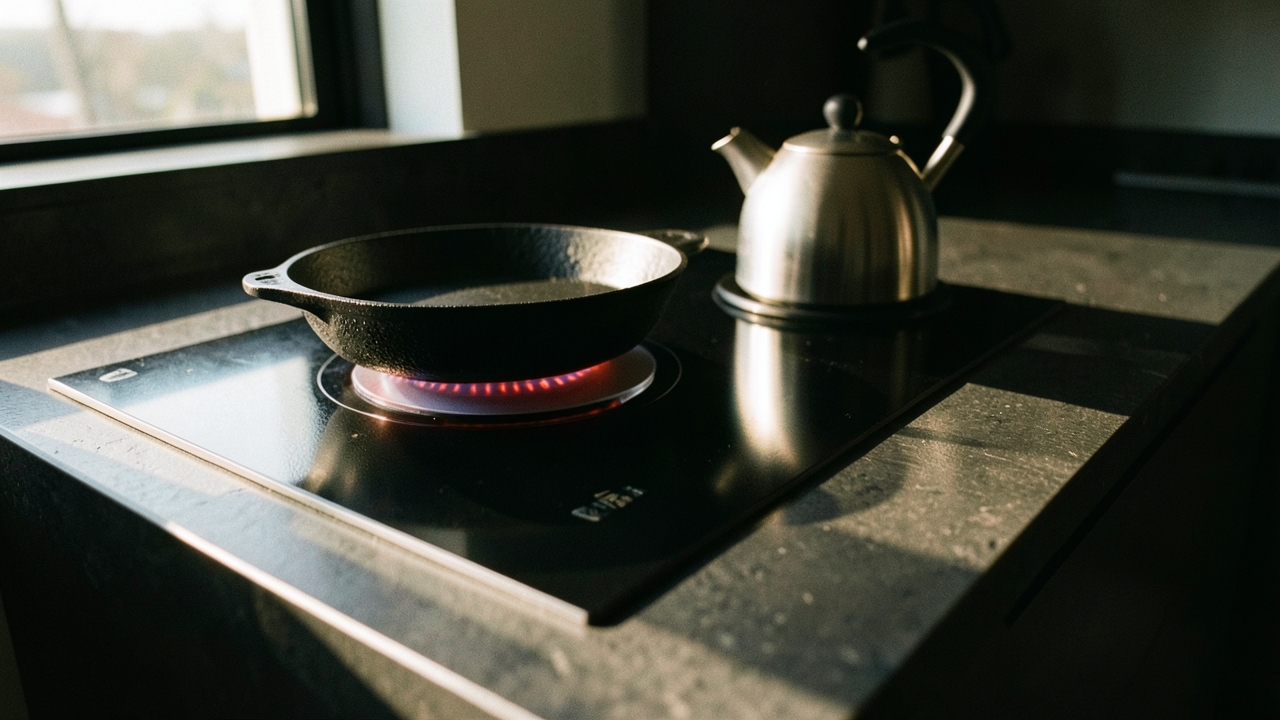
A highlight surface takes 10 to 20 minutes to cool after the power is off, and stays in the burn-risk range throughout. Induction generates its heat in the pot, so the glass runs cooler — but heat conducted back from the cookware can still push the surface past 85°C immediately after cooking. Either way, wiping the surface bare-handed right after cooking is a bad habit. The safety guidance compiled by ZDNet Korea recommends allowing 5 to 10 minutes for heat to dissipate and unplugging the unit when it will sit unused for more than five hours. The same guidance notes how often accidents start with an object left on a touch-sensitive surface before the household goes out.
Cracks in the ceramic surface are a shared risk regardless of type. A cracked panel carries fire and rupture risk and should be taken out of service and replaced. For anyone in the habit of setting heavy cast iron down hard, that item outranks thermal efficiency.
- Existing cookware is mostly stainless or cast iron, or replacing it is acceptable
- High-heat cooking is frequent, so the time saving compounds
- Monthly usage already sits in progressive tier 2 or 3, where 20kWh shows up on the bill
- Children or pets make shorter residual-heat exposure worth paying for
- Earthenware, glass or aluminum cookware stays in rotation
- Upfront cost must be minimal, as in temporary housing or a studio kitchen
- The cooktop is used briefly, once or twice a day
- Panel capacity leaves no room for a dedicated high-output circuit
Who it fits, and who should wait
Induction-only fits kitchens that cook often and either already own compatible cookware or will replace it. The time saved by 90% efficiency accumulates across 90 sessions a month rather than one, and that is the scale at which the 20kWh in the table starts to matter.
A hybrid fits households unwilling to abandon earthenware but wanting speed from the main burner. Check the spec sheet for how many induction zones there are and whether the highlight zone sits in the rear secondary position or the front primary one. If zone layout contradicts usage patterns, the reason for buying a hybrid evaporates.
Waiting makes sense for anyone who has not yet checked panel capacity and dedicated wiring. Against a 3,300W ceiling, a 3,700W rating is only valid inside the catalogue. Verifying installation conditions comes before comparing products.