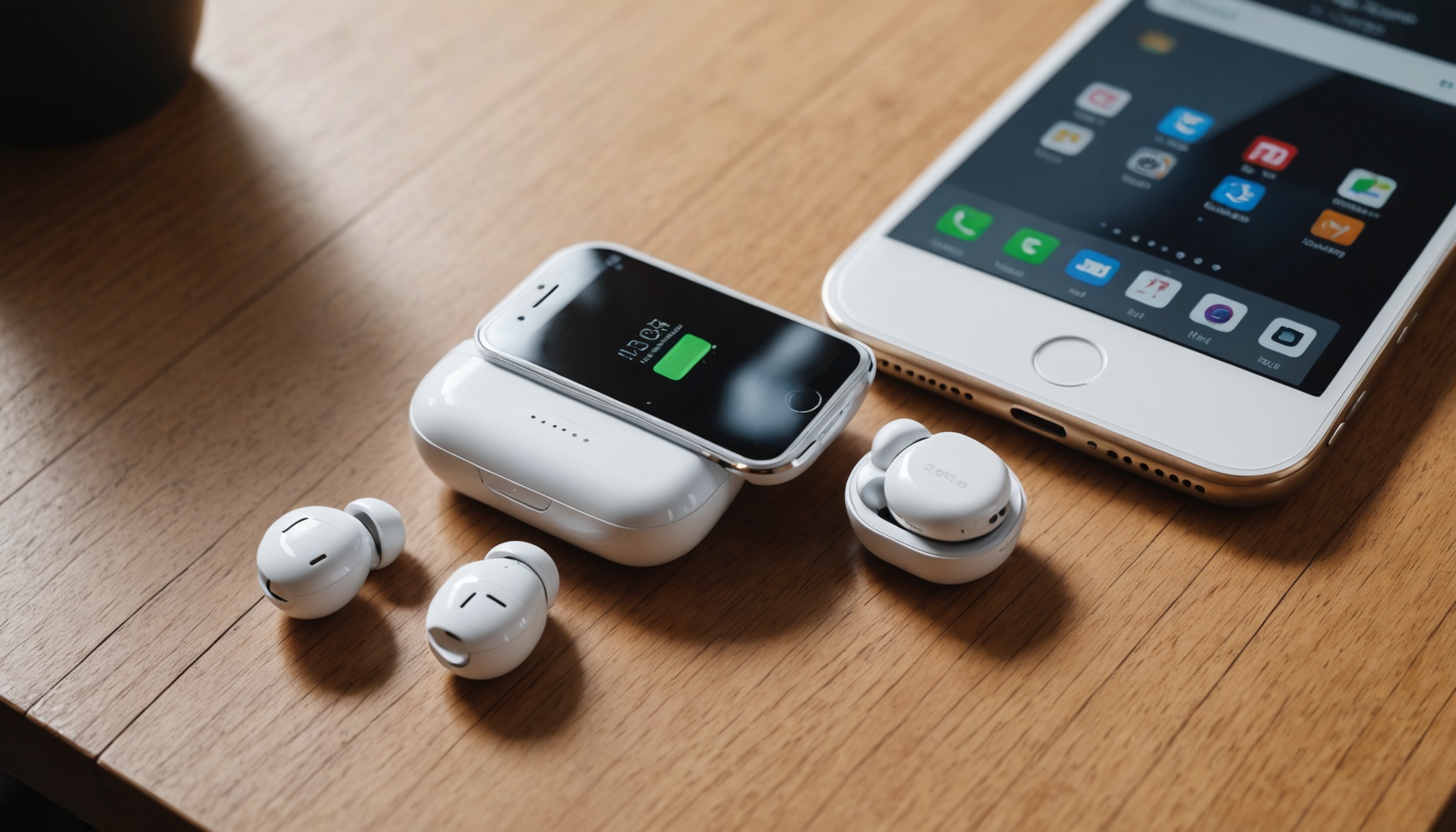
Bluetooth 5.4 will not make your earbuds sound better than 5.3. According to the official documents from the Bluetooth SIG, which maintains the standard, version 5.4 adds exactly two features — PAwR (Periodic Advertising with Responses) and Encrypted Advertising Data — and both are networking tools for herding thousands of ultra-low-power devices like electronic shelf labels in supermarkets, not audio features. The "Bluetooth 5.4" line on an earbud box is no evidence of better sound or lower latency. What splits the sound is not the version number but LE Audio and codec support.
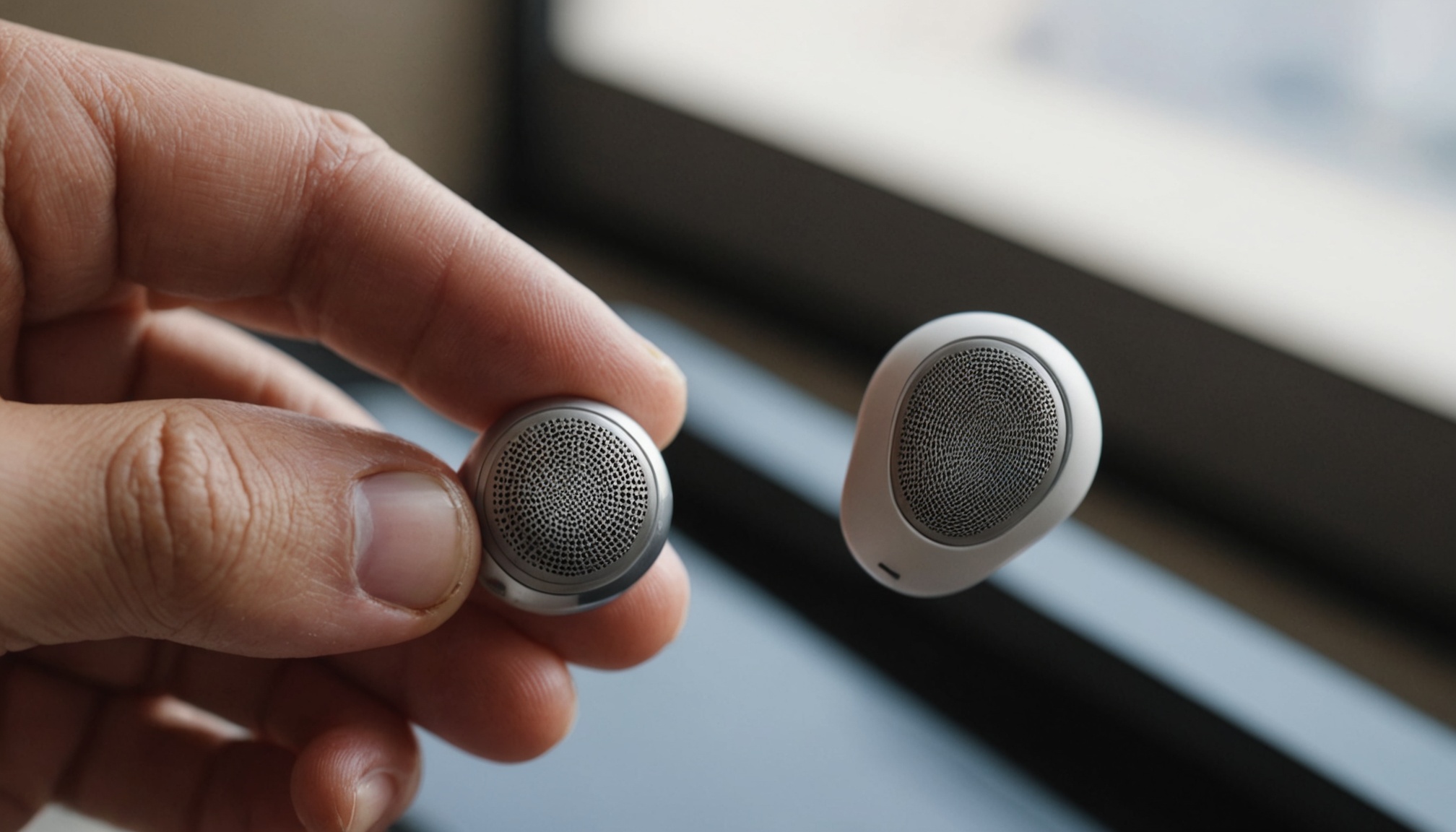
Why 5.4's New Features Have Nothing to Do With Earbuds
The SIG's 5.4 overview sums up the two features as enabling "connectionless, bidirectional, secure communication with thousands of very low-power end nodes." PAwR lets one central device exchange data on a fixed schedule with a large fleet of devices without ever forming connections. Per the analysis at embedded-development site Novel Bits, it slices each advertising interval into up to 128 subevents (7.5–318.75ms apart) and can bind over 10,000 nodes to a single access point. Encrypted Advertising Data is its companion feature, encrypting those broadcast packets.
The first standardized use of this combination is the Electronic Shelf Label (ESL) profile, released alongside the 5.4 spec. It is engineering for retail floors that must run thousands of shelf price tags on coin cells for years. Earbuds — which connect to one smartphone and recharge every few hours — are a completely different problem. On an earbud spec sheet, "5.4" mostly tells you the chipset is a recent generation, and little more.
So What Did 5.3 Actually Change?
One generation earlier, 5.3 does touch earbuds. Per the SIG's 5.3 feature document, three items matter. Connection Subrating lets an established link switch rapidly between low-power and high-bandwidth states — the SIG's own example is a hearing aid that idles in power-saving mode and instantly raises its duty cycle when a call comes in, and the same principle applies to earbud standby drain. The Channel Classification Enhancement lets the peripheral (your earbuds), not just the phone, detect and report congested frequency channels, reducing packet collisions when the two devices are apart. The Periodic Advertising Enhancement discards duplicate packets at the controller level, saving receive power.

All three belong to the battery and link-stability column, not the sound-quality column. Fewer dropouts on a packed rush-hour subway where the 2.4GHz band is saturated, lower idle drain — real, but indirect. Cross-tabulating both versions by what an earbud user actually feels gives this.
| Spec | Key additions | Designed for | Felt in earbuds? |
|---|---|---|---|
| Bluetooth 5.3 | Connection Subrating · Channel Classification · duplicate-packet discard | Power saving, link stability | Indirect gains in battery and congested areas |
| Bluetooth 5.4 | PAwR · Encrypted Advertising Data | Shelf labels, large sensor networks | Effectively none |
| LE Audio (separate from version) | LC3 codec · Auracast · Multi-Stream | Full audio overhaul | Direct impact on sound, battery, features |
The table reclassifies the SIG's official feature lists by consumer impact. The point sits in the last row — what changes audio is not the version line but LE Audio, a separate feature set.
The version number is the road specification; the sound is decided by the codec driving on it.
What Actually Decides Sound Quality: LE Audio and LC3
The real generational shift in audio happens in the SIG's LE Audio specification. LE Audio is a new audio architecture running on the Low Energy radio, and in the SIG's listening tests its default LC3 codec delivered better perceived quality than the legacy SBC codec even at a 50% lower bitrate. Halving the data means the headroom can be spent on battery life or smaller hardware. On top come Auracast — one source broadcasting to an unlimited number of receivers, aimed at airports, theaters and hearing assistance — and Multi-Stream, which sends independent synchronized streams to the left and right buds for better stereo imaging.

The catch: LE Audio is an optional feature set, independent of the version label. A 5.3 or 5.4 chip does not grant it automatically — the manufacturer must state LE Audio, LC3 and Auracast support separately. The line to read on a spec sheet is the codec line, not the version line. For where LDAC, aptX and AAC actually diverge in the hi-res segment, there is a separate breakdown, and to weigh it alongside tangible features like ANC, start from the headphone pre-purchase checklist.

Who Should Buy, Who Should Wait
Based on the published spec documents, the decision splits like this.
- If you need earbuds now — do not sort products by 5.3 versus 5.4. Compare the feature line (LC3, LE Audio, multipoint) and the supported-codec line instead
- If subway dropouts drive you crazy — 5.3-or-later chipsets with channel classification and subrating point the right way, though implementation (antenna design and tuning) varies too much for the version alone to guarantee anything
- If Auracast is the draw — check support on the transmitting side (phone, TV) as well as the earbuds, or you will not be able to use it
- If your current earbuds are fine — 5.4 is no reason to upgrade. Waiting for the generation where LE Audio support becomes standard is the better trade
What to watch until your next purchase is not version numbers but how fast LC3- and Auracast-capable phones and earbuds spread. When that list gets long enough, that is the moment to switch.