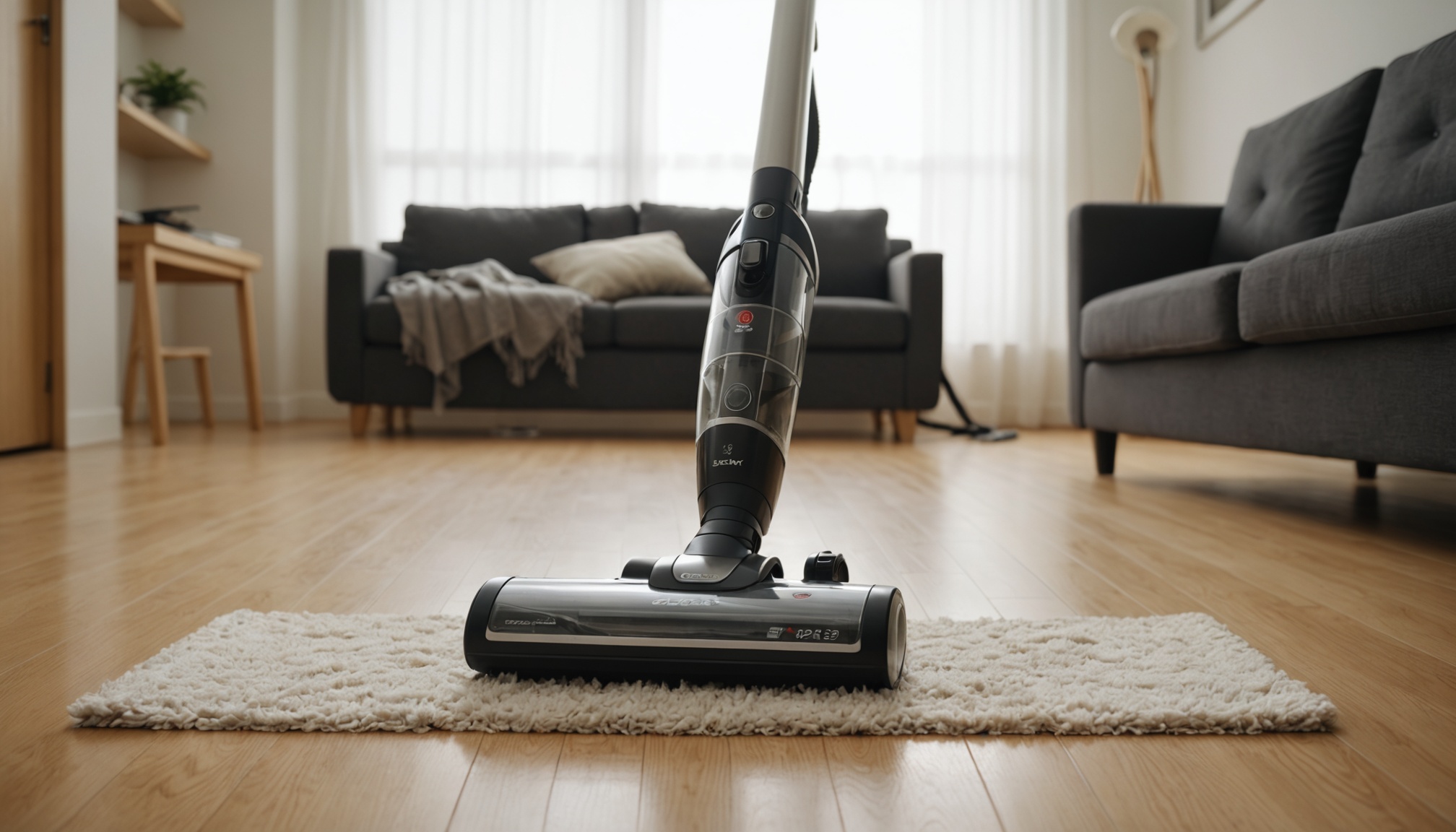
The unit to compare on a cordless vacuum spec sheet is W (watts). The "48,000 Pa" printed across product pages is not suction power but vacuum pressure inside the machine, and pressure is only one of the two terms that make up suction. Per Financial News, Korea Consumer Agency testing found that the six models advertising 18,000–48,000 Pa delivered 58–160 W of actual peak suction. In the same test, Samsung, LG and Dyson — which label in W and AW — met their stated figures around the 280 W/AW mark.
Why the Pa figure looks so large
The three units measure different things. W follows the IEC definition of suction work rate and AW the American ASTM air-watt; both describe how much air the machine actually moves. Pa is the pressure difference between the inside and outside of the machine — what you read with the nozzle fully blocked. The Consumer Agency's findings call vacuum pressure "one component of suction power" and state plainly that using it as a suction unit is inappropriate.
The trouble is the order of magnitude. Suction lands in the tens or hundreds; vacuum pressure lands in the tens of thousands. Set the printed numbers side by side and 48,000 looks 171 times larger than 280. Skip the unit and the misreading is almost automatic.
| Unit | What it measures | Standard | Typical magnitude | Models tested |
|---|---|---|---|---|
| W (watt) | Suction work rate — flow × pressure | IEC | Tens to hundreds | 3 |
| AW (air watt) | Suction work rate — same product | ASTM | Tens to hundreds | 1 |
| Pa (pascal) | Vacuum pressure — internal difference | Not a suction unit | Tens of thousands | 6 |
Labelling practice splits by brand. Samsung and LG use W, Dyson uses AW, and Pa labelling turned up on six models including Xiaomi, Roborock, Dreame and Ainic. Within a single product category, there is currently no common unit to compare against.
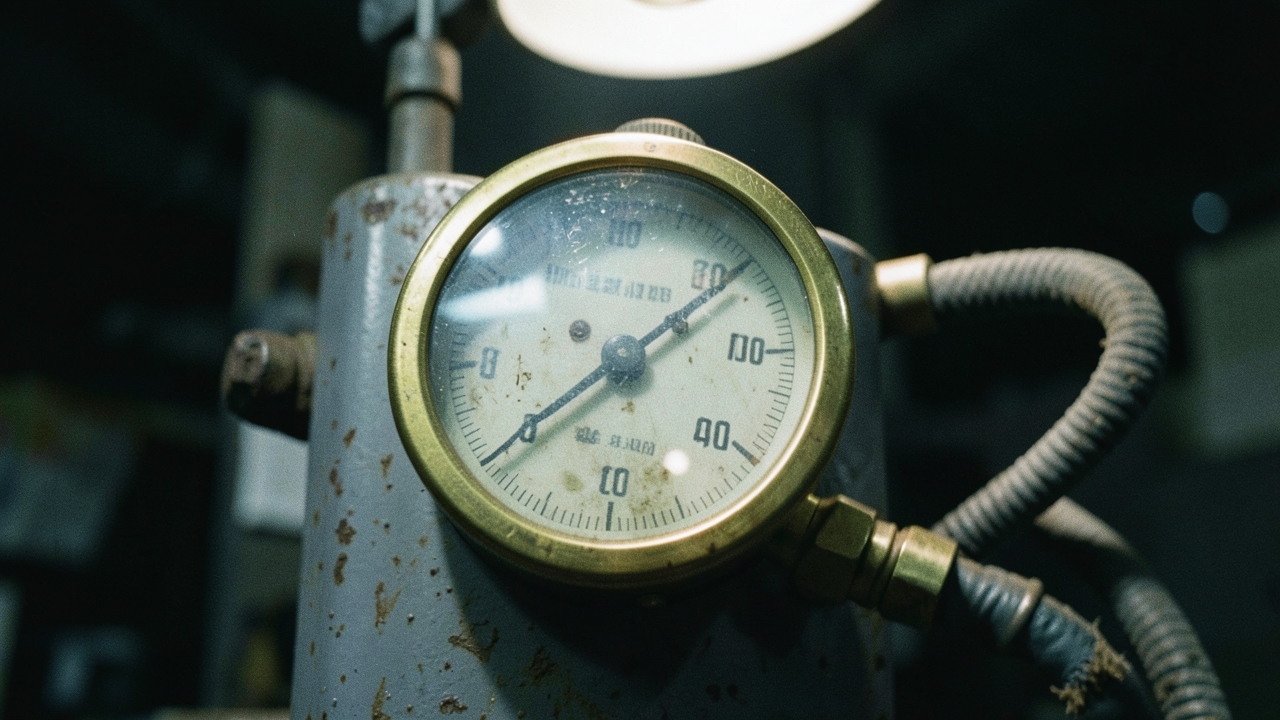
Pa alone cannot produce a suction figure
The formula behind the incoming Korean standard is simple. Suction power in watts is air flow (L/s) multiplied by vacuum pressure (kPa). Because 1 L/s × 1 kPa is exactly 1 W, those two values give you suction directly — and inverted, that means pressure by itself tells you nothing.
In practice, identical pressure with different flow spreads suction across a wide range. The grid below applies the formula to four pressure levels and four flow levels.
| Pressure (kPa) | At 2 L/s → suction (W) | 3 L/s (W) | 4 L/s (W) | 5 L/s (W) |
|---|---|---|---|---|
| 18 (18,000 Pa) | 36 | 54 | 72 | 90 |
| 25 (25,000 Pa) | 50 | 75 | 100 | 125 |
| 35 (35,000 Pa) | 70 | 105 | 140 | 175 |
| 48 (48,000 Pa) | 96 | 144 | 192 | 240 |
Read the diagonal: 18 kPa at 5 L/s (90 W) lands essentially level with 48 kPa at 2 L/s (96 W). A 2.7-fold pressure advantage evaporates once flow is cut by more than half. That multiplication is exactly why a blocked-nozzle pressure reading diverges from what a machine does on carpet.
Vacuum pressure is one term of a product. A spec sheet that prints pressure in large type while withholding air flow has hidden half of the multiplication.
Feeding the measured values back through the formula
Dividing the measured suction figures by each end of the advertised pressure range shows what air flow those results would require. Per-model pressure claims were not published, so both an 18 kPa and a 48 kPa assumption are applied.
| Measured peak suction (W) | Share of 280 W (%) | Required flow at 48 kPa (L/s) | Required flow at 18 kPa (L/s) |
|---|---|---|---|
| 160 | 57.1 | 3.33 | 8.89 |
| 87 | 31.1 | 1.81 | 4.83 |
| 82 | 29.3 | 1.71 | 4.56 |
| 72 | 25.7 | 1.50 | 4.00 |
| 58 | 20.7 | 1.21 | 3.22 |
The share column carries the test result. Models measuring 72–82 W sit at 25.7–29.3% of the ones that met 280 W — roughly a third. Assume a model advertising close to 48,000 Pa and the implied flow drops to 1.2–1.8 L/s. Narrowing the air path to raise pressure costs flow, and the trade-off shows up here as arithmetic.
Some models also missed their own printed figures. Per ZDNet Korea, only 3 of the 10 tested models met the suction value they advertised. That gap between rating and measurement is a separate problem from the choice of unit.
Do AW and W convert?
They measure the same physical quantity but under different test conditions, so the numbers are not interchangeable. IEC and ASTM differ on measurement point, whether nozzle and hose are fitted, and reference orifice size. Working from published specs alone, two rules hold up: compare numbers directly only within the same standard, and across standards, check only whether they sit in the same order of magnitude before leaning on flow rate and dust pickup to decide.
This mismatch between label and lived performance is not unique to vacuums. Wherever the labelling basis is left to the manufacturer, the same number comes to mean different things — the same trap appears in how refrigerator capacity splits on usable interior volume and in the standard coverage area rating on air purifiers.
When does the KS standard take effect?
Korea's National Institute of Standards and Technology is drafting a national standard (KS) for cordless vacuum performance measurement based on IEC 62885-4. The draft went through a 60-day public notice period from 18 September 2025, with completion scheduled by early 2026. Once finalised, suction labelling unifies on W and the measurement method is specified.
A KS is a voluntary standard, though, so publication does not by itself create a labelling obligation. How fast manufacturers switch, how existing stock is labelled, and whether directly imported models follow all move on separate timelines. Through the first half of 2026, it is safer to read spec sheets assuming W and Pa labelling still sit side by side on the shelf.

Who should buy now, who should wait
- Buy now — if you can narrow your shortlist to models that state suction in W or AW with a figure in the tens or hundreds, there is little reason to wait. Within one standard, the comparison already works.
- If a Pa-labelled model is on the list — ask the manufacturer for the air flow figure in L/s and do the multiplication yourself, or swap in a model with published test results. A pressure figure on its own is not a basis for comparison.
- Wait — if you are shopping the premium tier and the replacement is not urgent, comparison gets easier after labelling settles in the first half of 2026. When a model's stated unit changes, its real performance level tends to surface with it.