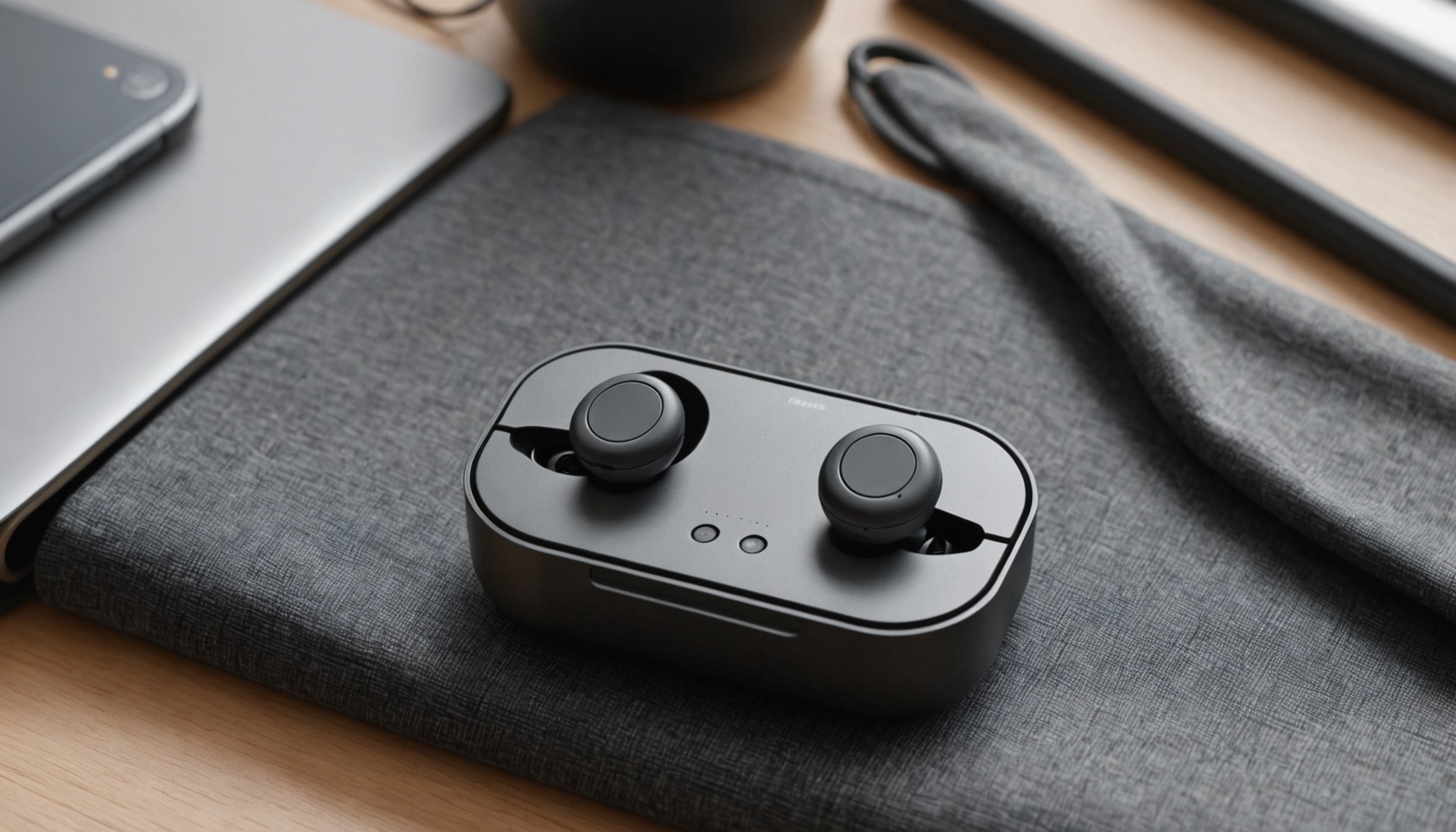
The 30dB that noise cancelling advertises is not a full-spectrum figure — it is an average below 1kHz. Built In notes that most active noise cancelling (ANC) devices do well at blocking frequencies under 1kHz and struggle above that threshold. By the industry estimate the same piece cites, ANC cuts ambient noise by about 30 decibels on average, while low-frequency repetitive noise — lawnmowers, subway traffic, the constant murmur of a jet engine — can drop by as much as 60 decibels.
Which means a single attenuation figure is not what to read on a spec sheet. There are two axes: ANC handles the low end, and the seal of the ear tip handles the mid and high end. Leave either one empty and the room does not get as quiet as the number suggests.
ANC and passive isolation cover different bands
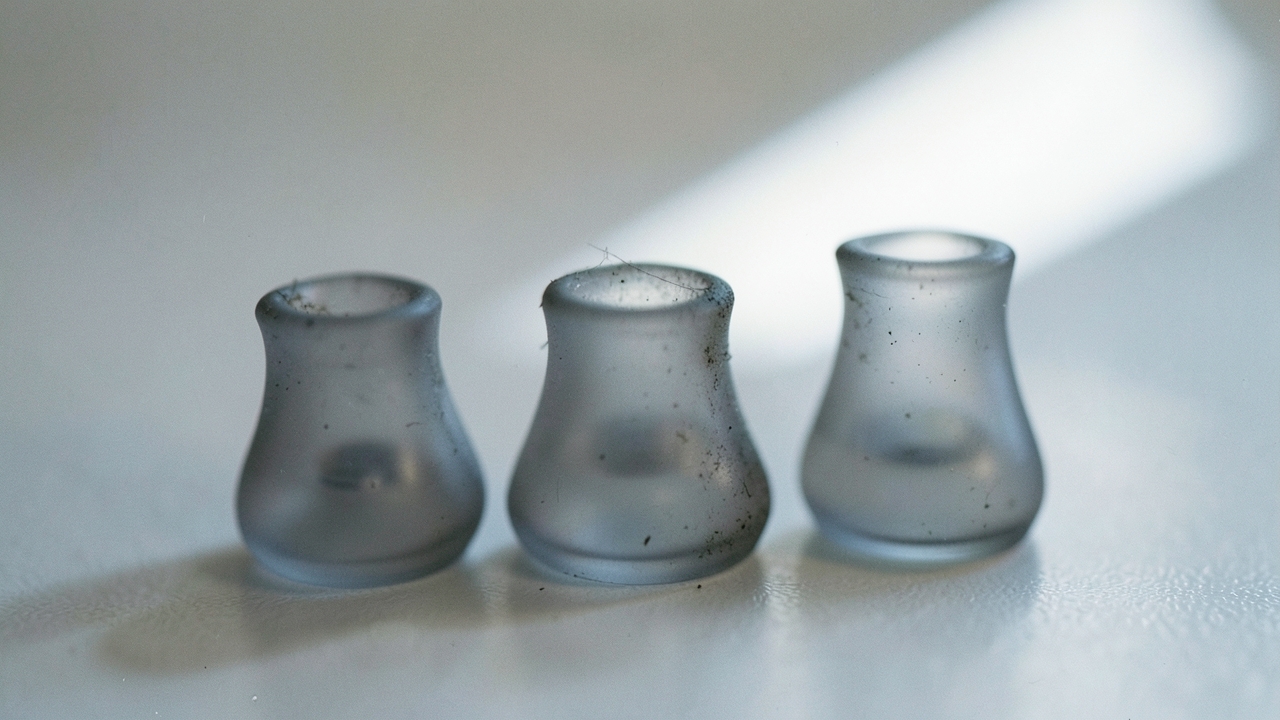
Built In puts passive isolation — dense, sound-absorbent materials such as foam or rubber — at roughly 15 to 30 decibels of reduction across mid and high frequencies. ANC is the reverse: strong at the bottom, and less effective the moment a sudden noise appears. The two are not competitors but a division of labour.
| Band | Typical noise | Handled mainly by | Attenuation on published figures (dB) |
|---|---|---|---|
| Below 1kHz | Train rumble, engines, HVAC fans | ANC | ~30 average, up to 60 for steady repetitive noise |
| Above 1kHz | Nearby conversation, keyboards, brake squeal | Ear tip / ear pad seal (passive) | about 15–30 |
| Sudden, irregular noise | Announcements, closing doors, horns | Neither blocks it fully | - |
That split changes the buying decision. If office chatter is the reason for shopping ANC in the first place, a set that ships with tips that actually fit matters more than a headline attenuation spec. Speech sits mostly above 1kHz, and that band belongs to the seal.
How much quieter is 20dB of attenuation, really
Decibels are logarithmic, so subtraction alone gives no feel for scale. Two conversions are needed side by side. Sound pressure ratio is 10^(-dB/20); perceived loudness follows the convention that a 10dB drop halves it, so 2^(dB/10). The reference noise levels are Korean measurements — SBS News reports the Ministry of Environment's recommended in-carriage limit at 80dB, with Seoul subway sections exceeding 90dB, while commuter trains average around 75dB.
| Attenuation (dB) | Sound pressure ratio | Perceived loudness reduction (×) | Subway 90dB → remaining (dB) | Commuter train 75dB → remaining (dB) |
|---|---|---|---|---|
| 10 | 0.316 | 2.0 | 80 | 65 |
| 15 | 0.178 | 2.8 | 75 | 60 |
| 20 | 0.100 | 4.0 | 70 | 55 |
| 25 | 0.056 | 5.7 | 65 | 50 |
| 30 | 0.032 | 8.0 | 60 | 45 |
Two things read out of the table. First, moving from 20dB to 25dB shifts perceived loudness reduction from 4x to 5.7x — roughly 40% more. If five decibels on paper doubles the price, that ratio deserves scrutiny. Second, even a full 30dB leaves 60dB inside a subway car. That is not silence; it is the level at which conversation becomes possible.
An attenuation figure does not delete noise — it moves noise down one step.

Why two "hybrid" sets perform differently
ANC is defined by where the microphones sit. As Sakamaka summarises it, feed-forward uses only an external mic — fast to react, low in precision — while feedback uses an internal mic, precise but at risk of howling. The hybrid label on mid-tier and above means both are used: catch the noise outside first, then clean up the remainder inside.
| Type | Mic position | Strength | Weakness |
|---|---|---|---|
| Feed-forward | Outside the housing | Reaction speed, little effect on sound | Cannot correct what remains inside the ear |
| Feedback | Inside, near the driver | Corrects against noise that actually reached the ear | Howling risk, weak at high frequencies |
| Hybrid | Outside + inside | Highest low-end blocking | Needs two or more mics and a higher chipset — cost |
The same source puts the gap between hybrid implementations at up to 15dB or more depending on the chipset. Run 15dB through the table above and that is a 2.8x difference in perceived loudness. So "hybrid ANC" on a box guarantees nothing — the same class of trap as generational labels that never become audible, covered in the piece on Bluetooth 5.3 versus 5.4.
The order to read a spec sheet in
Judging on published specifications alone, several items rank ahead of the attenuation number.
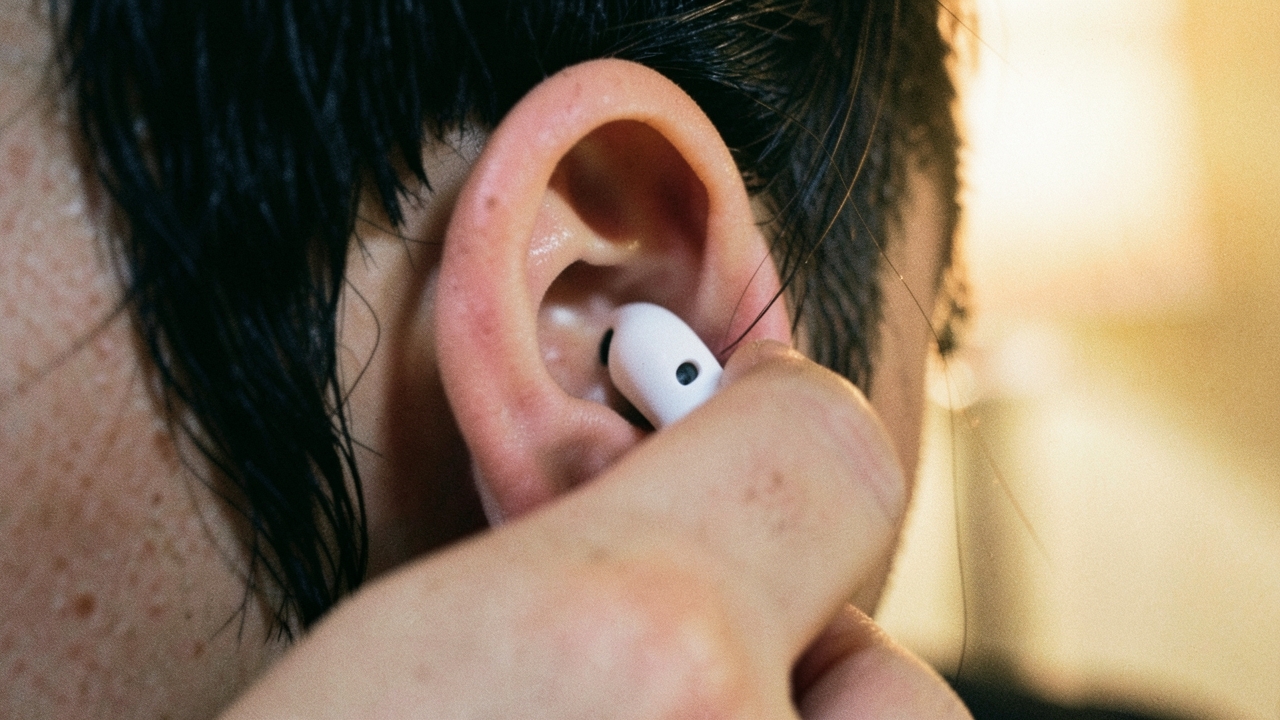
- Ear tip sizes included — two sets or four. This is where the 15–30dB mid and high band is decided. Check whether foam tips are sold separately.
- How the ANC type is stated — feed-forward only or hybrid. A maker that also lists microphone count has given you more to work with.
- The measurement condition for the dB figure — whether the frequency is stated. A maximum with no band attached is weak comparison material.
- Granularity of transparency mode — if announcements and conversation matter, whether it is an on/off switch or a stepped control.
- Battery life with ANC on — whether ANC-on and ANC-off runtimes are listed separately. The gap between them is the real power cost.
- Codec pairing — you can only use what phone and earbuds both carry. That order is set out in the piece converting codec bitrates against the source.

When waiting is the better call
- Mostly office or cafe use — little low-frequency content, so a flagship ANC set returns less. A mid-tier design with a good seal and well-fitting tips carries more of the benefit per won.
- Long flights or a subway commute — steady low-frequency noise lands exactly in ANC's effective range. Here the attenuation spec is worth paying for.
- Tips never seem to fit your ears — the ear pad seal of over-ear headphones is more consistent than an in-ear attenuation spec. Identical printed dB values arrive differently at the eardrum.
- Sensitive to in-ear pressure — stronger attenuation means a larger cancelling signal at the low end. Put stepped ANC strength settings on the checklist.