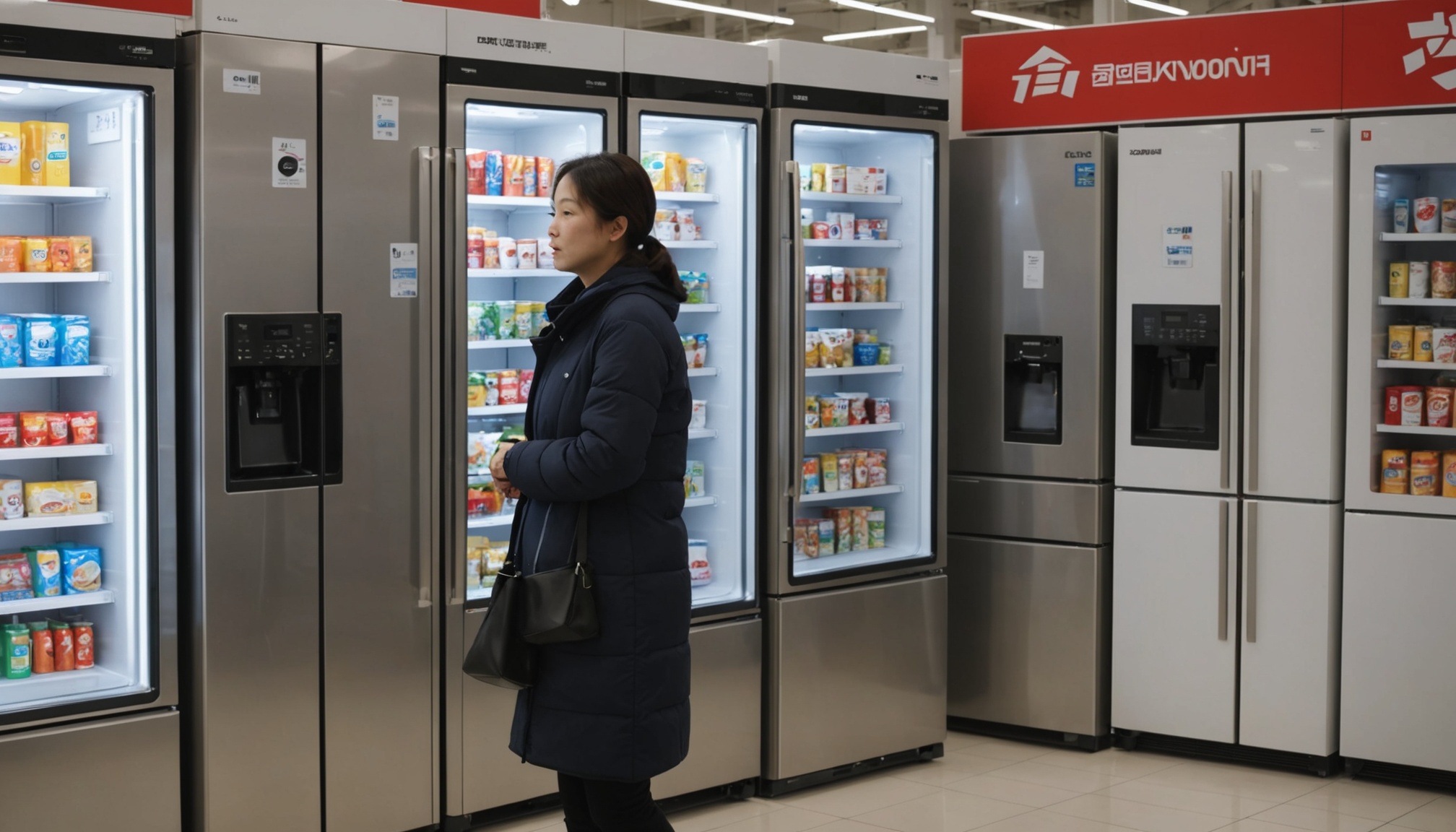
The starting point for refrigerator sizing is about 100L per person. Add 50-100L of headroom, and Korean households — which store a lot of kimchi and jang (fermented sauces) — add another 100-150L on top (Choicemon). But you cannot map that number straight onto a fridge's rated liters. The rated figure counts every empty pocket in the doors and drawers, while only 60-70% of it is space you can actually load with food. Both factors — the per-person formula and the rated-versus-usable gap — have to be calculated together to find what you really need.

A fridge only reveals its real usable size once you start at 100L per person and then count on using just 70% of the rated liters.
How many liters fit how many people?
The base formula is simple: multiply household size by 100L for a floor, then add headroom and a Korean-storage adjustment for the recommended line. The table below combines figures from both sources. Minimum is household size x 100L; recommended adds headroom (+100L for 1-2 people, +150-200L for 3 or more).
| Household | Minimum (L) | Recommended (L) | Typical type |
|---|---|---|---|
| 1 person | 100 | 200-300 | Single-door / small top-fridge |
| 2 people | 200 | 300-400 | Top-fridge / kitchen-fit |
| 3 people | 300 | ~500 | Side-by-side / 4-door kitchen-fit |
| 4 people | 400 | 580-700 | 4-door freestanding |
| 5+ people | 500 | 800-900 | 4-door large / paired with kimchi fridge |
The minimum column is only a calculation floor. The 70L-per-person figure often cited is a bare minimum too, so unless size or budget forces it, aim for 100L or more per person (Rentre). The recommended column is the range to actually shop in.
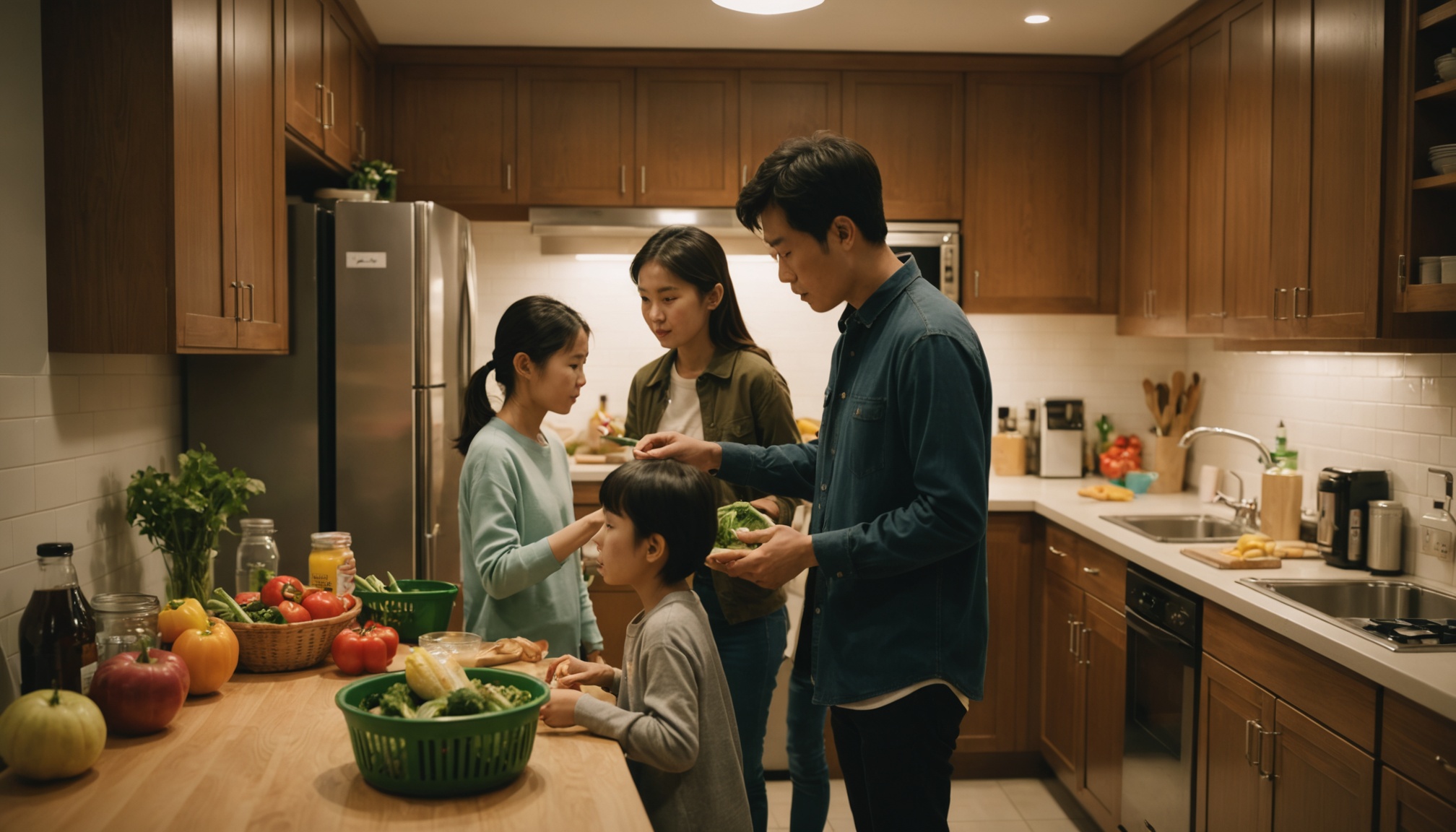
Why rated and usable capacity differ
The liters printed on the catalog measure total interior volume with door pockets and drawers empty. Based on published specs, only 60-70% of that is usable for food once you subtract shelf thickness, airflow gaps, and dead corners. On top of that, a fridge should stay under 70% full so cold air circulates properly. Combine the two and real headroom is far below the rated number.
Run the numbers: a rated 600L fridge gives about 600 x 0.65 ≈ 390L of storable space, and filling only 70% leaves about 390 x 0.7 ≈ 270L for comfortable use. That is why the 4-person recommendation sits at 580-700L — converted to usable space, it barely clears the 400L floor.
| Rated (L) | Storable (65%, L) | Comfortable load (70% more, L) |
|---|---|---|
| 300 | 195 | 137 |
| 500 | 325 | 228 |
| 700 | 455 | 319 |
| 900 | 585 | 410 |
Even a rated 900L giant lands in the 400L range once airflow is accounted for. Plugging the rated number straight into the per-person formula makes it easy to think you bought a size larger than you did.
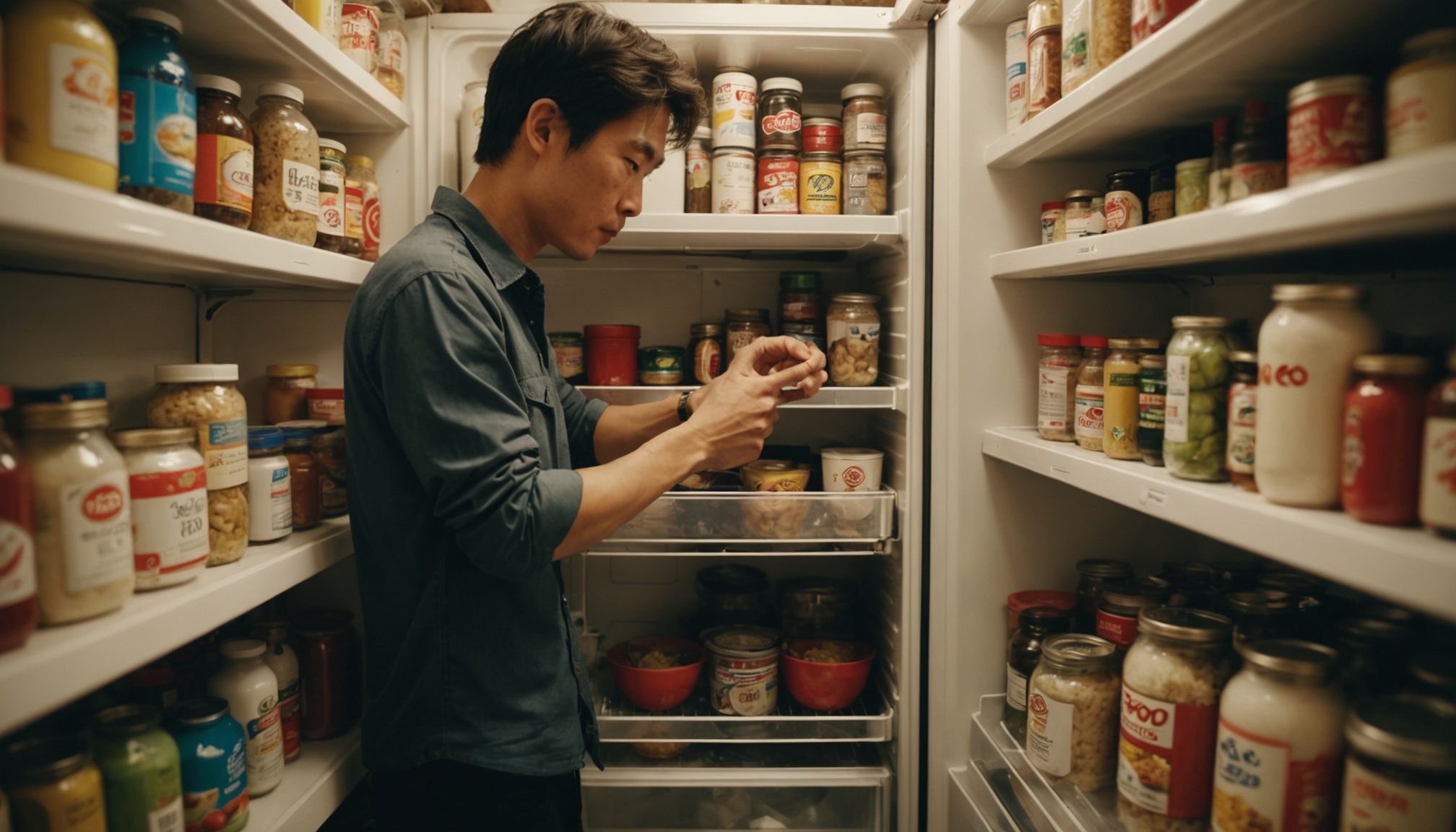
A separate kimchi fridge changes the math
The Korean +100-150L adjustment is mostly about kimchi, jang, and side dishes. Move that load into a dedicated kimchi refrigerator and the main fridge can drop a size. A 4-person household with a kimchi fridge can start at 500-600L instead of 800-900L.
But discount a kimchi fridge's rated capacity even harder: stand-type kimchi refrigerators use only about 40% of the rated liters as real storage, lower than a regular fridge's 60-70%, because of their lidded containers and drawer structure. Do not forget that 40% figure when totaling storage.
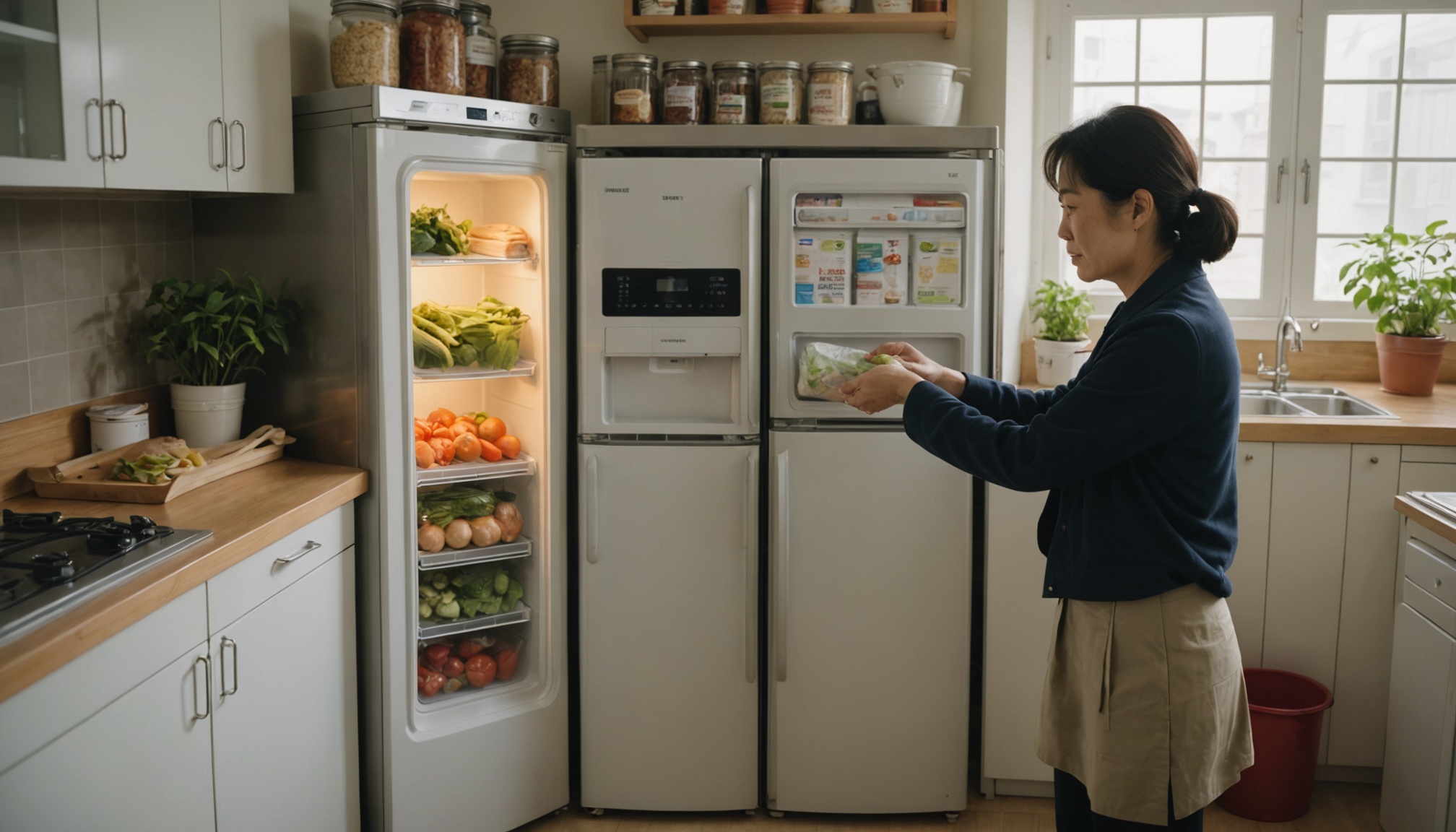
Which household needs which size — and who can wait
If you live alone and eat out or order in often, a rated 200-300L is realistic; that converts to 130-195L usable, plenty for a few kimchi tubs, drinks, and side dishes. Chasing a 400L+ model on the per-person formula alone just means maintaining empty airflow space.
A 3-4 person household without a kimchi fridge should not go below rated 600-700L, the line where usable space meets the 400L floor. But if you already own or plan to add a kimchi fridge, drop the main fridge to 500-600L — there is no reason to rush into an 800L+ flagship. Decide on the kimchi fridge first, then size the main unit.