A Market AMD Took First — Why Is Intel Entering Now?
The handheld gaming PC market transformed from a niche hobby segment into mainstream consumer territory in just a few years. AMD led that transformation. Every flagship product in the space — from the Steam Deck to the ROG Ally — runs on AMD silicon, while Intel struggled on both gaming performance and power efficiency with its Core Ultra Series 1 and Series 2, leaving it virtually invisible in this segment. According to IT Donga, Intel refused to give up, and after intensive work on GPU performance improvements and power efficiency gains, it unveiled the Core Ultra Series 3 in January 2026.
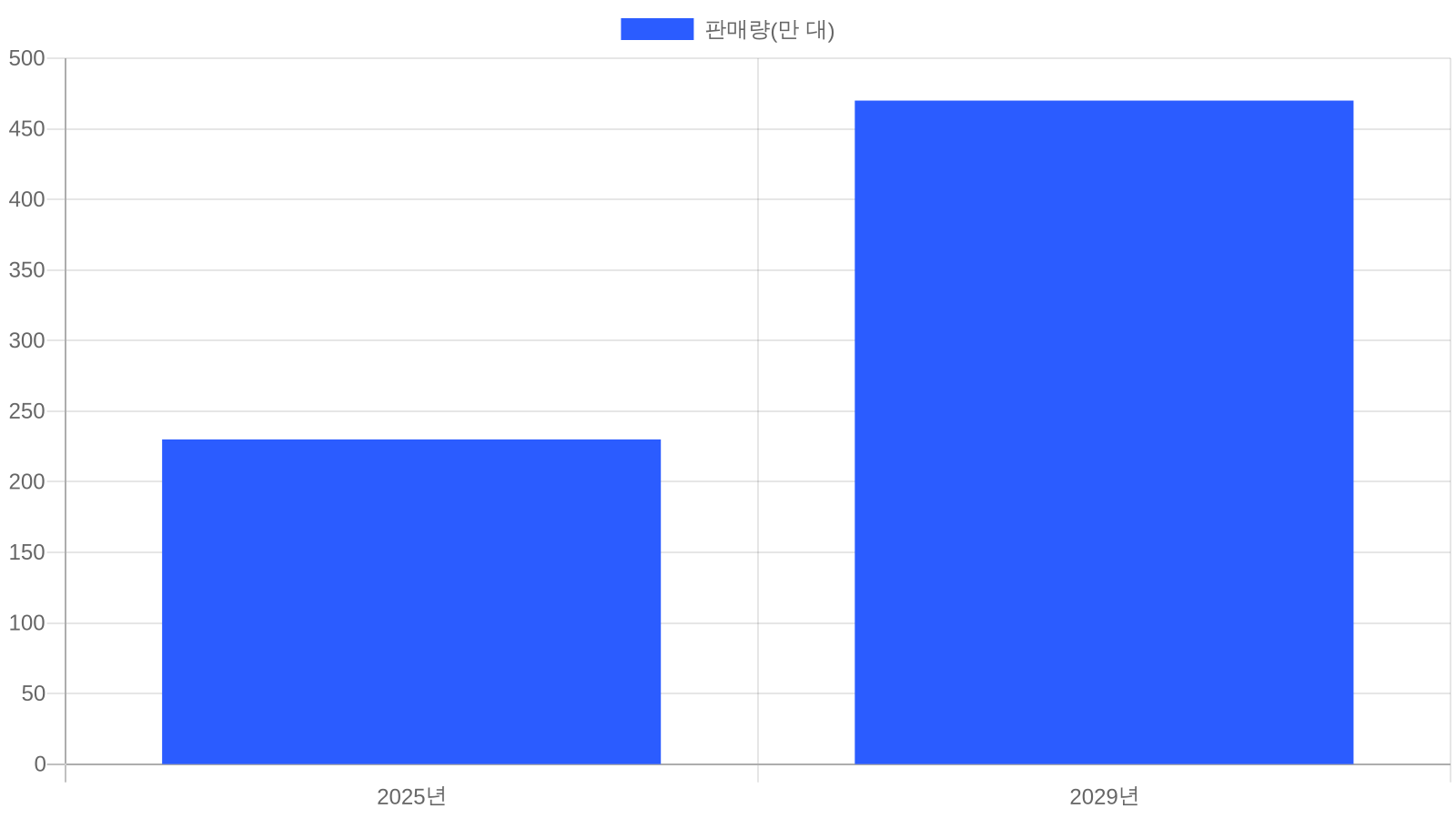
On timing alone, Intel is clearly a late mover. But read the market growth curve alongside that timing and the interpretation changes. Market research firm Omdia counted handheld gaming PC sales at 2.3 million units in 2025 and projects annual sales reaching 4.7 million units by 2029. That means the market more than doubles in size over four years. Entering now may not be late — it may be precisely the moment to catch the steepest part of the growth curve.
The broader context reinforces that view: the PC gaming market itself is expanding. According to data from Fortune Business Insights, the global PC gaming market is forecast to grow from $86.1 billion in 2025 to $96.6 billion in 2026 — an increase of more than $10 billion in a single year. Handheld gaming PCs are one of the fastest-growing segments within that pie. Intel's decision to design a dedicated gaming chip rather than repurpose a general-purpose notebook CPU reads as a deliberate strategic move aimed squarely at that growth curve.
Arc G3 Spec Deep Dive — Power Design Is the Core Story
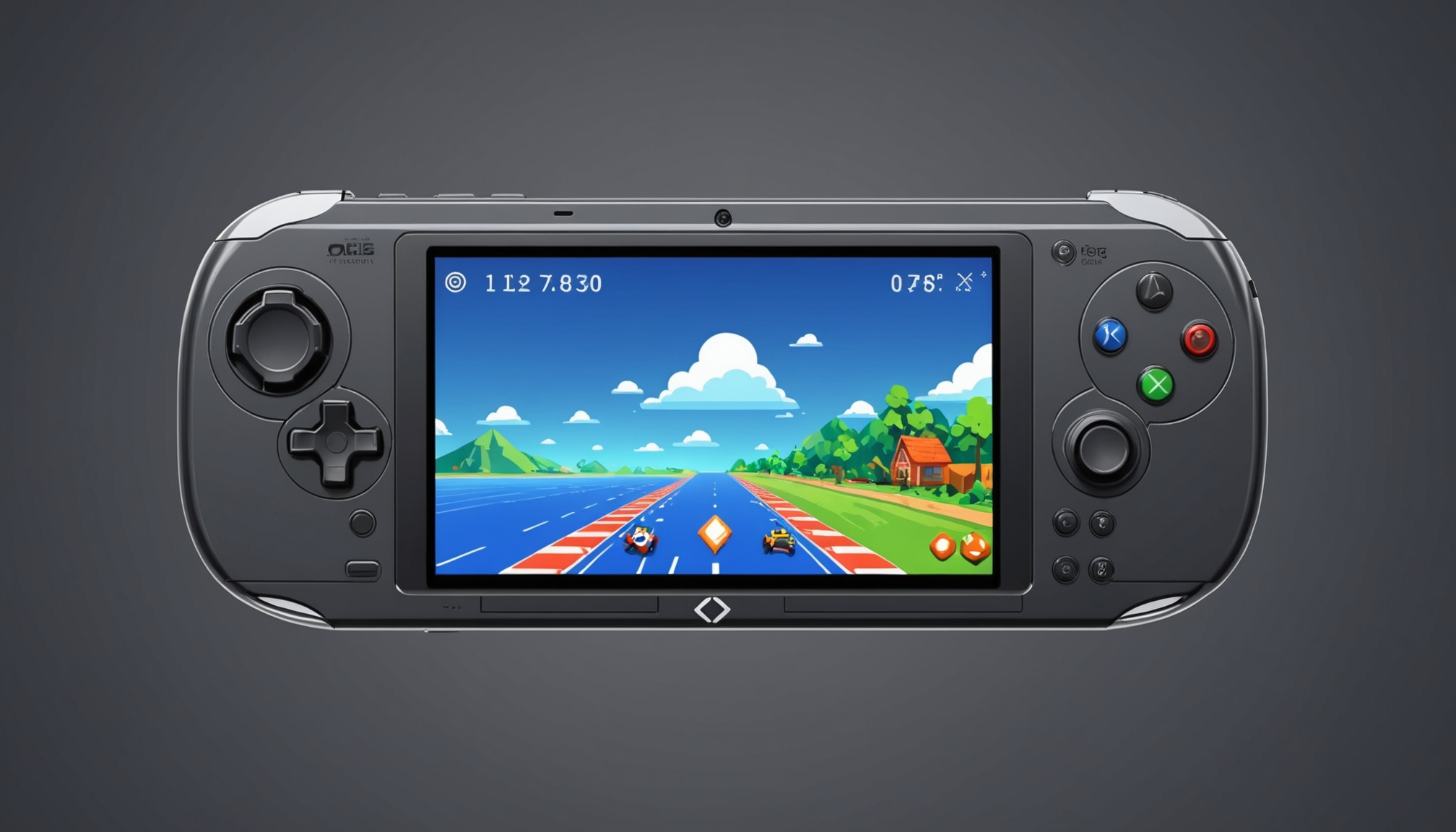
The most defining design characteristic of the Arc G3 processor is its explicit declaration: this is not a general-purpose mobile CPU. According to IT Donga, while Intel shares the same Panther Lake base architecture used in the Core Ultra Processor Series 3, it re-tuned the core configuration and power allocation specifically for gaming environments. The fixed core layout consists of 2 Performance cores (P-Core), 8 Efficient cores (E-Core), and 4 Low-Power Efficient cores (LP E-Core).
This core count may look conservative at first glance — fewer P-Cores compared to high-performance notebook CPUs. But the real bottleneck in handheld gaming PCs often lies not in CPU compute but in GPU throughput and thermal design limits. Reducing the CPU core count is Intel's way of freeing up power budget and thermal headroom to concentrate on the GPU side. Based on publicly disclosed specs, Arc G3's power design is: baseline TDP of 25W, minimum guaranteed TDP of 15W, and maximum TDP of 80W — reported to be at a similar level to the Intel Core Ultra Processor Series 3.
Setting a wide power range of 15W–80W is interpreted as a measure to give OEM device designs maximum flexibility. At the low-power mode (15W) the chip can support near-fanless quiet handheld use; at maximum boost (80W) the same chip can deliver near-desktop-class high-performance gaming. That breadth in power design is precisely why the Arc G3 earns the label "dedicated gaming chip."
| Spec | Intel Arc G3 Processor | Intel Core Ultra Series 3 (reference) |
|---|---|---|
| Base Architecture | Panther Lake | Panther Lake |
| P-Core (Performance Core) | 2 (fixed) | Varies by model |
| E-Core (Efficient Core) | 8 (fixed) | Varies by model |
| LP E-Core (Low-Power Efficient Core) | 4 (fixed) | Varies by model |
| Base TDP | 25W | Similar level |
| Minimum Guaranteed TDP | 15W | Similar level |
| Maximum TDP | 80W | Similar level |
| Design Purpose | Dedicated handheld gaming PC | General-purpose notebook |
Reading Intel's Market Entry Strategy Through Pricing Trends
The source material does not disclose a standalone unit price for the Arc G3 processor itself. However, a more meaningful metric than chip price alone is the expected price range of finished products that will carry this chip, and the competitive landscape they will enter. The current AMD-based handheld gaming PC market spans from entry-level to high-performance premium, and Intel has chosen a strategy of providing OEM partners with a compelling option via the Arc G3. Operating a gaming-specific chip line separate from the general CPU lineup also gives partners a clear basis for product positioning.
Power design also offers clues about pricing competitiveness. Support for as low as 15W is an advantage for extending runtime in compact devices with limited battery capacity, enabling OEMs to either reduce battery cost or push for longer gaming sessions. From a consumer pricing standpoint, where Arc G3-based products land relative to competing AMD offerings will be the pivotal variable determining market penetration.
The 2026 launch timing itself is also significant. If the market grows toward Omdia's projection of 4.7 million units by 2029, Intel's early ecosystem-building in early 2026 positions OEM partners to consider the Intel platform when designing products in 2027–2028. In other words, this launch may be less about near-term sales and more about securing a platform ecosystem foothold over the medium term.
Power Design Flexibility (8.5): The publicly disclosed TDP range of 15W–80W offers strong advantages across a variety of form factor designs. Core Configuration Efficiency (7.5): The 2 P-Core configuration is a deliberate design choice to concentrate power on the GPU rather than raw CPU compute — this may fall short for workloads beyond gaming. Market Entry Timing (7.5): While AMD holds first-mover advantage, entering during the market's acceleration phase is assessed positively. Ecosystem Expansion Potential (7.5): Securing OEM partnerships and ensuring gaming software optimization remain key medium-term variables.
- Purpose-built for handheld gaming PCs — structurally breaks free from the limitations of general-purpose notebook chips
- Wide TDP support of 15W–80W gives finished product designers high flexibility (based on publicly disclosed specs)
- Panther Lake base expected to deliver improved GPU performance compared to Core Ultra Series 3
- Entering the market during the high-growth phase (2025–2029: 2.3M → 4.7M units) creates room to build an OEM ecosystem
- AMD's first-mover advantage — the established brand recognition and software optimization ecosystem around Steam Deck and ROG Ally will not be easy to close in the short term
- Fixed 2 P-Core configuration may underperform general-purpose CPUs in multitasking and creative workloads outside gaming
- Finished product pricing is still undetermined — consumer price competitiveness depends on OEM partners' product strategy
- The poor reputation of Core Ultra Series 1 and 2 could be an obstacle to rebuilding trust with OEMs and consumers
Who Should Watch This / Who Should Wait
Who Should Pay Attention to Arc G3-Based Devices
- Users for whom Intel platform software compatibility matters — If certain games or utilities run more stably on Intel drivers than AMD, Arc G3 devices become a natural fit.
- Users who need low-power, extended-use sessions — The publicly disclosed minimum TDP of 15W is a meaningful option in battery-constrained environments.
- Users considering new handheld gaming PCs launching in 2026–2027 — When Arc G3-based finished products hit the market in earnest, active price competition is likely to follow.
Who Is Better Off Waiting
- Users who need to buy right now — Until Arc G3-based products' pricing and real-world gaming performance are officially validated, already-proven AMD-based products remain the safer choice.
- Users with heavy non-gaming workloads — The fixed 2 P-Core configuration is optimized for gaming, but users with significant video editing or heavy multitasking needs may find general-purpose mobile CPUs more suitable (based on publicly disclosed specs).
- Users who value a mature software and game title optimization ecosystem — Driver maturity and game compatibility for Arc G3-based platforms can only be verified over time. For those wanting to avoid early-adopter risk, waiting through one or two generations is a rational strategy.